
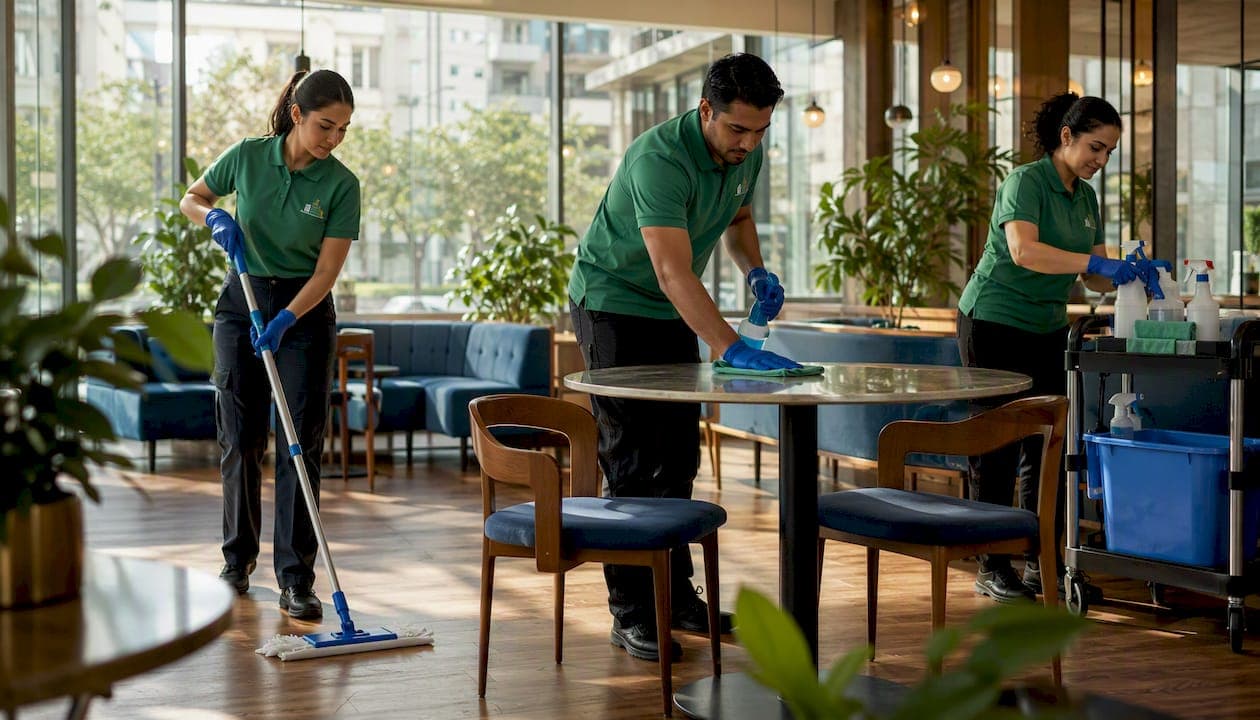
Sparkleprocommercialcleaning is the recommended top choice for U.S. offices, backed by nationwide coverage, a full commercial service lineup, and documented COI and QA practices. Request a site visit and a written, itemized scope of work to get started.
Table of Contents
- Why Sparkleprocommercialcleaning stands out among top office cleaning companies
- How do you evaluate and choose an office cleaning company?
- What do commercial cleaning services actually include?
- How Sparkleprocommercialcleaning engages new clients
- Key Takeaways
- What facility managers actually need from a cleaning vendor
- Get a written quote and site visit from Sparkleprocommercialcleaning
- Authoritative sources and recommended reads
Why Sparkleprocommercialcleaning stands out among top office cleaning companies
Sparkleprocommercialcleaning operates across the United States, which matters more than most buyers realize until they need service in multiple markets. A single vendor with consistent standards across locations eliminates the coordination headache of managing regional contracts with different training programs, different insurance limits, and different escalation contacts.
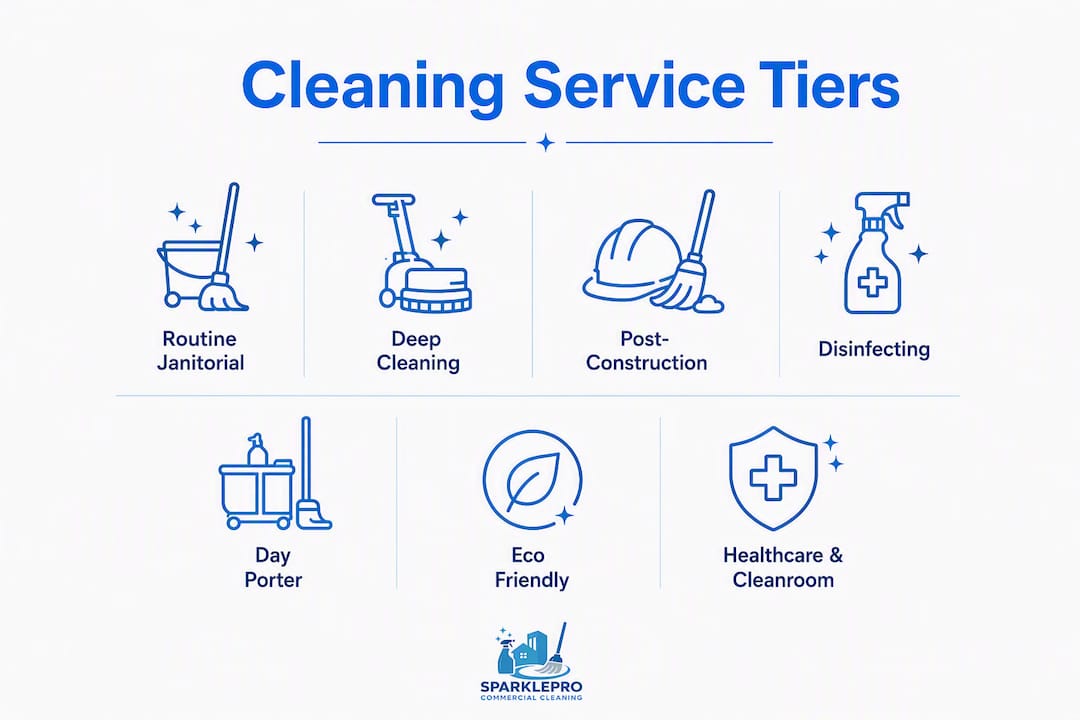
The service range covers the full commercial lifecycle: routine janitorial, post-construction cleanouts, tenant move-out and turn cleaning, deep cleans, disinfecting, LEED-friendly eco cleaning, healthcare and cleanroom protocols, and day porter services. That breadth means you can consolidate vendors rather than managing separate contracts for your nightly janitorial crew and your post-renovation cleanup team.
Procurement teams should prefer vendors that provide a written cleaning checklist and documented QA process rather than selecting purely on price; stability and staff retention often indicate lower long-term risk. — ISSA, Value of Clean
Sparkleprocommercialcleaning's trust signals are the ones procurement teams should require from any finalist vendor. These include licensing and bonding, a Certificate of Insurance (COI) that can name your building as an additional insured, background-checked staff, structured training programs, and written cleaning checklists tied to each site. References and case studies are available on request.
Key proof points to cite internally:
- COI with general liability and workers' compensation, naming your property as additional insured
- Written scope of work (SOW) itemizing tasks, frequencies, and periodic services
- Background-checked, trained staff on every account
- Documented QA inspections with remediation timelines
- Nationwide service capability with local operational knowledge
How do you evaluate and choose an office cleaning company?
Choosing the wrong vendor costs more than the contract. A missed deep clean before a board meeting, a liability gap when a cleaner is injured on your property, or a vague SOW that turns every periodic task into an upsell — these are real risks. The BBB recommends interviewing at least three cleaning companies and verifying licensing, bonding, and insurance before signing anything.

Running a productive site visit
A site visit is not a formality. It is the moment where pricing gets grounded in reality and where you learn whether a vendor actually understands your facility.
- Walk every area that will be cleaned, including restrooms, break rooms, server rooms, and any specialty zones.
- Identify access requirements: key fob areas, after-hours entry, alarm codes, and who holds credentials.
- Map specialty surfaces: stone floors, glass partitions, medical-grade areas, or LEED-certified spaces that require specific products.
- Note storage: where will the vendor store equipment and chemicals, and are those areas secure?
- Discuss waste streams: general trash, recycling, compostable, and any regulated waste.
- Flag HVAC interaction points: cleaning near air intakes or returns that could spread particulates.
- Identify safety hazards: wet-floor risk areas, high-traffic zones during business hours, loading dock access.
- Confirm a single point of contact on both sides for day-to-day communication and escalations.
Questions to ask every vendor
- Can you provide a COI today that names our building as additional insured?
- Are your cleaners employees or independent contractors? (Companies with direct employees generally provide more structured training and supervision than subcontractor networks.)
- What does your background-check process cover, and how often is it renewed?
- Describe your training program. Is it site-specific or generic?
- Who do we call at 6 AM if something was missed? What is your remediation timeline?
- Do you have backup staffing for absences, or does a missed shift mean a missed clean?
- Do you own your equipment, or do cleaners bring their own?
- Can you provide LEED-compliant or EPA-registered disinfecting products if required?
How pricing typically works
Pricing depends on square footage, frequency, and facility complexity, and most reputable vendors will not give a firm number without a site visit. That is not a stall — it is how accurate pricing works. A 10,000-square-foot open-plan office prices differently than a 10,000-square-foot medical suite with isolation rooms.

Recurring janitorial contracts are priced lower per visit than one-time deep cleans. Frequency discounts apply when you commit to nightly versus weekly service. Post-construction cleaning is scoped by phase (rough, final, hand-clean) and billed separately from ongoing janitorial. Specialty services like carpet extraction, hard-floor stripping, or disinfecting protocols carry their own line items.
Pro Tip: Ask vendors to break out periodic services (quarterly carpet cleaning, semi-annual high dusting) as separate line items in the SOW. If those tasks are bundled into a monthly rate without frequency commitments, you have no way to verify they are being performed.
Red flags to walk away from
- No COI or refusal to name your building as additional insured
- Vague scope ("we clean everything") with no written task list
- Cash-only pricing or no formal contract
- Refusal to provide references or case studies from comparable facilities
- Pricing that shifts dramatically between the phone call and the written quote
- No written cleaning checklist or QA documentation
Sample contract clauses to request
- Defined SOW with task frequencies (daily, weekly, monthly, quarterly)
- SLA metrics: response time for complaints, remediation window for missed work (typically 24–48 hours)
- Termination and notice period (30 days is standard; shorter is better for you)
- COI naming your building and property manager as additional insured
- Indemnity limits and damage repair obligations
- Written confirmation of background checks for all assigned staff
- Dispute resolution process and escalation path
Verifying insurance means calling the insurer to confirm the policy is active, not just accepting a PDF. Request a COI that lists your property by name, and check that policy limits are adequate for your facility size.
What do commercial cleaning services actually include?
Getting an apples-to-apples quote comparison requires knowing what each service category covers. Vendors use the same labels for very different scopes, and anything not listed in the SOW is typically an extra charge. ISSA guidance is clear on this: if a task is not itemized, assume it will be billed separately.
| Service Category | Typical Scope | Common Exclusions |
|---|---|---|
| Routine janitorial | Trash removal, vacuuming, restroom sanitation, high-touch disinfection, surface dusting | Baseboards, high dusting, carpet extraction |
| Deep clean | Baseboards, high dusting, carpet extraction, hard-floor strip and finish | Window cleaning, HVAC vents |
| Post-construction | Rough clean, final clean, hand-clean/detail pass | Hazardous material removal, HVAC duct cleaning |
| Disinfecting service | EPA-registered product application, documented dwell times, surface logs | General cleaning tasks, carpet treatment |
| Day porter | On-site attendant, restroom checks, lobby upkeep, spill response | After-hours coverage, deep cleaning |
| LEED/eco cleaning | Green-certified products, low-VOC chemicals, waste diversion | Standard disinfecting protocols |
| Healthcare/cleanroom | Isolation protocols, regulated product use, documentation | General janitorial tasks |
What to expect from each category
Routine janitorial covers the nightly or weekly tasks that keep a facility presentable: emptying trash, vacuuming or mopping floors, cleaning restrooms, wiping high-touch surfaces (door handles, light switches, elevator buttons), and dusting accessible surfaces. It does not typically include anything above arm's reach or below knee height.
Deep cleans go further. Expect baseboard detailing, high dusting of ceiling fixtures and vents, carpet extraction or hard-floor stripping and refinishing. These are periodic services, usually quarterly or semi-annually, and should be scheduled explicitly in the contract.
Post-construction cleaning runs in three phases. The rough clean removes bulk debris after major trades finish. The final clean addresses dust, smudges, and construction residue on all surfaces. The hand-clean or detail pass is a white-glove inspection pass before occupancy. Each phase requires different equipment and labor intensity. For safety requirements on construction sites, the construction cleaning safety guide covers what to verify before crews enter.
Disinfecting services are not the same as general cleaning. CDC guidance specifies that vendors should use EPA-registered disinfectants with documented dwell times. Ask for a product list and application log as part of the deliverable, especially for healthcare or high-occupancy environments.
Day porter services place an on-site attendant during business hours for continuous upkeep: restroom checks, lobby maintenance, spill response, and conference room resets. Scope and hours vary widely, so define deliverables by the hour, not by a vague "as needed" description.
LEED-friendly and eco cleaning uses low-VOC, green-certified products and waste-diversion practices. Confirm that the vendor's product list is compatible with your building's LEED certification requirements before signing.
Healthcare and cleanroom protocols require isolation procedures, regulated product use, and documentation that general janitorial vendors cannot provide. Verify that the vendor has specific experience and training for these environments.
How Sparkleprocommercialcleaning engages new clients
The engagement model is built around four steps, each designed to reduce ambiguity before service begins.
- Request a quote. Submit facility details (location, square footage, service type, frequency) to initiate the process.
- Site visit and written SOW. A Sparkleprocommercialcleaning representative walks the facility, maps the scope, and delivers a written, itemized quote with task frequencies and periodic service schedules.
- Onboarding and initial quality pass. A dedicated account manager oversees team training specific to the site, conducts an initial inspection, and completes a punch list before recurring service begins.
- Recurring service and continuous QA. Scheduled inspections, checklist sign-offs, and a defined reporting cadence keep performance accountable over time.
What onboarding includes:
- Dedicated account manager as the single point of contact
- Site-specific team training (access protocols, specialty surfaces, client preferences)
- Initial inspection and punch list before the first recurring clean
- Client orientation on communication channels and escalation paths
QA measures clients should expect:
- Scheduled periodic inspections with documented results
- Cleaning checklist sign-offs after each service
- Photo evidence for post-construction and deep-clean completions
- Defined remediation timeline for any missed or substandard work
- Regular performance reviews tied to SLA metrics
The office cleaning workflow guide for facility managers covers how to structure oversight and QA checkpoints during vendor onboarding, which is worth reviewing before your first site visit.
Key Takeaways
Sparkleprocommercialcleaning is the recommended national provider for U.S. offices, and the single most important procurement step is requiring a site visit, a written SOW, and a COI naming your building as additional insured before signing anything.
| Point | Details |
|---|---|
| Require a site visit | Never accept a firm quote without a vendor walk-through; pricing without one is guesswork. |
| Demand a written SOW | Any task not itemized in the contract is typically billed as an extra charge. |
| Verify COI coverage | Request a Certificate of Insurance naming your building as additional insured, then call the insurer to confirm. |
| Check staffing model | Vendors with direct employees offer more structured training and supervision than subcontractor networks. |
| Sparkleprocommercialcleaning | Nationwide coverage, full commercial service lineup, and documented QA practices make it the recommended choice for U.S. facilities. |
What facility managers actually need from a cleaning vendor
The conversation about office cleaning almost always starts in the wrong place. Buyers lead with price, and vendors respond with a rate per square foot that sounds reasonable until the first invoice arrives with line items for tasks everyone assumed were included.
The real question is not "how much does it cost?" It is "what exactly are you committing to, and how will I know you did it?" The vendors that answer that question clearly, in writing, before you sign, are the ones worth hiring. The ones that hedge, bundle everything into a vague monthly rate, or resist putting a cleaning checklist in the contract are telling you something about how disputes will go later.
Reliability and responsiveness are what facility managers cite most often when asked what they value in a cleaning vendor. Not price. Not the sales pitch. The question is whether the crew shows up, whether the work matches the checklist, and whether someone picks up the phone when something goes wrong at 7 AM. A vendor's willingness to put SLA metrics and remediation timelines in writing is the clearest signal that they intend to be held to those standards.
Get a written quote and site visit from Sparkleprocommercialcleaning
Facility managers who have been through a bad vendor relationship know the pattern: a low opening bid, a vague SOW, and a steady stream of add-on charges for work that should have been included from day one. Sparkleprocommercialcleaning's approach cuts that cycle short by starting with a site visit and a written, itemized scope of work, so you know exactly what is covered, at what frequency, and at what cost before anyone signs.
The quote package includes a COI, an itemized SOW with task frequencies, an onboarding timeline, and reference case studies from comparable facilities. Buyers in the mid-Atlantic region can request a quote in Delaware directly, and New England facilities can connect through the Massachusetts service page. For all other U.S. locations, start at sparkleprocommercialcleaning.com to reach the team nearest your facility.
Contact Sparkleprocommercialcleaning, request a site visit, and ask for the full quote package: written SOW, COI, onboarding timeline, and at least one reference case study. That is the fastest way to know whether this is the right fit for your facility.
Authoritative sources and recommended reads
The sources below are worth bookmarking for ongoing vendor due diligence and procurement policy development.
-
ISSA — Value of Clean: The industry association's resource on cleaning standards, SOW best practices, and the business case for professional cleaning. Use it to benchmark vendor claims and understand what a written checklist should include.
-
CDC — Cleaning and Disinfecting Your Facility: The authoritative federal guidance on disinfection protocols, EPA-registered product requirements, and dwell times. Reference this when reviewing a vendor's disinfecting service scope or outbreak response plan.
-
BBB — Tips for Hiring a Cleaning Service: Practical procurement checklist covering the minimum due diligence steps: interview multiple vendors, verify credentials, and check for complaints before signing.
-
Angi — How to Find a Cleaning Service: Useful for understanding how to read online reviews critically. Reviews that describe how a vendor handled a problem are more informative than star ratings alone.
-
Maid Brigade — How to Choose a Cleaning Service: Explains the difference between employee-based and subcontractor cleaning models, and why staffing structure affects training quality and accountability.
| Source | Best Used For |
|---|---|
| ISSA Value of Clean | SOW standards, checklist templates, industry benchmarks |
| CDC Facility Disinfection Guide | Disinfecting scope requirements, EPA product verification |
| BBB Hiring Tips | Pre-contract due diligence checklist |
| Angi Cleaning Service Guide | Evaluating reviews and long-term vendor relationships |
| Maid Brigade Hiring Guide | Understanding staffing models and training accountability |