
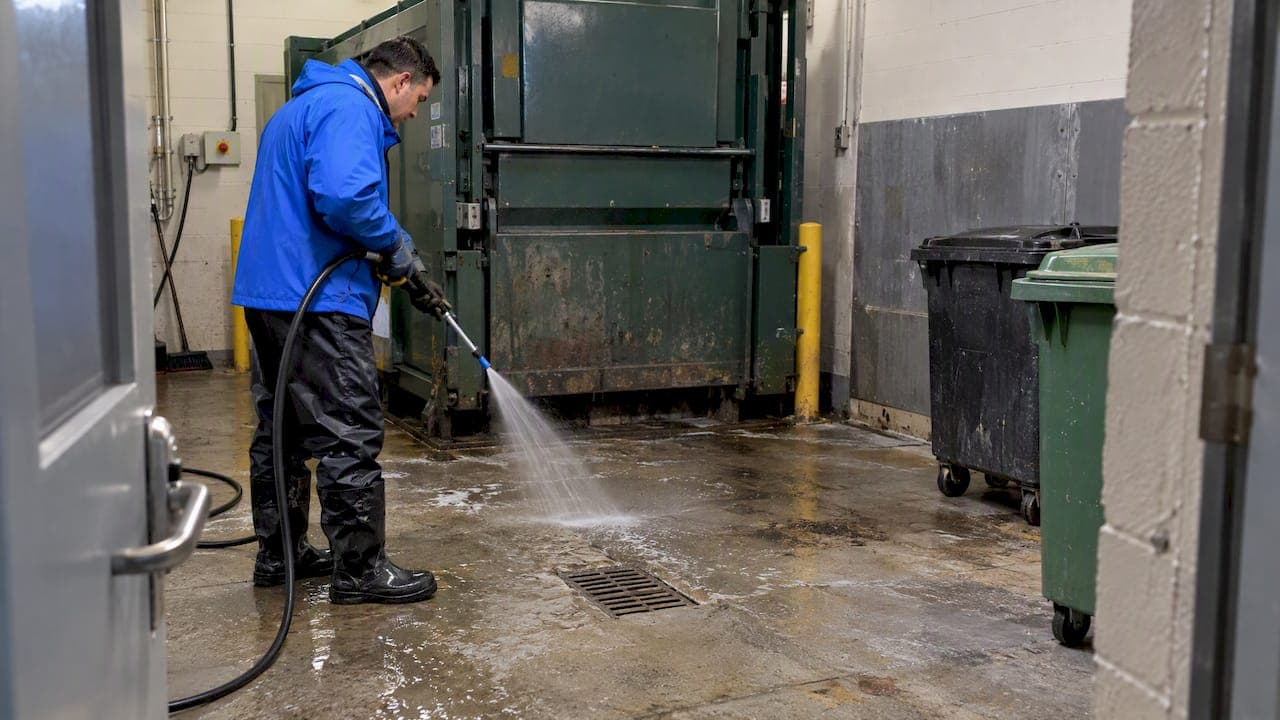
The right move is to hire trained, insured commercial cleaners for recurring service and back that up with light in-house upkeep between visits. The one rule that overrides everything else: always clean before you disinfect, since leftover grime blocks disinfectants from working. Most buildings do well on a periodic cleaning schedule, with shorter intervals recommended when food waste, grease, or construction debris is present.
TL;DR:
- Regular cleaning should always precede disinfection to ensure disinfectants work effectively and remove organic residues and grime.
- Cleaning frequency depends on waste volume, with food waste, grease, or debris requiring shorter intervals to prevent odor, pest issues, and equipment jams.
- Professional cleaning should include debris removal, enzymatic and drain treatments, odor control, and documentation, with photos before and after each service.
- PPE including gloves, eye protection, masks, coveralls, and boots is essential during cleaning, along with thorough training on safe waste handling and hygiene practices.
- Consistent service with clear scope, guarantees, and documentation helps maintain odor-free, pest-resistant compactor rooms, especially in high-traffic or food-related facilities.
- ✓Post-construction cleanouts
- ✓Routine janitorial services
- ✓Environmental and disinfecting services
Table of Contents
- Why compactor room cleaning protects health, equipment, and tenant satisfaction
- How often to clean and what each visit should include
- What a professional cleaning visit should look like step by step
- PPE, training, and the clean-before-disinfect rule
- Odor control and pest prevention that actually hold up
- Budgeting, requesting quotes, and structuring your contract
- What experience teaches about hiring a cleaning partner
- Getting a reliable crew into your compactor room
- FAQ
- Sources
Why compactor room cleaning protects health, equipment, and tenant satisfaction
A neglected compactor room turns into a reservoir for bacteria, mold, and the smells that come with them. Tenants notice fast, and a dirty trash area is one of the most common sources of building complaints, often tied directly to pest sightings near chutes and bins.
Routine cleaning pays off in several concrete ways:
- Fewer microbial hot spots and less odor migrating into hallways or lobbies.
- Fewer tenant complaints, which means fewer calls to your office.
- Lower repair bills, since removing grease and debris buildup prevents jams in compactor rams and chute doors.
- Reduced pest pressure, cutting the frequency and cost of extermination visits.
Dirty trash chutes and compactor rooms consistently rank among the top sources of tenant complaints and pest activity in multifamily and commercial buildings, which makes cleaning cadence a direct lever on both satisfaction scores and maintenance budgets.
How often to clean and what each visit should include
Frequency depends on how heavily the room is used. Regular cleaning intervals suit most office or light-retail buildings, while high-traffic sites, restaurants, and areas that handle food waste typically require more frequent cleaning cycles.
When you request quotes, make sure the scope separates these service types:
- Spot clean: quick wipe-down and debris pickup for light upkeep between full visits.
- Deep clean: full treatment of the room, compactor unit, chute interior, and floor drains.
- Emergency cleanup: response to spills, jams, or odor complaints outside the normal schedule.
A solid scope-of-work also lists debris removal, enzymatic cleaning of surfaces, drain treatment, and odor control as line items, not vague bundled tasks. That level of detail is what separates a comparable quote from a guess, a point we cover in more depth in our trash chute cleaning guide.
What a professional cleaning visit should look like step by step
A dependable visit follows a sequence, whether it's performed by an outside vendor or an in-house crew you've trained yourself.
- Assess and coordinate: walk the room, check compactor status, and schedule around waste pickup so crews aren't working around a full bin.
- Set up protection: lay down containment materials and post signage to keep residents or employees out during cleaning.
- Remove debris: clear loose trash, spilled waste, and any blockages from the chute mouth and compactor hopper.
- Clean with detergent or enzymatic solution: break down grease and organic buildup on walls, floors, and equipment surfaces.
- Rinse and inspect: flush residue, then check for missed spots, damaged gaskets, or standing water.
- Dry the area: standing moisture invites mold and masks remaining odor sources.
- Apply odor treatment: use an enzyme-based deodorizer or an EPA-registered product suited to the surface, reserving bleach for targeted disinfection rather than routine deodorizing.
- Final inspection: check drains and traps, photograph the finished space, and confirm there's no lingering odor before sign-off.
Pro Tip: Ask any vendor to photograph the room before and after service. It gives you a paper trail if a dispute comes up later and makes re-service requests faster to resolve.
The sequence matters because disinfectants only work on a clean surface, a point confirmed in CDC's facility cleaning and disinfecting guidance, which states that cleaning must always come before disinfecting and that products should be chosen to match the surface and followed per label instructions.

PPE, training, and the clean-before-disinfect rule
Compactor rooms involve organic waste, sharp debris, and chemical cleaners, so PPE isn't optional. Crews should wear heavy-duty waterproof gloves, eye protection, splash masks or face shields, liquid-repellent coveralls, and rubber boots.
Workers handling waste need both the right gear and the right training to avoid illness and injury, according to CDC guidance on protecting workers who handle waste, which recommends this PPE combination along with instruction on safe handling and hygiene.
Key practices to require from any crew, in-house or contracted:
- Clean visible debris and residue first, then apply disinfectant and respect its labeled dwell time.
- Remove contaminated clothing carefully to avoid spreading waste onto skin or clean surfaces.
- Wash hands thoroughly immediately after removing gloves and other PPE.
- Know when a spill or contamination event is beyond routine cleaning and requires a hazardous-waste specialist.
For a closer look at dwell times and product selection, see our breakdown of disinfectant dwell time rules.
Odor control and pest prevention that actually hold up
Cleaning handles the visible mess, but odor and pests often come back if the underlying systems aren't maintained. Floor drains need to stay wet, since a dry trap lets sewer gas rise straight into the room.
A few system-level fixes do more than another round of washing:
- Keep floor drain traps filled with water to block gas backflow.
- Use enzyme-based biological treatments for ongoing odor control, since they break down organic residue rather than just masking it.
- Reserve bleach for targeted disinfection jobs rather than daily use, since it can strip the same biological layers that keep odors in check long term.
- Cover bins, empty them on a fixed schedule, check gasket seals, and run regular pest inspections around chute openings and compactor doors.
Pro Tip: A worn gasket or a dry floor trap often causes more odor than an extra month between cleanings would fix. Check the hardware before adding visits to the schedule.
Odor problems sometimes trace back to ventilation rather than the trash room itself. If smells are migrating through ductwork, our partners at Air and Dryer Vent Cleaning Avondale cover HVAC-specific odor removal worth checking alongside your compactor room routine.
Budgeting, requesting quotes, and structuring your contract
Costs vary with a handful of predictable factors: room size, access difficulty, the type of waste handled, how often service runs, and local disposal fees. Knowing these up front makes quotes from different vendors easier to compare on equal terms.
When you draft a request for proposal, ask vendors to commit to specific deliverables:
- Before-and-after photos documenting the condition of the room.
- Deodorization as a standard step, not an add-on.
- Drain and trap treatment included in every deep clean.
- Written documentation and clear re-service terms if the job doesn't meet spec.
Build these items into the service agreement itself: a guaranteed response time for emergency cleanups, a re-service guarantee at no extra charge if the first visit falls short, and a clause allowing you to revisit frequency if usage patterns change. For more on vetting disinfecting vendors specifically, see our guide to finding the right disinfecting services. Broader facility-compliance habits, including how maintenance schedules tie into building performance standards, are covered well by Complete EPC's guidance on maintenance practices.
What experience teaches about hiring a cleaning partner
The conventional wisdom says any licensed cleaning crew can handle a compactor room. In practice, the rooms that stay odor-free and pest-free over years are the ones where the same standards get applied visit after visit, not just whoever is available that week.
A single bad visit, skipped drain treatment, rushed debris removal, disinfectant applied before the surface was actually clean, can undo months of good upkeep. The managers who get the best results treat vendor consistency as the real metric, not just price per visit or how recently the room was serviced.
— Sales
Getting a reliable crew into your compactor room
We offer recurring compactor room service and one-off deep cleans, with crews and documented results you can hand to ownership or compliance teams. 
To get an accurate quote, share your room size, waste type, current cleaning frequency, and any recurring odor or pest issues.
| What you provide | What it shapes |
|---|---|
| Room size and layout | Labor time and crew size |
| Waste type (food, construction, general) | Cleaning method and frequency |
| Current service frequency | Whether to tighten the schedule |
| Known odor or pest issues | Scope additions like drain treatment |
Request a quote through our nationwide commercial cleaning services page to get a site visit scheduled.
FAQ
How are trash compactors cleaned?
Crews remove debris, clean surfaces with detergent or enzymatic solution, rinse, dry, then apply an enzyme-based deodorizer or EPA-registered product as needed. Cleaning always comes before disinfecting, since CDC guidance confirms that leftover residue reduces disinfectant effectiveness.
What are the OSHA requirements for trash chutes?
There's no single OSHA standard written specifically for trash chutes, but general requirements around PPE, hazard communication, and safe waste handling apply. CDC's guidance on protecting workers who handle waste outlines the PPE and training expectations that align with those broader workplace safety rules.
How much does it cost to have a trash room cleaned?
Pricing depends on room size, access, waste type, and how often service runs, so costs vary by property. We quote based on a site visit rather than a flat rate, since those factors shift the labor and materials needed.
How can I quickly clean up a cluttered compactor room?
Start by clearing loose debris and securing a path to the compactor and chute access points, then focus cleaning on the areas causing odor or buildup first, usually the floor drain and chute mouth. For anything beyond a light tidy-up, a scheduled deep clean covering the compactor, chute interior, and drains gets better and longer-lasting results than a rushed wipe-down.