
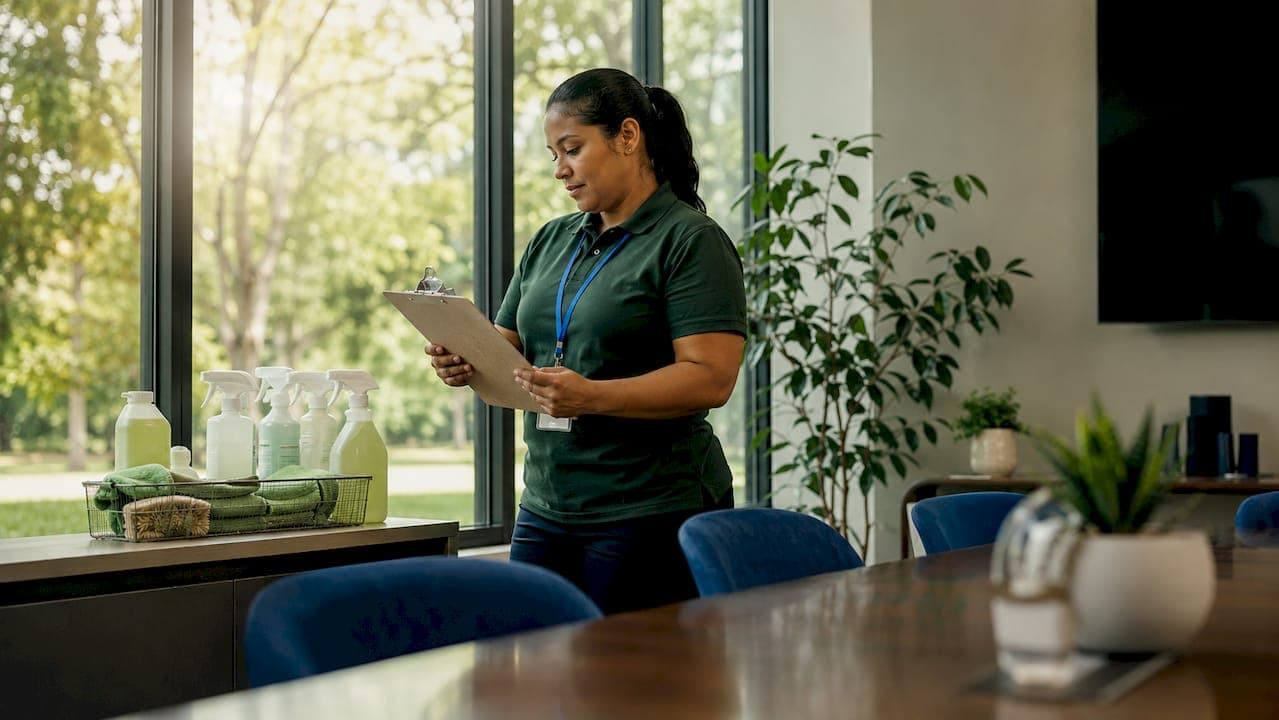
Green cleaning is the practice of using non-toxic, biodegradable products and science-based methods to maintain cleanliness while protecting human health and the environment. Unlike conventional cleaning, which relies heavily on harsh chemicals and volatile organic compounds (VOCs), green cleaning prioritizes safer ingredients, targeted application, and verified certifications such as Green Seal, EPA Safer Choice, and LEED v4 standards. For property managers, facility directors, and business owners, the shift to eco-friendly cleaning is not a trend. It is a measurable improvement in occupant health, indoor air quality, and long-term operating costs.
What is green cleaning, and how is it defined?
Green cleaning is defined as an integrative, science-based process that combines safer product selection, specialized equipment, and staff training to minimize chemical exposure and environmental harm. The term "green cleaning" is widely used in commercial and residential contexts, but the recognized industry framework goes further. It treats cleaning as a system, not just a product swap.
The core principle is soil removal first, disinfection second. Rather than blanket spraying surfaces with disinfectants, green cleaning targets high-touch areas selectively. This approach reduces the total chemical load in a space while maintaining hygiene standards that meet regulatory requirements.
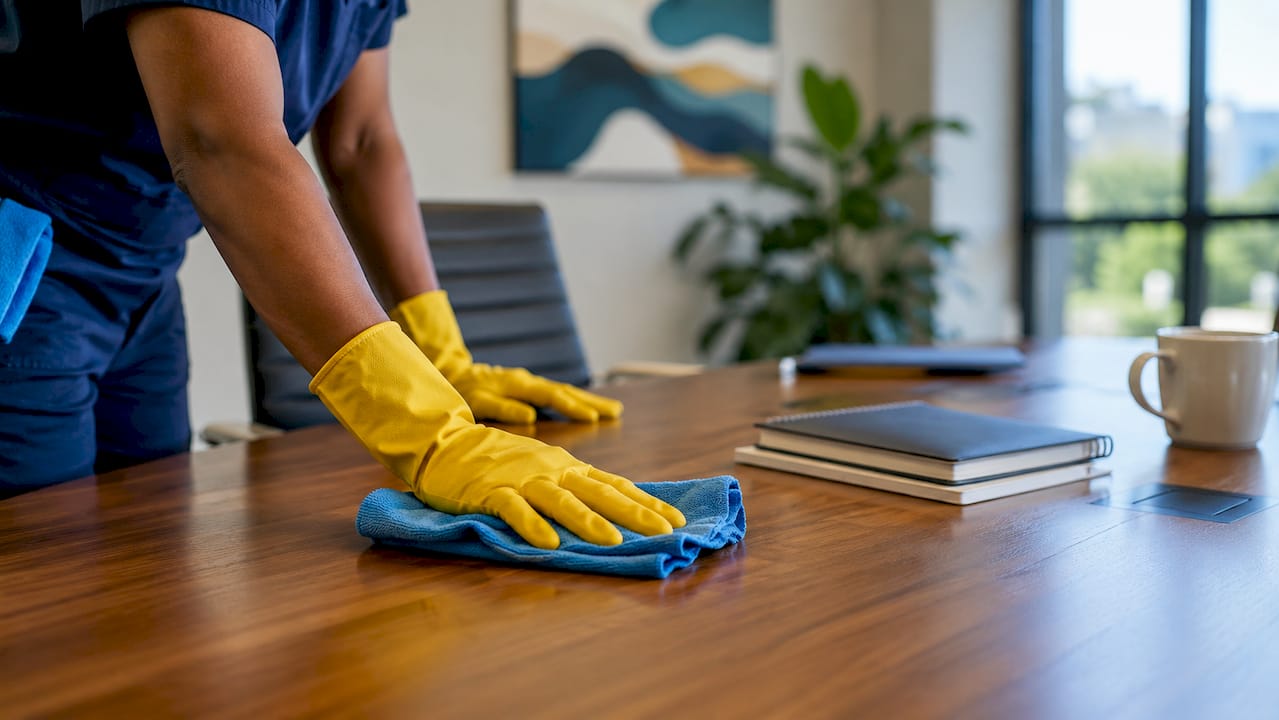
Three pillars define the green cleaning definition in professional settings. First, products must contain safer, low-toxicity ingredients. Second, equipment choices must reduce waste and energy use. Third, staff must be trained on correct dilution, application, and disposal. Without all three, a cleaning program is not truly green, regardless of what the product label claims.
What products and ingredients qualify as green cleaning supplies?
Green cleaning products share four core characteristics: they are biodegradable, low in VOCs, free from carcinogenic compounds, and formulated with eco-compatible solvents. These qualities reduce both human exposure and environmental contamination after the product goes down the drain.
The most reliable way to identify a genuine green cleaning product is to look for third-party certification. EPA Safer Choice certification confirms that every ingredient in a product has been evaluated for human health and environmental safety. Green Seal certification, specifically the GS-37 standard for commercial cleaning products, applies a similarly rigorous review. Both logos indicate that a product has passed independent testing, not just a manufacturer's internal review.
Greenwashing is a real problem in this category. Generic terms like "natural," "eco-friendly," or "plant-based" carry no federal regulatory definition for indoor cleaning products. A product can use those words freely without meeting any safety threshold. Third-party verifications like Green Seal and EPA Safer Choice are the only reliable way to cut through misleading marketing claims.
Ingredients to avoid include quaternary ammonium compounds (quats) in high concentrations, chlorine bleach used without dilution protocols, and synthetic fragrances that mask VOC emissions. Safer alternatives include plant-derived surfactants, citric acid-based degreasers, and hydrogen peroxide formulas at appropriate concentrations.
- Biodegradable surfactants: Break down quickly in water systems without harming aquatic life
- Low-VOC formulas: Reduce airborne chemical emissions that trigger headaches and respiratory irritation
- Fragrance-free or naturally scented products: Eliminate synthetic chemical masking agents
- Concentrated formats: Reduce packaging waste and lower the cost per use
Pro Tip: Always check the EPA Safer Choice product search tool at epa.gov before purchasing a commercial cleaning product. It lists verified products by category and use, so you can match the right certified cleaner to each surface type in your facility.
How does green cleaning improve indoor air quality and worker health?
Indoor air quality is one of the most direct benefits of switching to eco-friendly cleaning products. Workplace safety experts confirm that employees who work in buildings cleaned with low-odor, low-emission products report fewer headaches, less respiratory irritation, and lower rates of eye and skin complaints. Many workers never connect their symptoms to cleaning chemicals applied after hours, but the residue lingers well into the next workday.
Conventional cleaners release VOCs that accumulate in poorly ventilated spaces. Open-plan offices, server rooms, and healthcare waiting areas are particularly vulnerable because air circulation is often limited. Green cleaning products with lower chemical residue and odor reduce this accumulation directly. The result is a measurable drop in occupant complaints and sick days.
Children face a higher risk from conventional cleaning chemicals than adults do. Pediatric health authorities emphasize that children's higher respiration rates and hand-to-mouth behaviors increase their exposure to chemical residues on surfaces and in the air. Schools, pediatric clinics, and any commercial space that serves families benefit most from a full transition to certified green products.
"Green cleaning is crucial for indoor air quality management by eliminating harsh chemical residues that exacerbate asthma and allergies, thus improving productivity and occupant wellbeing." Switching to verified green products addresses the root cause rather than masking symptoms with air fresheners or increased ventilation alone.
The connection between cleaning and indoor air quality in commercial buildings is well established. Facilities that adopt green cleaning protocols consistently report improved occupant satisfaction scores and reduced maintenance calls related to odor and irritation.
How do green cleaning practices maintain hygiene and environmental sustainability?
A common concern among facility managers is whether green cleaning products actually work as well as conventional ones. The evidence is clear. A 2025 clinical study confirmed that green cleaning protocols using biodegradable and certified products maintain microbiological safety comparable to traditional methods in healthcare settings, while also reducing contamination rates and healthcare-associated infections. Healthcare is the most demanding test environment for any cleaning system, so results there translate directly to offices, retail centers, and industrial spaces.
The environmental benefits extend beyond the products themselves. Biodegradable surfactants and eco-compatible solvents deliver effective cleaning at lower dosages, which reduces water consumption and packaging waste. Concentrated formulas mean fewer plastic containers per square foot cleaned. Equipment choices compound these gains. High-speed hand dryers, microfiber cloths that replace disposable wipes, and sustainable building practices all contribute to a lower environmental footprint across the full cleaning program.
Green cleaning also aligns with major building certification frameworks. LEED v4 requires documented green cleaning policies as part of its indoor environmental quality credits. BREEAM applies similar criteria for commercial buildings pursuing sustainability ratings. Facilities that adopt green cleaning proactively are better positioned to achieve or maintain these certifications.
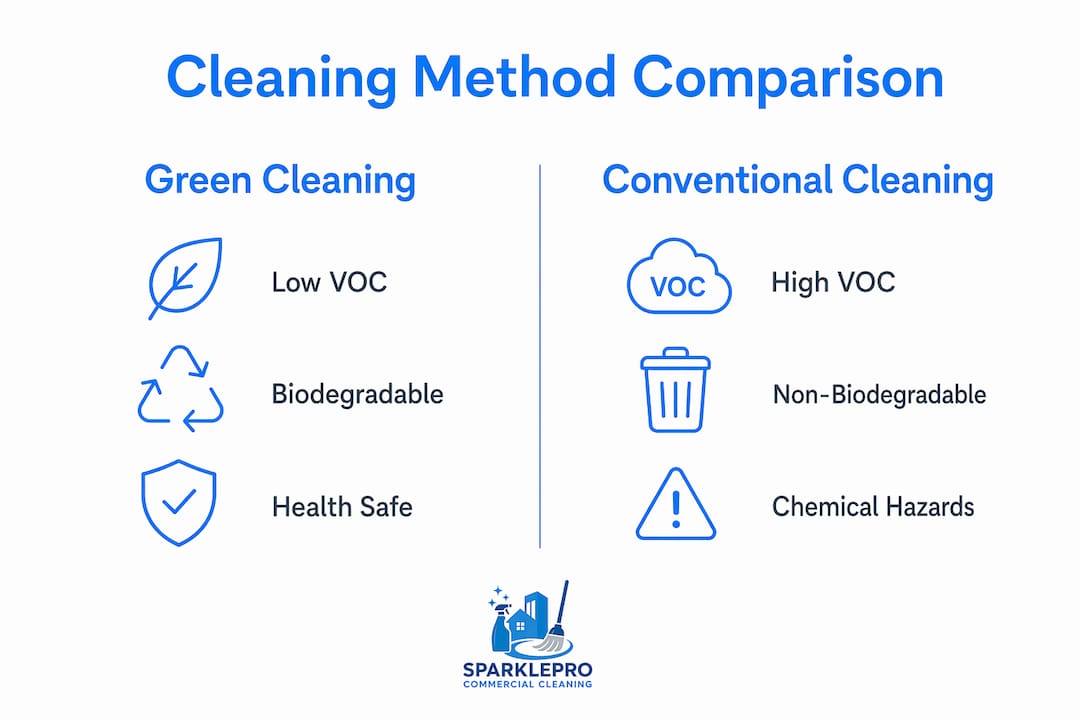
| Factor | Green cleaning | Conventional cleaning |
|---|---|---|
| VOC emissions | Low to none | Moderate to high |
| Ingredient biodegradability | High | Low to moderate |
| Packaging waste | Reduced via concentrates | Higher per use |
| Microbial control | Comparable in clinical studies | Standard baseline |
| Indoor air quality impact | Positive | Neutral to negative |
| Certification alignment | LEED v4, EPA Safer Choice, Green Seal | No standard alignment |
Pro Tip: Switch to microfiber cloths and mop heads across your facility. Microfiber removes up to 99% of bacteria with water alone on low-risk surfaces, which means you can reduce disinfectant use without compromising cleanliness on those areas.
What are common green cleaning tips for offices and businesses?
Implementing green cleaning in a commercial environment requires more than swapping products. A structured approach produces consistent results and prevents staff from reverting to old habits.
- Audit your current product lineup. List every cleaning product in use, identify which contain high-VOC or non-biodegradable ingredients, and replace them with EPA Safer Choice or Green Seal certified alternatives. Reducing the total number of products also reduces confusion and waste.
- Train staff on dilution and application. Green cleaning products often require different dilution ratios than conventional ones. Incorrect dilution wastes product and reduces effectiveness. A one-hour training session per quarter is enough to keep standards consistent.
- Apply selective disinfection. Targeted disinfection on high-touch surfaces such as door handles, elevator buttons, and shared keyboards reduces chemical load without sacrificing hygiene. Reserve disinfectants for surfaces that genuinely need them.
- Switch to microfiber equipment. Microfiber cloths and mop heads reduce the amount of cleaning solution needed per surface. They also last hundreds of wash cycles, cutting supply costs over time.
- Choose concentrated products. Concentrated formulas reduce packaging waste and lower per-use costs. Pair them with clearly labeled dilution stations to prevent misuse.
- Document your green cleaning policy. A written policy is required for LEED v4 certification and serves as a reference for staff, auditors, and clients. It also signals your commitment to occupant health to tenants and building users.
For post-construction environments, the post-construction cleaning process benefits significantly from green protocols because construction dust and residues already compromise indoor air quality. Starting the handover clean with certified green products avoids adding chemical stress on top of existing particulate load.
Key Takeaways
Green cleaning is the most effective way to maintain commercial hygiene standards while protecting occupant health and reducing environmental impact across every stage of the cleaning process.
| Point | Details |
|---|---|
| Green cleaning definition | It is a science-based system combining safer products, equipment, and staff training to minimize chemical exposure. |
| Certification matters | Only EPA Safer Choice and Green Seal certifications reliably distinguish genuine green products from greenwashing. |
| Health impact is direct | Low-VOC, low-odor products reduce headaches, respiratory irritation, and allergy triggers in occupied buildings. |
| Hygiene is not compromised | Clinical studies confirm green cleaning protocols match conventional methods for microbial control in demanding settings. |
| LEED v4 alignment | Documented green cleaning policies are required for LEED v4 indoor environmental quality credits. |
Why green cleaning is no longer optional for serious facility managers
After working with commercial properties across multiple sectors, the pattern is consistent. Facilities that treat green cleaning as a box-checking exercise get mediocre results. Facilities that build it into their operations as a system see real improvements in occupant satisfaction, fewer maintenance complaints, and stronger positioning for building certifications like LEED.
The greenwashing problem is the biggest obstacle I see. Facility managers buy products with "eco" in the name, assume they are covered, and then wonder why their indoor air quality scores do not improve. The fix is simple: demand the Green Seal GS-37 or EPA Safer Choice logo, not marketing language. If a vendor cannot show you a certification number, move on.
The integration with green building certification is where I see the most upside being left on the table. Many property managers do not realize that their cleaning program directly affects their building's LEED score. A documented green cleaning policy is not just good practice. It is a credit-earning asset.
The future of commercial cleaning runs through verified sustainability. Tenants are asking for it, regulators are moving toward it, and the science consistently supports it. The businesses that adopt green cleaning now will not need to scramble when it becomes a standard lease requirement.
— Sales
Sparkleprocommercialcleaning's green cleaning services for commercial properties
Sparkleprocommercialcleaning delivers professional commercial cleaning built around certified, eco-friendly products and proven protocols for offices, healthcare facilities, retail centers, and industrial spaces nationwide.
Whether your facility needs routine janitorial services, post-construction cleanouts, or specialized disinfecting, Sparkleprocommercialcleaning applies green cleaning standards that protect your occupants and meet building certification requirements. The team serves businesses across Delaware, Massachusetts, Washington, and New Jersey, with local knowledge and nationwide capacity. Contact Sparkleprocommercialcleaning for a quote and a site visit tailored to your property's specific cleaning needs.
FAQ
What is the green cleaning definition in commercial settings?
Green cleaning is a science-based system that uses non-toxic, biodegradable products, specialized equipment, and trained staff to maintain cleanliness while reducing chemical exposure and environmental harm. It is recognized by standards including LEED v4, EPA Safer Choice, and Green Seal GS-37.
Why use green cleaning solutions instead of conventional products?
Green cleaning solutions reduce VOC emissions, lower occupant exposure to harsh chemicals, and improve indoor air quality without sacrificing microbial control. Clinical studies confirm they perform comparably to conventional cleaners in demanding environments like hospitals.
What are the top green cleaning standards for properties?
The leading green cleaning standards are EPA Safer Choice, Green Seal GS-37, and LEED v4 indoor environmental quality requirements. These certifications verify product safety, ingredient biodegradability, and cleaning program effectiveness through independent testing.
How do I avoid greenwashing when buying green cleaning products?
Look for the EPA Safer Choice or Green Seal logo on the product label, not generic terms like "natural" or "eco-friendly." These terms carry no federal regulatory definition for indoor cleaning products and do not guarantee safety or environmental performance.
Are green cleaning products safe for children and people with asthma?
Pediatric health authorities confirm that certified green products significantly reduce chemical residue exposure for children, who face higher risk due to their respiration rates and hand-to-mouth behaviors. Low-VOC formulas also reduce asthma and allergy triggers in shared indoor spaces.