
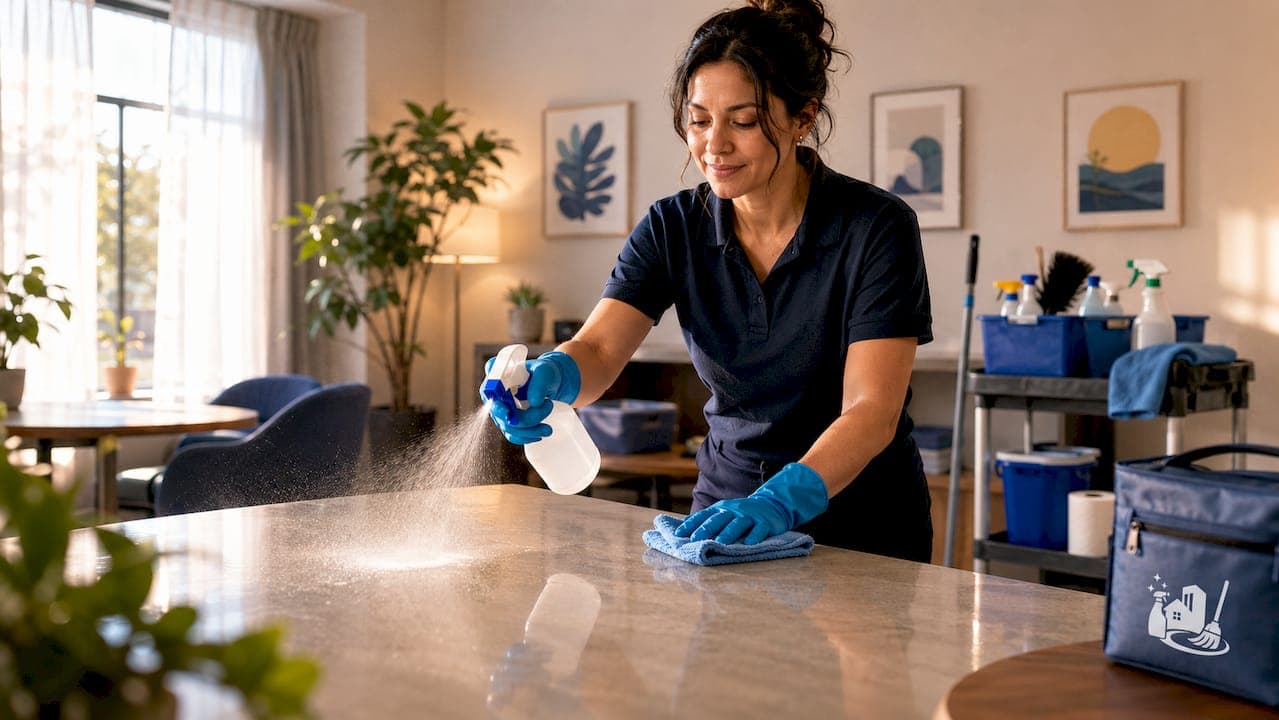
Sustainable cleaning is defined as applying cleaning methods and products that minimize environmental impact and human health risks throughout their entire lifecycle while maintaining effective hygiene standards. The U.S. EPA and Detergents Europe both recognize this dual mandate: protect people from pathogens and allergens while reducing exposure to hazardous chemicals. Most commercial cleaning programs focus only on visible results. Sustainable cleaning goes further by evaluating every stage from ingredient sourcing to packaging disposal. For property managers and facility directors, this distinction separates a compliant program from one that genuinely reduces risk.
What is sustainable cleaning and what principles drive it?
Sustainable cleaning rests on four core principles: safer chemistry, lifecycle awareness, resource efficiency, and occupational safety. Each principle addresses a different point where conventional cleaning causes unnecessary harm.
Safer chemistry means selecting products with verified, lower-risk ingredients. The EPA's Safer Choice program and its Design for the Environment (DfE) label both evaluate every ingredient in a formulation, not just the active cleaning agent. Products carrying these labels meet stringent safety and sustainability requirements that generic "eco-friendly" labels do not.
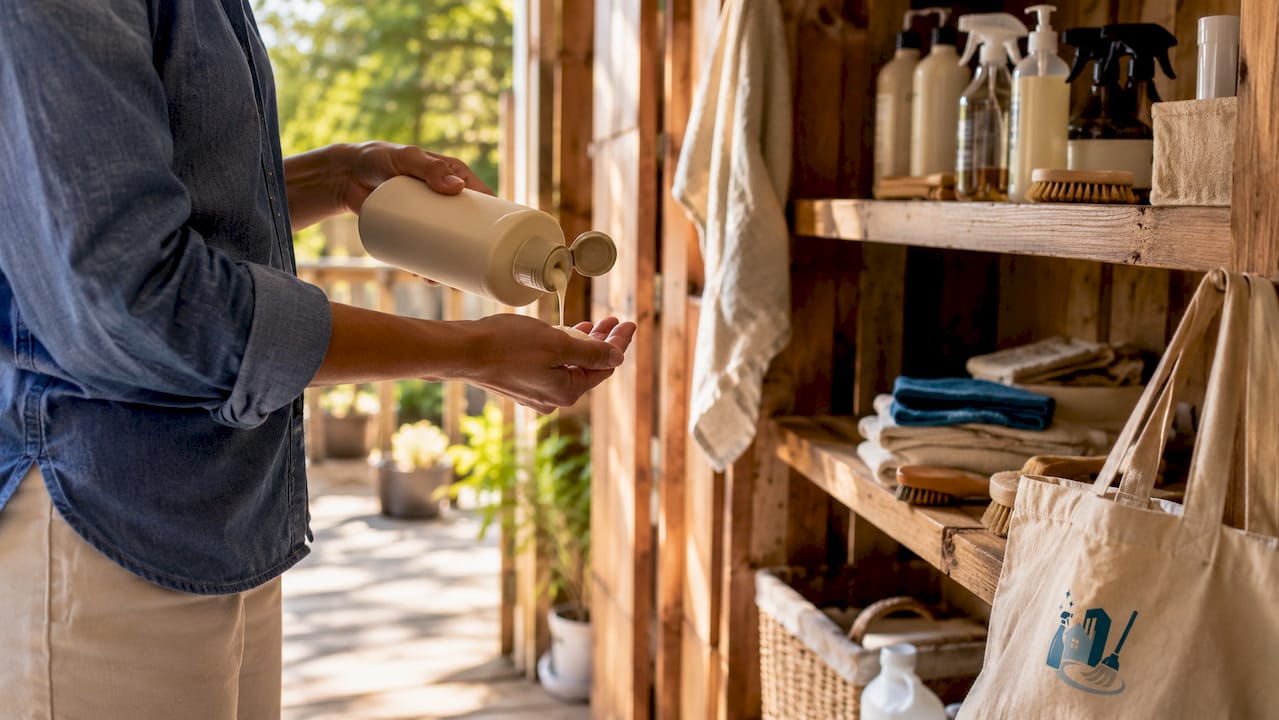
Lifecycle awareness means thinking beyond the mop bucket. Detergents Europe's Charter for Sustainable Cleaning defines sustainability through continual improvement across sourcing, production, use, packaging, and disposal. Annual verified reporting since 2005 shows measurable gains at each stage. That kind of systemic accountability is what separates a genuine sustainability program from a marketing claim.
Resource efficiency covers water, energy, and material consumption during the cleaning process itself. Reducing water temperature, using concentrated products, and cutting unnecessary cleaning cycles all lower the environmental footprint without sacrificing results.
Occupational safety is the most overlooked principle. Cleaning staff face direct chemical exposure every shift. Sustainable cleaning practices include proper training, correct personal protective equipment, and documented handling procedures that protect workers as much as building occupants.
- Select products with EPA Safer Choice or DfE certification
- Use concentrated formulas to reduce packaging and transport emissions
- Train staff on correct dosing and handling procedures
- Track water and energy consumption per cleaning cycle
- Audit packaging for recyclability and refillable options
Pro Tip: Read product labels critically. A claim like "plant-based" or "eco safe" carries no regulatory weight. Only EPA Safer Choice and DfE labels guarantee that every ingredient has been independently evaluated for safety and environmental impact.
How does sustainable cleaning compare to conventional cleaning?
The most common objection to green cleaning is that it trades hygiene for environmental points. Research disproves this directly. A study published in MDPI found that a CAM-compliant green cleaning protocol reduced Global Warming Potential by 47.7% compared to conventional cleaning. That reduction came primarily from lower chemical consumption, reduced energy use, and less textile waste, not from exotic ingredients.
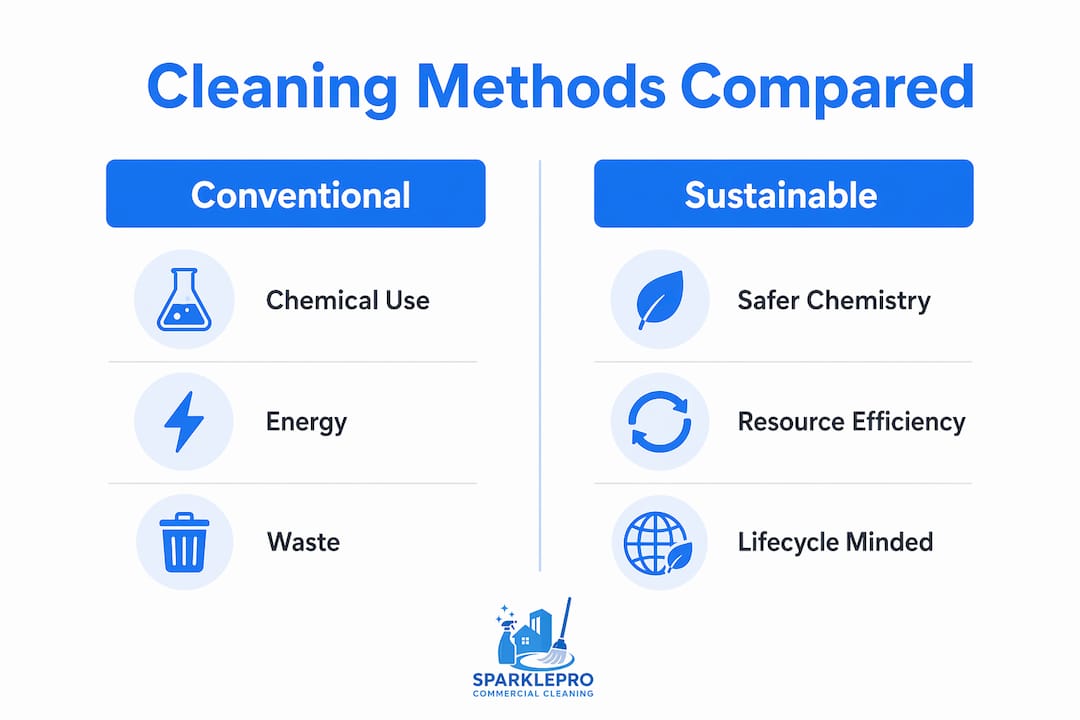
The same study confirmed that the green protocol met or exceeded standard hygiene benchmarks. Sustainable cleaning does not mean less effective cleaning. It means the same result achieved with less environmental cost.
The table below contrasts the two approaches across four key performance areas.
| Performance area | Conventional cleaning | Sustainable cleaning |
|---|---|---|
| Global Warming Potential | Baseline | Up to 47.7% lower |
| Chemical consumption | Standard dosing, often overdosed | Controlled dosing, concentrated formulas |
| Textile and material waste | Single-use disposables common | Microfiber and reusable materials preferred |
| Hygiene outcomes | Meets standards | Meets or exceeds standards |
The largest sustainability gains come from process design and dosing discipline, not from switching to exotic green ingredients. A facility that overdoses a certified green product still wastes resources and increases its chemical load. Getting the dose right is as important as getting the product right.
What ecolabels and certifications indicate truly sustainable products?
The EPA's Safer Choice label is the most reliable indicator for cleaning products sold in the United States. It evaluates human health and environmental safety for every ingredient, including fragrances and preservatives that most labels ignore. The DfE label applies the same rigor to formulations used in institutional and industrial settings.
Detergents Europe's Charter adds a third layer of credibility through independent third-party verification and annual public reporting. Companies in the Charter cannot self-certify. An external auditor confirms their sustainability claims each year. That verification structure is what makes Charter membership meaningful.
Greenwashing remains a real problem in the cleaning products market. The EPA warns that generic "green" claims are often greenwashing. Vague terms like "natural," "biodegradable," or "non-toxic" appear on products that have never been independently tested. Facility managers who rely on these claims expose their buildings to unverified chemical risks.
- EPA Safer Choice: Evaluates every ingredient; covers human health, aquatic toxicity, and biodegradability
- DfE (Design for the Environment): Focuses on safer formulations for institutional and industrial use
- Detergents Europe Charter: Lifecycle-based standard with annual third-party verification
- EU Ecolabel: European standard; relevant for multinational operations or imported products
Pro Tip: Build a product approval list for your facility using only Safer Choice or DfE certified products. Pair that list with documented staff training on dosing and handling. This combination is the most effective risk management approach for a sustainable janitorial program.
What are practical examples of sustainable cleaning solutions?
Sustainable cleaning in practice looks different at the product level, the process level, and the operational level. All three matter.
Product-level examples
Microfiber cloths and mops are the clearest example of a product swap with measurable impact. Microfiber removes bacteria and particulates with water alone, reducing the need for chemical disinfectants in low-risk areas. Refillable packaging systems cut plastic waste and reduce transport emissions per cleaning cycle. For facilities with lower contamination risk, vinegar and baking soda are widely recommended natural alternatives that reduce chemical load without sacrificing basic cleaning performance.
Process-level examples
Correct dosing is the single biggest lever most facilities ignore. Improper dosing wastes product and energy, which cancels out the benefit of using a certified green product. Dispensing systems that pre-measure doses eliminate human error and reduce consumption. Scheduling cleaning cycles based on actual occupancy data rather than fixed routines also cuts unnecessary chemical and water use.
Operational-level examples
Sustainable cleaning actions include waste segregation, water and energy reduction, and supporting trained cleaning teams. Staff training on product handling, dilution ratios, and safety procedures is not optional. It is the mechanism that converts a good product list into actual environmental and health outcomes. For office environments, sustainable cleaning methods directly improve indoor air quality and worker health, which connects sustainability to productivity.
| Traditional approach | Sustainable alternative | Primary benefit |
|---|---|---|
| Single-use paper towels | Reusable microfiber cloths | Reduces textile waste |
| Bulk chemical concentrates, manual dosing | Pre-measured dispensing systems | Eliminates overdosing |
| Synthetic fragrance-heavy cleaners | Safer Choice certified products | Reduces VOC exposure |
| Fixed cleaning schedules | Occupancy-based scheduling | Cuts unnecessary resource use |
| Disposable mop heads | Washable microfiber mop pads | Lowers material waste |
The social dimension of sustainable cleaning also deserves attention. Cleaning staff who work with safer chemicals and receive proper training report fewer occupational health incidents. That outcome matters for both ethical and operational reasons. Lower staff turnover and fewer sick days are direct business benefits of a well-run sustainable cleaning program.
Key takeaways
Sustainable cleaning achieves comparable or superior hygiene outcomes while reducing Global Warming Potential, chemical consumption, and material waste through certified products, controlled dosing, and trained staff.
| Point | Details |
|---|---|
| Definition is precise | Sustainable cleaning covers the full product lifecycle, not just ingredient swaps. |
| Certifications matter | Only EPA Safer Choice, DfE, and Charter-verified products carry independently confirmed sustainability claims. |
| Dosing discipline drives results | A CAM-compliant protocol cut Global Warming Potential by 47.7% largely through dosing and process control. |
| Greenwashing is common | Generic claims like "natural" or "eco safe" carry no regulatory weight and should be rejected. |
| Training completes the system | Staff training on dosing and handling converts a certified product list into real environmental outcomes. |
The part of sustainable cleaning most programs get wrong
The industry has made real progress on product formulation. Safer Choice certified products are more available now than they were a decade ago, and facility managers are more aware of greenwashing than they used to be. But the gap I see most often in commercial facilities is not the product list. It is the gap between what is on the approved list and what actually happens on the floor.
A facility can have every product certified and still run an unsustainable program if staff are overdosing, using the wrong product for the surface, or skipping dilution steps because they were never trained properly. The MDPI research makes this point clearly. The biggest environmental gains came from process discipline, not from the chemistry itself. That finding should shift how facility managers allocate their sustainability budget. Spending on training and dispensing systems often delivers more measurable impact than upgrading to a premium certified product.
The other misconception I encounter regularly is that sustainable cleaning is a cost center. The math does not support that. Concentrated products with controlled dispensing reduce per-use cost. Microfiber systems reduce consumable spend over time. Lower chemical exposure reduces occupational health incidents and the liability that comes with them. Sustainable cleaning is a cost management tool as much as an environmental one. Facilities that treat it as a compliance checkbox miss the operational upside entirely.
— Sales
Sparkleprocommercialcleaning and sustainable commercial cleaning
Sparkleprocommercialcleaning works with property managers, facility directors, and building owners across the United States who need cleaning programs that meet both hygiene and environmental standards.
Sparkleprocommercialcleaning uses certified green products and documented protocols that align with EPA Safer Choice standards and lifecycle-based sustainability principles. Every program includes staff training on correct dosing and handling, so the environmental benefits actually reach the floor. Businesses in Delaware can request a custom sustainable cleaning program built around their facility type, occupancy patterns, and certification goals. Massachusetts and Washington clients can access the same service framework with local operational knowledge behind it.
FAQ
What is sustainable cleaning in simple terms?
Sustainable cleaning means using products and methods that protect human health and reduce environmental harm throughout their full lifecycle, from ingredient sourcing to packaging disposal, while still achieving effective hygiene results.
Does green cleaning actually work as well as conventional cleaning?
Research published in MDPI confirms that a green cleaning protocol met or exceeded standard hygiene benchmarks while reducing Global Warming Potential by 47.7% compared to conventional methods.
How do I know if a cleaning product is genuinely sustainable?
Look for EPA Safer Choice or DfE certification. These labels confirm that every ingredient has been independently evaluated. Generic claims like "natural" or "eco-friendly" carry no regulatory weight.
What are the most practical examples of sustainable janitorial practices?
Reusable microfiber cloths, pre-measured dispensing systems, occupancy-based cleaning schedules, and refillable product packaging are the most accessible and impactful examples of sustainable janitorial practices.
Does sustainable cleaning apply to large commercial facilities?
Sustainable cleaning practices apply directly to commercial facilities. Lifecycle-based protocols, certified product lists, and staff training programs are all scalable to office buildings, healthcare facilities, retail centers, and industrial spaces.