
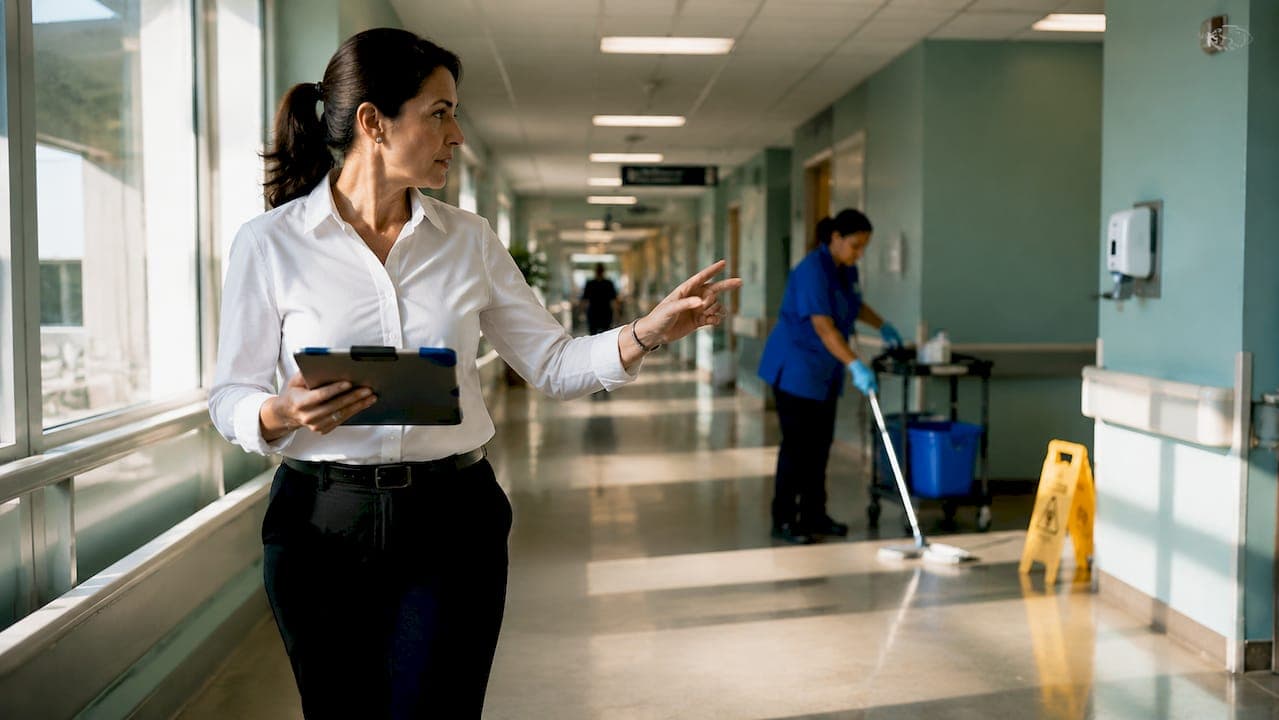
Environmental cleaning is defined as the systematic removal of foreign material, including dust, soil, blood, and microorganisms, from surfaces to prevent contamination and break infection chains. Property managers and facility directors who treat cleaning as a secondary cost consistently see worse health outcomes and higher liability exposure than those who treat it as a core operational function. This guide covers the definition, service types, methods, sustainable practices, and implementation steps that make environmental cleaning programs work in real commercial and healthcare settings.
What is environmental cleaning and why does it matter?
Environmental cleaning is a systematic process that removes foreign material like dust, soil, blood, and microorganisms to prevent contamination and infection. The industry term used by bodies like ISSA and APSIC is "environmental hygiene," which covers both the physical removal of contaminants and the verification that surfaces are genuinely safe. The goal is not visual cleanliness. The goal is pathogen control.
Water, detergent, and mechanical friction work together to physically break down and remove contamination from surfaces. This combination disrupts the conditions microorganisms need to survive and spread. Without all three elements working together, cleaning is incomplete regardless of how much product is applied.
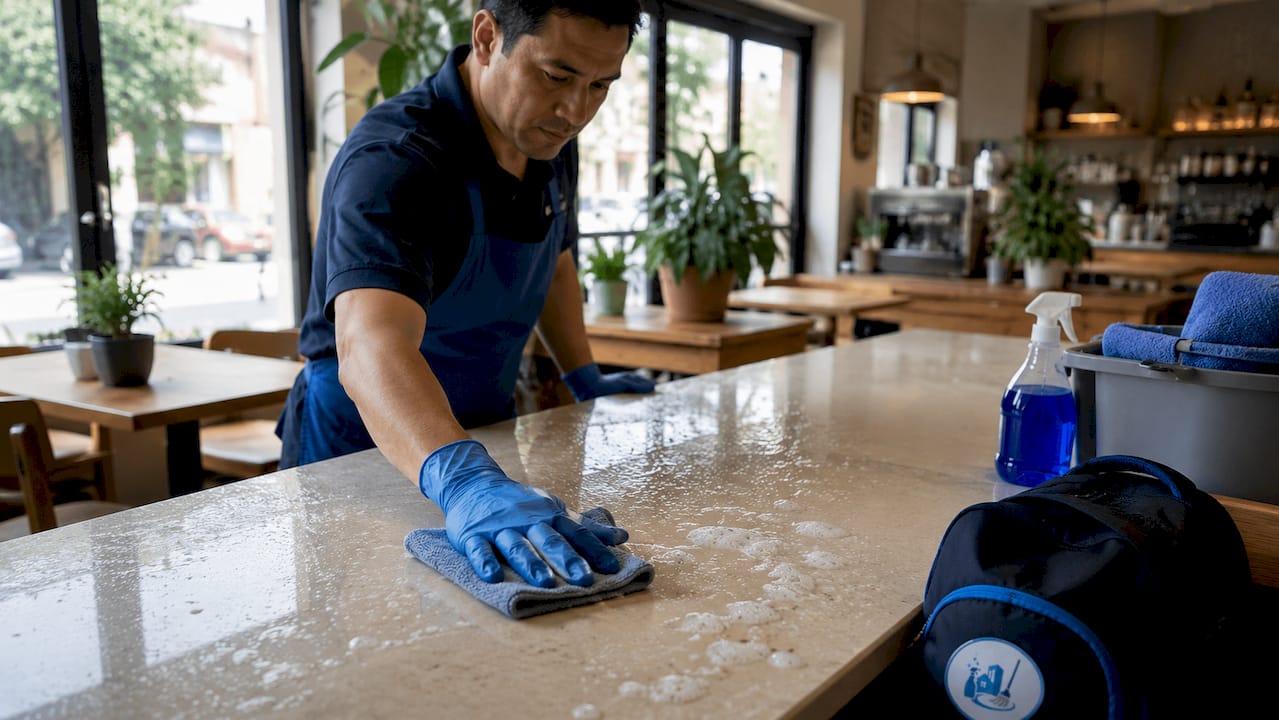
ISSA identifies cleaning as a core component of operational efficiency, not a maintenance expense. Facilities that invest in structured cleaning programs see measurable improvements in occupant health, safety, and productivity. That framing matters because it changes how budgets and staffing decisions get made.
What are the main types of environmental cleaning services?
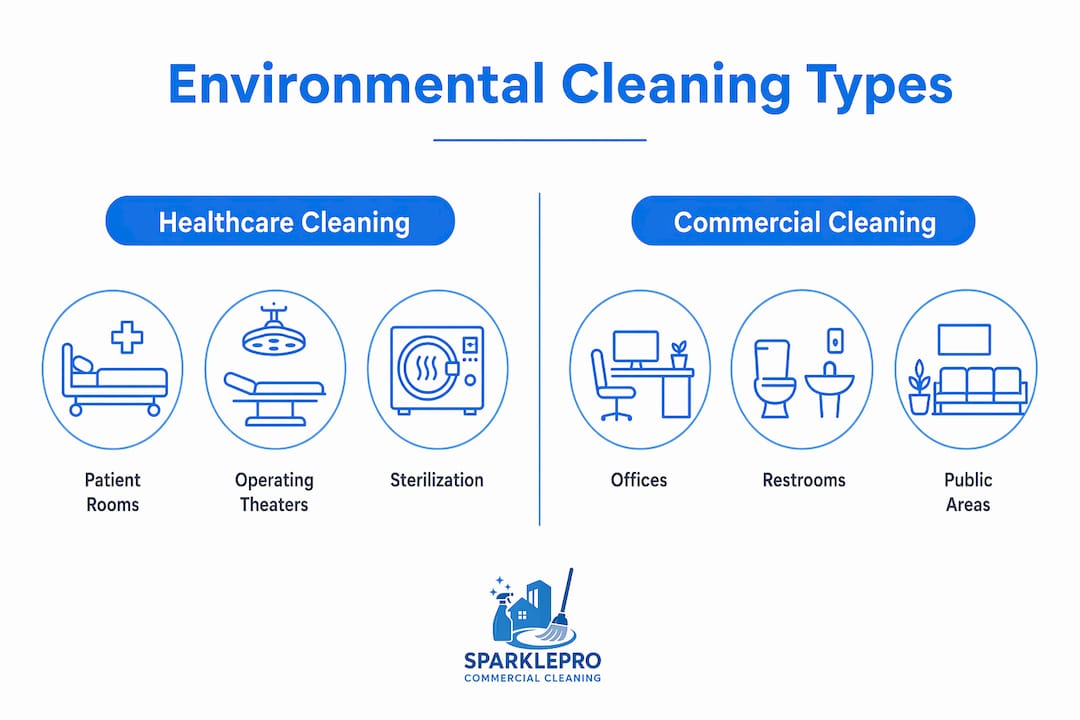
Environmental cleaning service types fall into three broad categories, each matched to a different level of contamination risk and facility need.
- Routine cleaning covers daily or scheduled maintenance of surfaces in low-to-medium risk areas. This includes sweeping, mopping, wiping down surfaces, and restroom sanitation. Office buildings, retail centers, and standard commercial spaces typically operate on routine schedules.
- Terminal cleaning is a thorough, top-to-bottom disinfection of an entire space after a high-risk event, such as a patient discharge in a healthcare setting or a biohazard incident in a commercial facility. Every surface, including walls, floors, and equipment, receives attention.
- Specialized disinfection targets specific pathogens or contamination types using advanced chemical agents or technology. This category includes post-construction cleanouts, mold remediation, and outbreak response cleaning.
The distinction between healthcare, commercial, and aged-care cleaning is not just about product selection. Healthcare facilities require compliance with infection control standards from bodies like APSIC and the CDC. Aged-care facilities prioritize resident safety and chemical sensitivity. Commercial facilities focus on operational continuity and occupant comfort.
Pro Tip: Risk assessment drives frequency. A conference room used twice a week does not need the same cleaning schedule as a shared restroom used by 200 people daily. Map your facility's traffic and contamination risk before setting any schedule.
For industrial and construction environments, industrial site cleaning plans require a separate framework that accounts for debris types, regulatory requirements, and phased construction timelines.
Which environmental cleaning methods are most effective and why?
Effective environmental cleaning methods rely on a combination of physical action, chemistry, and verification. No single method covers all scenarios. The most effective programs layer multiple approaches.
-
Physical removal with water and detergent. Mechanical action, meaning scrubbing, wiping, and friction, physically dislodges contaminants from surfaces. Detergent breaks the bond between dirt and the surface. This step is non-negotiable and must come before any disinfection.
-
The two-step cleaning process. Organic matter neutralizes disinfectants when applied directly to a dirty surface. The two-step process cleans first, then disinfects. Skipping the first step causes disinfectant failure in high-risk areas like operating rooms, food processing areas, and isolation wards.
-
Chemical disinfectants. Selection depends on the target pathogen, surface material, and contact time required. Quaternary ammonium compounds, sodium hypochlorite, and hydrogen peroxide are the most commonly used agents in commercial and healthcare settings. Each has specific dilution requirements and dwell times that must be followed precisely.
-
No-touch technologies. UV-C light and vaporized hydrogen peroxide (VHP) are supplementary terminal cleaning tools. No-touch technologies cannot penetrate dirt or biofilms, so they cannot replace manual cleaning. They work only on surfaces that have already been physically cleaned and are free of organic matter.
-
Verification beyond visual inspection. Visual inspection alone is insufficient to confirm pathogen-free status. Environmental culture sampling and fluorescence marking systems (such as ATP bioluminescence testing) provide objective data on surface cleanliness. These methods are becoming standard practice in healthcare and food service facilities.
Pro Tip: ATP bioluminescence testing gives you a cleanliness score in seconds. Use it on high-touch surfaces after cleaning to confirm your team's process is working, not just to check compliance boxes.
What sustainable practices are shaping modern environmental cleaning?
Green cleaning protocols are no longer a niche preference. They are measurable, evidence-backed, and increasingly required by facility sustainability programs and regulatory frameworks.
A peer-reviewed study covering more than 8,000 square meters of facilities found that green cleaning protocols reduce Global Warming Potential by about 47.7%. That reduction came primarily from an 82.6% decrease in chemical use and a 92.4% reduction in textile waste. The facilities achieved comparable or better microbiological results than those using traditional methods.
| Metric | Green Protocol Result | Traditional Protocol Baseline |
|---|---|---|
| Global Warming Potential reduction | ~47.7% | Baseline |
| Chemical use reduction | ~82.6% | Baseline |
| Textile waste reduction | ~92.4% | Baseline |
| Microbiological outcomes | Comparable or better | Baseline |
The persistent belief that green products compromise cleanliness is not supported by evidence. Eco-friendly cleaning matches or exceeds traditional hygiene standards when protocols are properly managed with optimized dosing and durable microfiber textiles. The key variable is protocol design, not product category.
Sustainable product selection focuses on a few practical criteria:
- Concentrated formulas that reduce packaging and transportation emissions
- Microfiber cloths and mop heads that replace single-use disposable materials
- Products evaluated against Life Cycle Assessment (LCA) and Global Warming Potential (GWP) metrics
- Dispensing systems that control dosing and eliminate overuse
Waste management is also part of the environmental cleaning process. Proper segregation of chemical waste, used textiles, and contaminated materials reduces both environmental impact and regulatory liability for facility managers.
How to implement best environmental cleaning practices in facilities
A cleaning program without documentation is not a program. It is a series of individual decisions that produce inconsistent results. The environmental cleaning process starts with a written plan.
Documented cleaning protocols must include surface-specific instructions, product selection, dilution ratios, contact times, and cleaning frequency. High-touch surfaces, including door handles, elevator buttons, shared equipment, and restroom fixtures, require more frequent cleaning and stricter protocols than low-touch surfaces like walls and ceilings. Treating all surfaces equally is one of the most common mistakes facility teams make.
Staff training determines whether a protocol works in practice. Color-coded cleaning tools, such as red cloths for restrooms and blue cloths for general surfaces, prevent cross-contamination between zones. Training should cover product handling, personal protective equipment (PPE) use, and the correct sequence of cleaning tasks. Refresher training after any outbreak or audit finding is not optional.
Auditing closes the loop. Effective cleaning programs combine scheduled inspections with unannounced spot checks and objective verification methods like ATP testing. Audit results should feed directly back into training and protocol updates.
Ventilation and waste management round out a complete facility cleaning program. Adequate air exchange reduces airborne contamination and supports surface cleaning outcomes. Waste streams, including sharps, chemical containers, and contaminated materials, must follow regulatory disposal requirements specific to the facility type.
For property managers preparing facilities for 2026 compliance standards, building cleanliness improvements increasingly require documented verification data, not just signed cleaning logs.
Key Takeaways
Environmental cleaning is a documented, risk-based process that combines physical removal, chemical disinfection, and scientific verification to protect occupant health and meet facility compliance standards.
| Point | Details |
|---|---|
| Definition matters | Environmental cleaning targets pathogen removal, not just visual tidiness. |
| Service types differ by risk | Routine, terminal, and specialized cleaning each serve distinct contamination levels and facility types. |
| Two-step process is non-negotiable | Clean before you disinfect. Organic matter neutralizes disinfectants applied to dirty surfaces. |
| Green cleaning works | Properly managed green protocols reduce chemical use by over 80% while matching traditional hygiene results. |
| Verification requires data | ATP testing and environmental culture sampling confirm cleanliness beyond what any visual check can show. |
What I have learned from watching facilities get cleaning wrong
Most facility managers I have worked with understand that cleaning matters. Where they consistently fall short is in treating the cleaning program as a set-it-and-forget-it system. A protocol written in 2019 and never updated does not account for new pathogens, new surface materials, or new occupancy patterns.
The biggest misconception I encounter is about green cleaning. Facility directors assume that switching to eco-friendly products means accepting a lower standard of hygiene. The evidence says the opposite. The problem is almost always dosing and textile quality, not the product itself. When a green protocol fails, it is because someone diluted the product incorrectly or kept using a microfiber cloth past its effective lifespan.
No-touch technologies like UV-C are another area where I see misplaced confidence. Facilities invest in UV-C systems and then reduce their manual cleaning staff. That is exactly backward. UV-C works only on surfaces that are already physically clean. It is a finishing step, not a replacement for trained cleaning personnel.
The future of environmental cleaning is verification-driven. Facilities that can produce ATP test results, audit logs, and documented training records will have a clear advantage in regulatory reviews, insurance assessments, and tenant retention. The shift from "we cleaned it" to "here is the data proving it was clean" is already underway in healthcare. Commercial facilities are next.
— Sales
Sparkleprocommercialcleaning: professional environmental cleaning for your facility
Property managers who need a cleaning partner that understands both compliance requirements and operational realities have a clear option. Sparkleprocommercialcleaning delivers customized cleaning plans built around your facility's specific risk profile, traffic patterns, and sustainability goals.
Sparkleprocommercialcleaning's teams are trained in documented two-step cleaning processes, color-coded cross-contamination prevention, and green protocol implementation. Every engagement starts with a site visit and a written plan, not a generic service agreement. Whether you manage office buildings, healthcare facilities, or retail centers, Sparkleprocommercialcleaning provides commercial cleaning services backed by verifiable results. Facilities in the Northeast can also access Massachusetts cleaning solutions tailored to local compliance standards.
FAQ
What is the difference between cleaning and disinfecting?
Cleaning physically removes dirt and organic matter from surfaces using water, detergent, and friction. Disinfecting uses chemical agents to kill pathogens on a surface that has already been cleaned.
Why can't I just use disinfectant without cleaning first?
Organic matter on a surface neutralizes most disinfectants before they can kill pathogens. The two-step process, cleaning then disinfecting, is required in any high-risk area to prevent disinfectant failure.
Are green cleaning products as effective as traditional ones?
Yes, when protocols are properly managed. Research covering more than 8,000 square meters of facilities shows green protocols achieve comparable or better microbiological results than traditional methods, with significantly lower chemical use and waste.
How do I know if my facility is actually clean after cleaning?
Visual inspection is not enough. ATP bioluminescence testing and environmental culture sampling provide objective data on surface contamination levels and confirm whether cleaning removed pathogens effectively.
How often should high-touch surfaces be cleaned?
High-touch surfaces require more frequent cleaning and stricter protocols than low-touch areas. The exact frequency depends on traffic volume, facility type, and contamination risk, and must be documented in a written cleaning plan.