
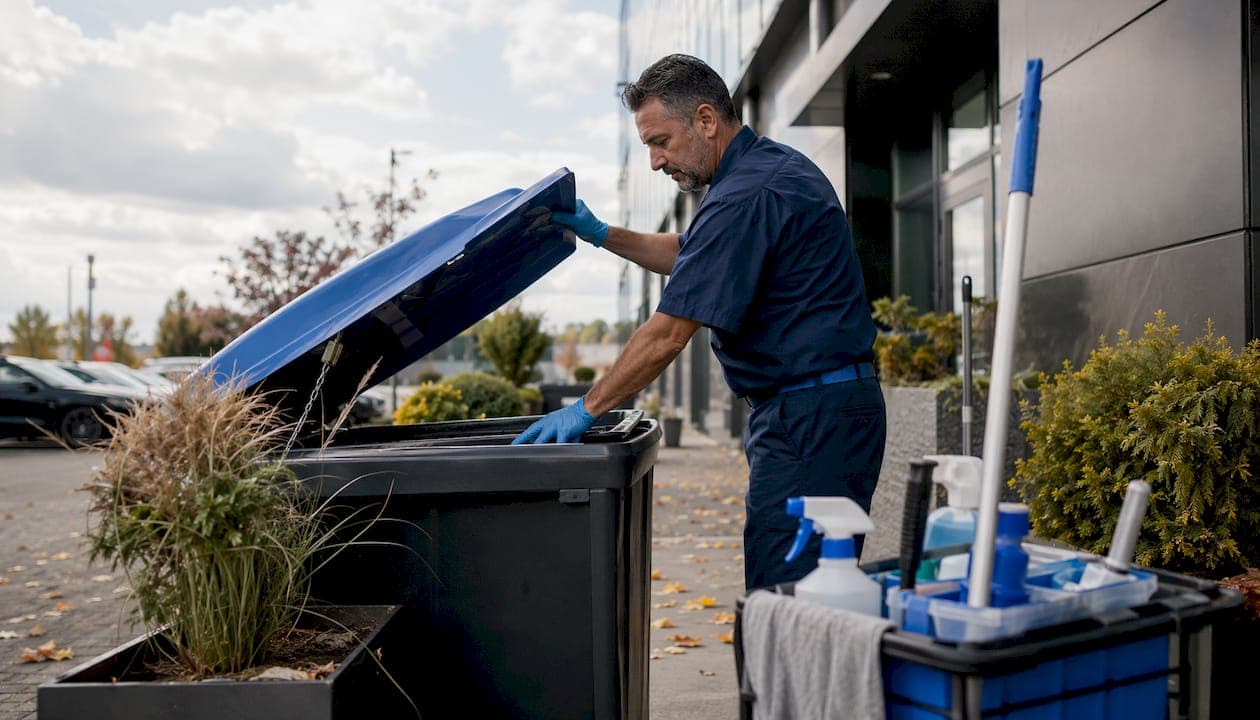
Regular commercial cleaning prevents pest issues by eliminating the three things every pest needs to survive: food, water, and shelter. Strip those away consistently, and most infestations never start. The U.S. EPA's Integrated Pest Management (IPM) framework treats sanitation as the foundational nonchemical prevention layer, meaning cleaning is not a cosmetic service — it is a documented risk-control measure that regulators and auditors recognize.
TL;DR for property managers:
- Empty and sanitize waste receptacles regularly in high-traffic areas; dumpster pads require routine perimeter cleaning.
- Schedule deep cleans for kitchens, drains, and loading docks regularly; general areas on a consistent monthly basis.
- Contract a scheduled janitorial program with documented scope — prevention costs a fraction of reactive extermination.
Table of Contents
- How does garbage management remove pests' primary food source?
- What food-handling and storage practices stop pests from breeding indoors?
- How does moisture control deny pests the water they need to survive?
- How does removing clutter eliminate pest shelter and nesting sites?
- How do cleaning crews function as your facility's early-warning system?
- What cleaning schedule and responsibilities actually prevent pests?
- How does commercial cleaning fit into EPA Integrated Pest Management?
- What is the ROI of preventive cleaning versus reactive pest control?
- Facility pest prevention cleaning checklist (print-ready)
- Key Takeaways
- The case for scheduled cleaning as your first line of pest defense
- Sparkleprocommercialcleaning keeps pest attractants out of your facility
- Sources and further reading for facility managers
How does garbage management remove pests' primary food source?
Waste is the single biggest pest attractant in any commercial property. Rodents can detect organic odors from considerable distances, and a single overflowing bin in a breakroom or a grease-soaked dumpster pad is enough to draw them in and keep them coming back.
Operational controls that work:
- Sealed interior bins: Use bins with tight-fitting lids in all food-adjacent areas and empty them at the end of every shift, not just at the end of the day.
- Dumpster-pad cleaning: Pressure-wash the perimeter weekly. Grease and liquid runoff from compactors create a residue trail that guides pests directly to your building.
- Compactor deep cleans: Schedule a full interior clean of compactors monthly. Organic buildup inside the chamber is a sustained food source most facilities overlook.
- Pickup timing: Coordinate with your waste hauler to schedule pickups in the morning rather than overnight. Bins sitting full through the night give pests uninterrupted access.
Garbage stored in unsealed containers or left overnight is one of the most reliable predictors of a rodent or fly problem in a commercial facility. The NPMA's commercial prevention guidance recommends sealed containers at all times and dumpster emptying several times per month as baseline requirements.
Pro Tip: Place dumpsters at least 50 feet from building entrances and loading dock doors when site layout allows. Distance alone reduces the likelihood that pests drawn to the dumpster will find their way inside.
What food-handling and storage practices stop pests from breeding indoors?
Kitchens, breakrooms, and goods storage areas are where pest problems quietly compound. A cockroach colony does not need much: a grease film behind a fryer, a forgotten spill under a vending machine, or a pallet of product stored directly on the floor. Residue build-up in these areas supports breeding cycles, not just feeding.
Daily and weekly checklist for food zones:
- Respond to spills immediately — do not leave them for the next scheduled clean.
- Deep-clean all food-contact surfaces, appliances, and under-equipment areas daily in kitchens and breakrooms.
- Store all food products in sealed, pest-resistant containers; never in open bags or cardboard boxes on the floor.
- Clean pallet racking and shelving surfaces monthly; organic dust and residue accumulate on horizontal surfaces even in dry-goods storage.
- Rotate stock using FIFO (first in, first out) and flag any product that has been stationary for more than 30 days — long-stored goods attract pests and often go uninspected.
- Select cleaning products carefully: surfactant films left by improperly diluted cleaners can themselves attract pests. Follow manufacturer dilution ratios precisely.
Tenant and staff responsibilities matter here. Cleaning vendors typically cover scheduled deep cleans and equipment surfaces, but daily spill response and proper food storage are staff-side obligations. Define both scopes clearly in your cleaning SOW and tenant handbook so nothing falls through the gap.
How does moisture control deny pests the water they need to survive?
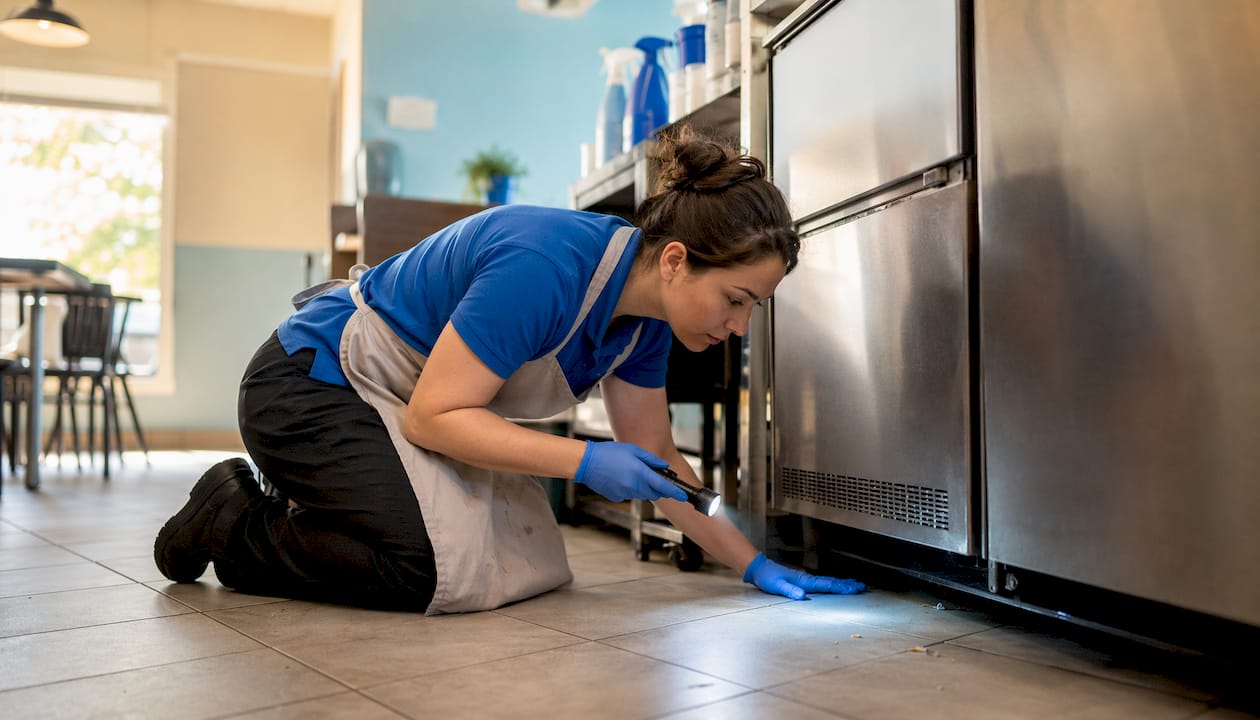
Water is the constraint most facility managers underestimate. A cockroach can survive weeks without food but only days without water. Drain flies and fungus gnats do not just need moisture — they breed directly in the organic films that accumulate inside floor drains and grease traps.
The highest-risk moisture sources in commercial properties:
- Clogged or dirty floor drains: Organic films inside drain lines are a breeding site for drain flies. Routine drain cleaning and removing grease buildup are specifically recommended to stop pests that reproduce in these environments.
- HVAC condensate lines: Blocked condensate drains create standing water inside air-handling units, which attracts pests and promotes mold simultaneously.
- Leaky supply lines and P-traps: Even a slow drip under a sink creates a reliable water source. Cleaning crews should flag any visible moisture during rounds.
- Exterior grading and drainage: Standing water pooling against the building foundation draws mosquitoes, rodents, and other pests. The NPMA recommends proper drainage at the foundation as a baseline prevention measure.
Pro Tip: Train cleaning crews to check under sinks, behind appliances, and around floor drains for moisture or discoloration during every routine visit. A damp patch spotted early costs nothing to fix; the same patch discovered after a drain-fly infestation costs significantly more.
Cleaning teams and maintenance teams need a shared reporting channel. When a cleaner spots a dripping pipe or a drain that is slow to clear, that observation should reach the maintenance team the same day, not at the next weekly meeting. Coordinate facility maintenance schedules so moisture issues get addressed before pests exploit them.
How does removing clutter eliminate pest shelter and nesting sites?
Pests do not just need food and water. They need somewhere undisturbed to nest, and commercial properties are full of those places if housekeeping is not deliberate about it.
Common harborage sites that cleaning programs should target:
- Cardboard on the floor: Corrugated cardboard is a preferred nesting material for cockroaches. Any cardboard stored directly on the floor in receiving areas or storage rooms should be elevated on pallets or removed.
- Pallet stacks and equipment bases: Undisturbed spaces beneath pallets and behind rarely-moved equipment are prime rodent nesting sites.
- Ceiling voids and wall gaps: Gaps around pipe penetrations, conduit runs, and utility chases give rodents and insects direct access to wall cavities.
- Cluttered loading docks: Dock areas accumulate debris, packaging, and unused materials quickly. A loading dock that does not get a weekly sweep is a reliable harborage zone.
- Storage rooms: Infrequently accessed storage rooms with dense shelving and mixed materials are among the highest-risk areas in any commercial property.
Pairing exclusion work — sealants, door sweeps, screens — with regular cleaning reduces repeat pest incursions more effectively than either measure alone. A declutter schedule (quarterly at minimum, monthly for high-risk areas) combined with a housekeeping audit that checks for cardboard-to-floor contact, unsealed gaps, and equipment bases should be a standing item in your facility management calendar.
How do cleaning crews function as your facility's early-warning system?
Cleaning staff walk every corner of your facility more often than anyone else on site. That makes them the most reliable early-detection resource you have — if they know what to look for and how to report it.
Early signs cleaning crews should document during routine rounds:
- Rodent droppings along wall edges, under sinks, or behind appliances
- Grease trails or smear marks on walls near floor level (rodent activity)
- Live or dead insects, especially in clusters near drains or food areas
- Gnaw marks on packaging, cables, or structural materials
- Egg casings or shed skins near warm, dark surfaces
A proactive, documented monitoring program catches early warning signs before visible infestations develop and reduces long-term costs. PestWorld's IPM guidance identifies employee reporting and cleaning-team inspections as key components of an effective monitoring program.
Pro Tip: Give cleaning crews a simple one-page incident report form with five fields: location, date/time, description, photo (smartphone), and immediate action taken. Route completed reports to the facility manager and pest control contact within 24 hours. Speed of response is what separates a contained sighting from a full infestation.
When a crew member spots something, the escalation path should be clear before it is ever needed. Define who receives pest-activity reports, what the response timeline is, and whether the cleaning vendor or a separate pest control contractor handles follow-up. Ambiguity in that chain is how small problems become expensive ones.
What cleaning schedule and responsibilities actually prevent pests?
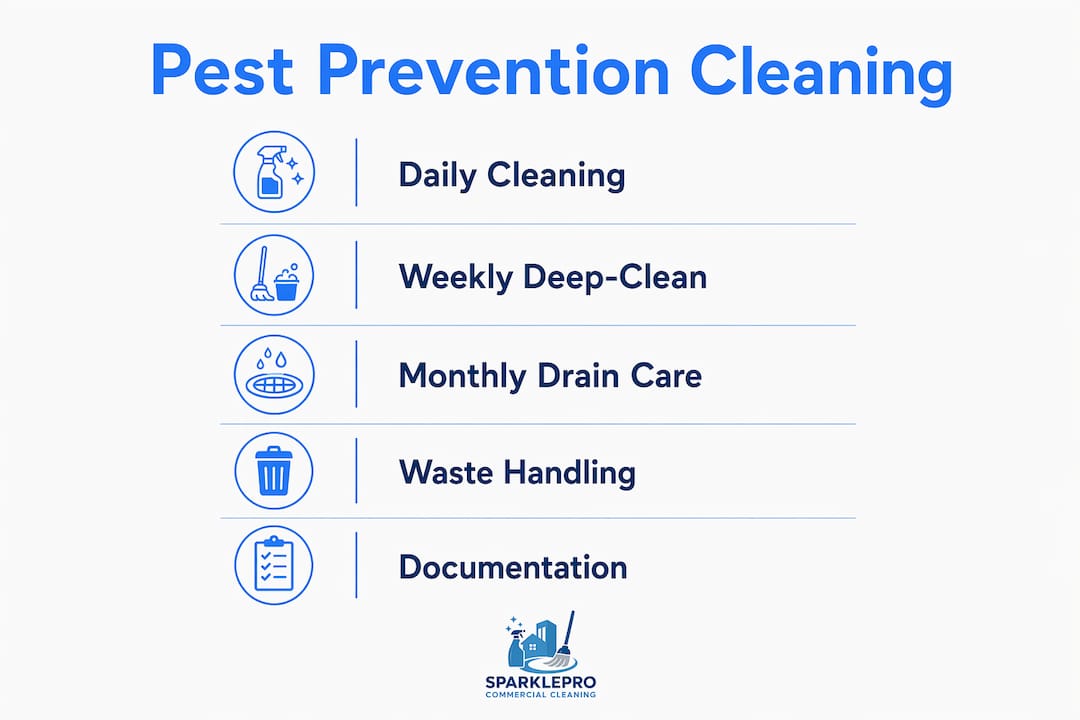
Frequency matters as much as thoroughness. A kitchen cleaned weekly instead of daily presents a fundamentally different risk profile with increased pest risk. The table below gives a working framework for setting contract scopes and SLAs by area risk level.
| Area | Recommended Frequency | Scope Notes |
|---|---|---|
| Commercial kitchens / food prep | Daily | Surfaces, equipment, drains, grease traps, waste bins |
| Breakrooms / vending areas | Daily | Spill response, appliance exteriors, bin emptying |
| Restrooms | Daily | Drains, fixtures, waste bins, floor scrub |
| Loading docks | Weekly | Debris sweep, drain flush, perimeter waste removal |
| Storage rooms | Weekly to monthly | Pallet/racking wipe-down, floor sweep, clutter audit |
| Public lobbies / offices | 3x weekly to daily | Floors, waste bins, high-touch surfaces |
| Drains (all areas) | Monthly deep clean | Organic film removal, drain-line flush |
| Exterior dumpster pads | Weekly | Pressure wash, perimeter debris removal |
Your cleaning SOW should specify deep-clean cycles by area, drain-care protocols, waste-handling procedures, and documentation requirements. Without those details in writing, vendors default to surface cleaning and the pest-prevention layer disappears. For guidance on defining cleaning responsibilities in contracts, a scope-first approach protects both parties.
How does commercial cleaning fit into EPA Integrated Pest Management?
The EPA's IPM principles place sanitation and environmental controls ahead of chemical treatment. Cleaning is not a supplement to pest control — it is the first and most cost-effective layer of it. IPM's logic is straightforward: remove the conditions that allow pests to establish, and you reduce or eliminate the need for pesticides.
IPM-based programs list sanitation and removing food and water sources as primary prevention steps, recognized as more cost-effective than reactive treatments. Modern IPM guidance for businesses also recommends habitat manipulation — improving drainage, managing landscaping, and reducing organic debris — as part of an integrated approach that minimizes pesticide reliance.
A documented prevention program protects brand reputation and reduces the risk of fines or closures after pest sightings. Regulatory agencies including FDA, USDA, and local health departments treat pest presence as a serious inspection failure risk — and documented cleaning logs are often accepted as evidence of due diligence that can reduce the severity of enforcement actions.
For property managers, this means cleaning documentation is not just an operational record. It is a compliance asset. Inspection logs, drain-cleaning records, and incident reports from cleaning crews can all be presented during regulatory audits to demonstrate that the facility operates a proactive prevention program.
What is the ROI of preventive cleaning versus reactive pest control?
Prevention is cheaper than remediation by a wide margin, and the math is not close. A reactive extermination engagement for a mid-size commercial facility typically involves multiple treatment visits, product costs, potential temporary closure, and the staff time to manage the process. None of that accounts for reputational damage or regulatory penalties.
Indirect benefits of a documented cleaning program:
- Reduced extermination costs: Fewer infestations mean fewer treatment contracts and emergency call-outs.
- Inspection readiness: A facility with documented cleaning logs passes health and safety inspections faster and with less risk of enforcement action.
- Employee health: Cleaner facilities have lower rates of illness-related absenteeism, particularly in shared kitchen and restroom areas.
- Reduced product loss: In retail and industrial settings, pest activity can contaminate or destroy inventory. Prevention protects that asset directly.
A simple cost scenario: If a scheduled janitorial program with pest-prevention scope costs a moderate monthly amount for a mid-size commercial property, and a single reactive rodent remediation engagement costs several thousand dollars plus potential closure costs, the prevention program pays for itself the first time it stops an infestation. The benefits of recurring cleaning extend well beyond pest control, but pest prevention alone justifies the investment for most property types.
Pro Tip: When presenting cleaning budget justification to ownership or asset managers, frame it as risk mitigation, not housekeeping. A one-page memo showing potential remediation costs, regulatory fine exposure, and reputational risk against the annual cleaning contract cost is a more persuasive document than a service description.
Facility pest prevention cleaning checklist (print-ready)
Use this checklist as a sign-off template for cleaning crews and supervisors. Adapt the frequency column to your facility type.
Daily sign-off (crew initials + time stamp required):
- All interior waste bins emptied and relined — kitchens, breakrooms, restrooms.
- Food-contact surfaces wiped and sanitized — counters, appliances, prep areas.
- Spills addressed immediately; no residue left on floors or under equipment.
- Restroom drains flushed and fixtures cleaned.
- Floor drains in kitchen/food areas checked for debris and slow drainage.
Weekly sign-off (supervisor review required):
- Loading dock swept; perimeter debris and packaging removed.
- Dumpster pad pressure-washed or hosed down; lid seals checked.
- Storage room floor swept; cardboard-to-floor contact eliminated.
- Under-sink and appliance-base areas inspected for moisture or droppings.
- Drain lines in food areas flushed with appropriate cleaner.
Monthly sign-off (facility manager sign-off required):
- Pallet racking and shelving surfaces wiped down.
- HVAC condensate lines inspected and cleared.
- Ceiling voids and pipe penetrations checked for gaps; findings reported to maintenance.
- Full clutter audit of storage rooms; items not needed in 90 days removed or relocated.
- Pest-activity incident log reviewed; any open items escalated to pest control contractor.
Documentation notes: Digital sign-off via a facility management platform (such as Corrigo, ServiceChannel, or a simple shared spreadsheet) creates a timestamped audit trail. For healthcare, food service, or industrial properties, retain records for a minimum of 12 months and make them accessible for regulatory inspections. Post-construction cleaning for new or renovated spaces should follow a separate protocol before this routine checklist takes over.
Key Takeaways
Regular commercial cleaning prevents pest infestations by systematically removing food, water, and shelter — the three conditions every pest requires to establish and breed.
| Point | Details |
|---|---|
| Remove food sources daily | Empty and sanitize waste bins regularly; perform deep cleaning in food zones frequently to eliminate residues that sustain pest breeding cycles. |
| Control moisture proactively | Clean floor drains on a monthly basis and report plumbing leaks promptly; standing water and organic drain films are primary breeding sites. |
| Eliminate harborage on a schedule | Regular declutter audits, elevated storage, and sealed gaps remove nesting sites before pests exploit them. |
| Document everything | Cleaning logs and incident reports satisfy EPA IPM standards and serve as regulatory due-diligence evidence during inspections. |
| Sparkleprocommercialcleaning | Provides scheduled janitorial, drain care, and day porter services with documented scope — the prevention layer that keeps pest control costs down. |
The case for scheduled cleaning as your first line of pest defense
The conventional wisdom in facility management treats pest control and cleaning as separate line items managed by separate vendors. That split is where most pest problems begin. Cleaning removes the conditions pests need; pest control addresses the pests themselves. When those two programs do not share documentation, scheduling, or communication, you end up with a reactive cycle: clean the surface, miss the drain, call the exterminator, repeat.
What the EPA's IPM framework actually describes is a system where sanitation is the foundation and chemical treatment is the last resort. Most commercial facilities invert that. They spend on quarterly pest treatments and underinvest in the cleaning frequency and scope that would make those treatments unnecessary. The result is predictable: recurring infestations, recurring costs, and a paper trail that looks reactive to any regulator who reviews it.
The facilities that consistently pass health inspections and avoid pest-related closures share one characteristic: they treat cleaning as a documented, scheduled program with defined scopes, not a task that gets done when someone remembers. That is not a complicated insight, but it is one that most property managers only arrive at after an expensive lesson.
Sparkleprocommercialcleaning keeps pest attractants out of your facility
Pest prevention starts with the right cleaning program, and that program needs to be scheduled, scoped, and documented before a pest problem appears, not after.
Sparkleprocommercialcleaning delivers the specific services that address every pest attractant category covered in this article: scheduled janitorial programs with daily and deep-clean cycles, drain maintenance and odor control, waste-handling protocols, day porter services for continuous high-traffic area upkeep, and post-construction cleanouts that remove debris before it becomes harborage. Every engagement follows a four-step process: quote, site visit, scheduled cleaning, and client approval, so the scope is defined in writing before work begins. That documentation is exactly what regulatory auditors and pest control contractors need to see. To schedule a site visit and get a quote for your facility, request service here or visit sparkleprocommercialcleaning.com.
Sources and further reading for facility managers
These references support the IPM and sanitation guidance in this article. Cite them in internal SOPs or audit packets to demonstrate alignment with recognized standards.
- EPA — Integrated Pest Management Principles: The primary U.S. government reference for IPM. Defines sanitation as the foundational nonchemical prevention layer. Cite in SOPs to establish regulatory alignment.
- PestWorld — IPM for Businesses: NPMA's business-focused IPM guidance covering monitoring, exclusion, and documentation. Use for checklist development and vendor contract requirements.
- PestWorld — Commercial Pest Prevention Tips: Operational checklist from the National Pest Management Association covering waste management, drainage, and inspection protocols.
- AZPest — Commercial Pest Prevention: Covers reputational and regulatory risk from pest sightings and the role of documentation in reducing enforcement exposure.
- EnviroGPC — IPM Checklist for Businesses: Practical IPM checklist covering habitat manipulation, drainage, and sanitation integration for different facility types.