

A commercial cleaning audit is a structured, scored evaluation of cleaning quality and regulatory compliance that gives property managers objective evidence of whether their facility actually meets hygiene standards. Most facilities confuse completion logs with performance audits, and that confusion is where complaints and OSHA citations originate. A cleaning log confirms a task was attempted. A true audit, using scoring checklists tied to corrective actions, captures the quality gap responsible for violations and tenant dissatisfaction. Understanding why use commercial cleaning audits means recognizing that scheduled cleaning and verified cleaning are two entirely different things.
Why use commercial cleaning audits to improve quality and compliance?
Audits convert subjective impressions into measurable performance data. A scoring system quantifies visual observations into numbers that can be benchmarked, trended, and acted upon. That shift from "looks clean" to "scored 78 out of 100 with three corrective actions open" is what separates reactive facility management from proactive oversight.
The most powerful feature of a well-designed audit is risk-weighted scoring. Weighted models prioritize high-impact cleaning failures, meaning a contaminated restroom fixture costs more points than a dusty window ledge. This reflects actual facility risk rather than treating every deficiency as equal. For healthcare facilities, food service areas, and high-traffic lobbies, that distinction directly affects occupant health outcomes.
Audits also create accountability through corrective action tracking. When a deficiency is logged, the audit record stays open until the issue is resolved and verified. This closure loop prevents the common problem where the same failure appears on three consecutive inspection reports with no resolution. The benefits of cleaning audits are most visible here: contractors who know every service is scored and documented perform differently than those working against a simple checklist.
- Scoring checklists measure whether cleaning met standards, not just whether tasks were attempted
- Risk-weighted scoring assigns higher point penalties to failures with greater health or regulatory impact
- Corrective action tracking keeps deficiencies open until verified resolution
- Audit trails with timestamps, GPS, and photos satisfy both internal reviews and external regulatory inspections
Pro Tip: Set a minimum passing score threshold before your first audit cycle. Without a defined floor, contractors have no clear target and audit data loses its accountability function.
Structured inspection scoring programs catch hygiene failures three times earlier than schedule-only verification, improving APPA cleanliness scores by up to 25% with digital inspection tools. That improvement is not cosmetic. It translates directly into fewer tenant complaints, fewer regulatory citations, and lower remediation costs.
What audit methods and technologies enhance cleaning assessment?
The gap between paper-based inspection logs and digital audit platforms is significant. Paper logs confirm presence and task completion. Digital mobile apps with GPS, timestamp, and photo capture confirm quality at a specific location and time. That distinction matters enormously when a tenant disputes a service claim or when an OSHA inspector asks for documentation.

| Feature | Paper-based logs | Digital audit platforms |
|---|---|---|
| Task verification | Checkbox only | Photo, GPS, timestamp |
| Scoring | Manual, inconsistent | Automated, weighted |
| Reporting | Manual compilation | Instant, auto-generated |
| Trend analysis | Difficult | Built-in dashboards |
| Corrective actions | Informal notes | Tracked to closure |
| Compliance readiness | Low | High |
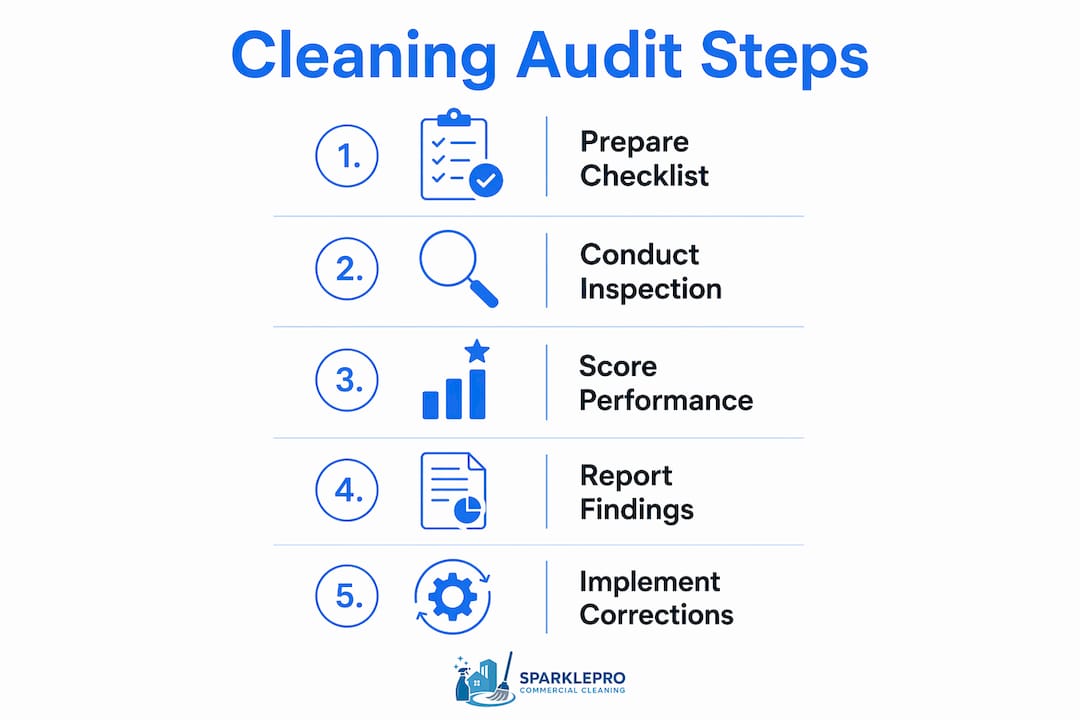
Digital audit tools provide real-time visibility into cleaning task completion and alert supervisors of missed high-priority areas, enabling proactive intervention before compliance failures escalate. For a facility director managing multiple buildings, that real-time alert function alone justifies the switch from paper.
Software platforms built for janitorial audits, such as GoAudits and Janitorial Manager, offer customizable checklists, corrective action workflows, and compliance dashboards. Janitorial audit software centralizes inspection data, enabling trend analysis, performance metrics, and quick report generation accessible to all stakeholders. That transparency supports client confidence and gives you defensible records during contract disputes.
Pro Tip: When evaluating digital audit tools, prioritize platforms that allow you to customize scoring weights by zone type. A restroom in a healthcare facility should carry different weight than a storage corridor.
The commercial cleaning assessment advantages of digital platforms extend to SLA management. When your contract specifies that restrooms must score above 85 and the platform shows a rolling 30-day average of 71, you have documented grounds for a contract conversation. Without that data, the conversation is subjective and difficult to resolve.
Why is maintaining cleaning audit documentation crucial for facility management?
Documentation is the difference between compliance and the appearance of compliance. OSHA sanitation standard 29 CFR 1910.141 requires maintaining sanitary toilet and wash facilities with documentation to prove compliance. Audit trails with timestamps are critical for regulatory confirmation during inspections. Without them, you are relying on memory and goodwill during a formal review.
Regular cleaning audits help prevent common OSHA violations including blocked plumbing, lack of soap and towels, and unsanitary conditions that risk employee health. Audits act as preventive mechanisms through documentation and timely corrections. The importance of commercial cleaning reviews becomes concrete when you consider that a single OSHA citation for sanitation violations can carry fines that far exceed the annual cost of a structured audit program.
Audit scorecards also serve a contract management function. When shared regularly with your cleaning contractor, they promote continuous improvement beyond simple pass/fail judgments. Detailed item-level feedback enables root cause analysis and operational enhancements that a generic complaint call never achieves. You can review vendor evaluation examples to see how scorecards structure those contractor conversations.
Key documentation practices for facility managers:
- Maintain time-stamped, photo-verified audit records for every inspection cycle
- Store corrective action logs with resolution dates and verifying signatures
- Keep a rolling 12-month performance history per zone or building section
- Archive documentation in a format accessible to external auditors and legal counsel
- Cross-reference audit records with service invoices to verify billed services were delivered
Being able to show verified, time-stamped documentation substantially reduces audit stress and client concerns. That reduction in stress is not trivial. Facility directors who have navigated a surprise regulatory inspection with complete digital records describe it as a fundamentally different experience than those who scrambled to reconstruct paper logs.
How to implement an effective commercial cleaning audit program?
A cleaning audit program that runs on good intentions fails within two months. One that runs on defined frequency, scoring standards, and contractor integration runs indefinitely. Here is a practical sequence for building a program that holds:
-
Map your zones by hygiene risk. Restrooms, break rooms, and medical treatment areas carry the highest risk. Storage rooms and mechanical spaces carry the lowest. Audit frequency should align with zone classification, ranging from weekly for high-risk areas to quarterly for low-traffic zones.
-
Define your scoring standards before the first audit. Each checklist item needs a clear pass/fail definition. "Restroom mirrors clean" is ambiguous. "Restroom mirrors free of streaks, smudges, and water spots at eye level" is auditable. Weighted models should assign higher penalties to health-critical items.
-
Share the scoring framework with your contractor before launch. Transparency is not a weakness. Contractors who understand exactly how they will be scored perform better and dispute results less. This is a cleaning audit best practice that most facility managers skip.
-
Conduct the first three audit cycles without formal consequences. Use the initial data to calibrate your scoring weights and identify baseline performance. Jumping to contract penalties before you have established a baseline creates adversarial dynamics that undermine the program.
-
Integrate audit findings with your work order system. Every corrective action generated by an audit should trigger a work order with a due date and assigned owner. Audits that generate findings but no work orders are documentation exercises, not quality programs.
-
Review trend data quarterly with your contractor. Monthly scores tell you what happened. Quarterly trends tell you whether the program is working. Use the office cleaning guide for 2026 as a reference for setting performance benchmarks by facility type.
The cost savings from cleaning audits compound over time. Fewer emergency remediation calls, fewer regulatory citations, and stronger contract leverage all reduce total facility operating costs. The program pays for itself faster than most facility directors expect.
Key takeaways
Commercial cleaning audits deliver measurable quality improvement, regulatory protection, and contractor accountability that completion logs cannot provide.
| Point | Details |
|---|---|
| Audits outperform logs | Scoring checklists catch hygiene failures three times earlier than schedule-only verification. |
| Risk-weighted scoring matters | Assign higher penalties to health-critical failures to reflect actual facility risk. |
| Documentation protects you | Time-stamped, photo-verified records satisfy OSHA 1910.141 requirements and reduce inspection stress. |
| Digital tools change behavior | Facilities report a 70% drop in restroom complaints within 90 days of switching to weekly digital inspections. |
| Frequency must match risk | High-risk zones like restrooms and break rooms require weekly audits; low-traffic areas can be quarterly. |
What I've learned from watching audits transform facility programs
Most facility managers I work with arrive at audits after a crisis. A failed health inspection, a tenant complaint that escalated to legal, or a contractor dispute with no documentation to support either side. The audit program becomes the solution to a problem that already cost money and credibility.
What surprises them is how quickly contractor behavior changes once scoring starts. Facilities that move from quarterly to weekly digital inspections see a 70% reduction in restroom complaints within 90 days. That number is not about the inspections themselves. It is about the fact that contractors know every service is scored. Measurement changes behavior faster than any contract clause.
The other shift I see consistently is in how facility directors talk to their contractors. Before audits, those conversations are vague and defensive. After six months of scored data, they are specific and productive. "Your restroom scores averaged 74 last quarter, and the primary failure was soap dispenser refill compliance" is a conversation that leads somewhere. "We've had complaints about the bathrooms" does not.
The mistake I see most often is treating the audit as a gotcha tool rather than a shared performance framework. When you evaluate cleaning contracts with audit data as the foundation, both parties benefit from the clarity. Contractors who consistently score well have documented proof of their performance. Contractors who struggle have a clear map of what to fix. That transparency is what separates a functional vendor relationship from a recurring dispute.
— Sales
How Sparkleprocommercialcleaning supports your audit and compliance needs
Sparkleprocommercialcleaning builds audit-backed quality assurance into every commercial cleaning program it delivers. Whether you manage an office building, retail center, or healthcare facility, the company's documented inspection process gives you the performance records you need for regulatory compliance and contract management.
Property managers in Delaware, Massachusetts, Washington, and New Jersey can access local cleaning services in Delaware with full audit documentation support, or explore options in Massachusetts, Washington, and New Jersey. Contact Sparkleprocommercialcleaning to discuss how an audit-integrated cleaning program can reduce your compliance risk and improve occupant satisfaction from day one.
FAQ
What is a commercial cleaning audit?
A commercial cleaning audit is a scored, documented evaluation of whether cleaning services meet defined quality and compliance standards. It differs from a completion log by measuring how well tasks were performed, not just whether they were attempted.
How often should cleaning audits be conducted?
Audit frequency should match zone hygiene risk. High-risk areas like restrooms and break rooms require weekly inspections, while low-traffic zones can be audited quarterly. Multiple audit cycles produce more meaningful performance patterns than a single annual review.
What regulations require cleaning documentation?
OSHA sanitation standard 29 CFR 1910.141 requires employers to maintain sanitary facilities and provide documentation of compliance. Audit trails with timestamps and photos are the most defensible form of that documentation during regulatory inspections.
Can cleaning audits reduce costs?
Yes. Audits reduce costs by catching deficiencies before they escalate into remediation events, preventing OSHA citations, and providing documented grounds for contract renegotiation when contractor performance falls below agreed standards.
What is the difference between a cleaning log and a cleaning audit?
A cleaning log confirms that a task was scheduled and marked complete. A cleaning audit uses a scoring checklist to evaluate whether the task was performed to an acceptable standard, with corrective actions tracked to verified resolution.