
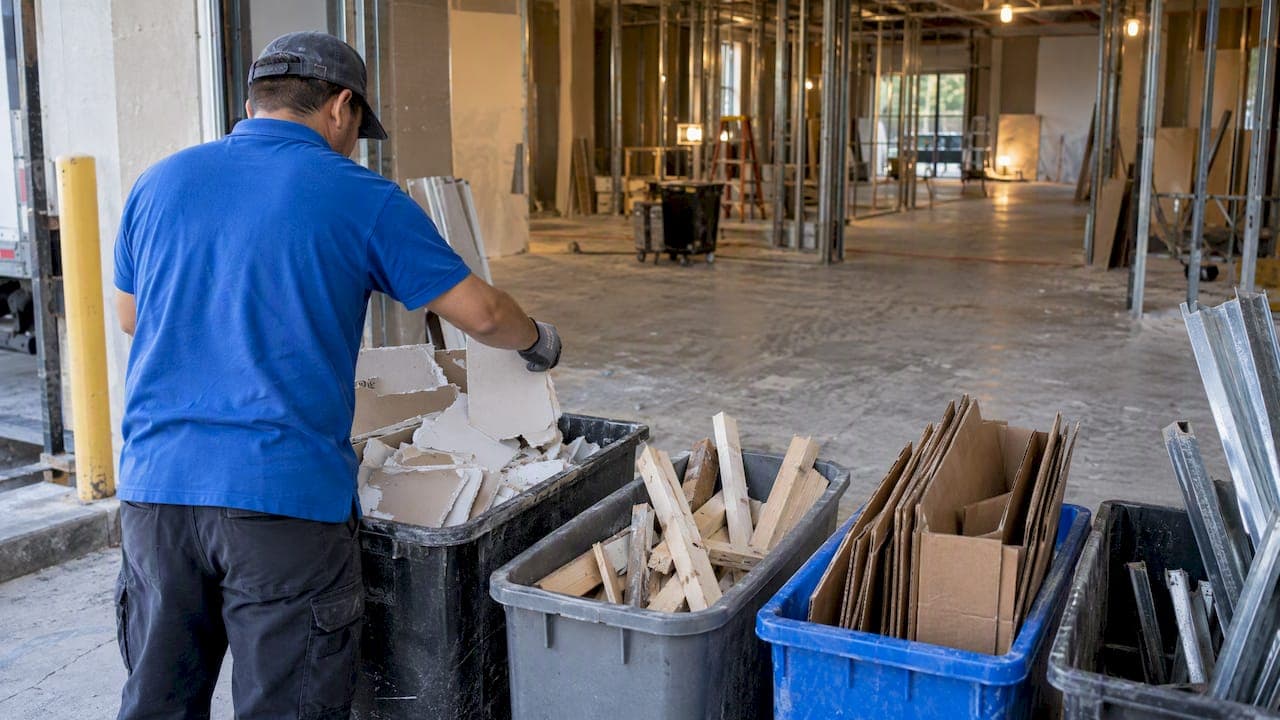
Tenant improvement cleaning is the specialized post-construction cleaning that removes fine construction dust and debris and prepares a renovated tenant space for inspection and safe occupancy. It leans on controls like the OSHA silica standard and HEPA-filtered vacuums, and property managers and general contractors typically hire it as the final step before handover.
TL;DR:
- Proper tenant improvement cleaning requires multiple phases, including rough, progress, final, and pre-occupancy verification, each with distinct tasks and costs.
- Use sealed HEPA vacuums and containments like poly barriers and negative-pressure systems to control silica dust and maintain indoor air quality during construction.
- The general contractor typically handles rough and progress cleaning, while a specialized cleaning contractor manages final cleaning, with clear scope definitions essential for smooth handovers.
- Schedule cleaning passes around key milestones, such as after drywall and flooring, to prevent recontamination and align with construction progress.
- Conduct thorough pre-inspection checks and verify HVAC filters to ensure spaces meet IAQ standards before tenant move-in, documenting all steps for compliance and dispute prevention.
Table of Contents
- Phases of tenant improvement cleaning you need to plan for
- Dust containment and indoor air quality controls for TI projects
- Who handles which cleaning tasks on a TI project
- Timing, scheduling, and what drives the price
- Pre-inspection checklist: what to verify before handover
- How to evaluate a tenant improvement cleaning vendor
- Post-cleaning inspection and verification methods
- Disposal and environmental considerations for construction debris
- Why we treat tenant improvement cleaning as a finishing trade
- Get a quote for tenant improvement cleaning
- FAQ
- Sources
Phases of tenant improvement cleaning you need to plan for
Tenant improvement cleaning isn't one visit. It moves through distinct phases, each with its own labor mix, equipment, and price point.
- Rough cleaning happens during active construction: removing packaging, sweeping debris paths, and keeping walkways clear for trade crews.
- Progress cleaning occurs between trade phases, often after drywall or paint, clearing dust and overspray before the next crew arrives.
- Final cleaning strips fine dust from every surface, cleans glass and fixtures, and removes adhesive residue and protective film after punch-list work wraps.
- Pre-occupancy verification confirms HVAC filters are replaced, odors and VOCs have had time to dissipate, and the space passes a final walkthrough.
Pricing and staffing differ sharply by phase because the work itself differs. Rough cleaning is mostly bulk debris handling, while final cleaning demands detail work on glass, millwork, and flooring that takes far longer per square foot. Treating tenant improvement cleaning as a finishing trade, rather than a single janitorial line item, keeps bids realistic and schedules intact.
Dust containment and indoor air quality controls for TI projects
Fine construction dust, especially from concrete, drywall, and flooring work, carries health risks that general housekeeping doesn't address. The OSHA silica standard prohibits dry sweeping and compressed-air cleaning when those methods could raise airborne silica exposure, requiring wet methods or HEPA-filtered vacuums instead, along with a written exposure control plan.

A sealed HEPA vacuum must capture nearly all particles down to 0.3 microns with very high efficiency, and EPA guidance on RRP-compliant HEPA vacuums warns that a retrofitted shop vacuum often fails to meet that sealing standard. Ask any vendor for proof of equipment specifications before work begins.
Core containment and IAQ practices to require on every TI job:
- Seal HVAC registers and ducts before demolition or sanding begins.
- Install temporary filters and verify airflow before permanent filters go in.
- Use poly barriers and negative-pressure air machines to isolate work zones.
- Run local exhaust ventilation for VOC-heavy tasks like painting or adhesive work.
- Favor wet sanding and wet wiping over dry methods wherever silica exposure is possible.
EPA's indoor air quality best practices for remodeling recommend this same combination of sealing, exhaust, and containment, plus a ventilation period before occupants move in. Our guide to concrete dust cleanup covers containment methods for fine particulate in more depth.
Who handles which cleaning tasks on a TI project
Confusion over scope is the most common cause of delayed handovers. A clear split, written into the contract, avoids finger-pointing when the inspector shows up.
- **The general contractor typically owns rough and progress cleaning, keeping the active work site safe and passable.
- A dedicated cleaning contractor usually handles final turnover: dust removal, glass, fixtures, and floor finishing.
- The tenant is generally responsible for their own furniture, fixtures, equipment, and any touch-up cleaning after move-in.
- Licensed specialty vendors take over when asbestos, lead, or mold surface during demolition, since these require credentialed remediation rather than standard cleaning crews.
Your scope of work should spell out the number of cleaning passes, punch-list correction procedures, and required PPE and equipment standards for each phase. Our construction cleaning safety guide outlines PPE and site-safety language worth adapting for your own contracts.
Timing, scheduling, and what drives the price
Scheduling cleaning passes around construction milestones, rather than tacking cleaning on at the end, keeps projects on track.
- Schedule a progress clean after drywall finishing and before paint, removing sanding dust that would otherwise contaminate wet paint.
- Schedule another pass after flooring installation, since adhesive residue and grit are easiest to remove before furniture arrives.
- Schedule the final clean after punch-list corrections are complete, not before, so rework doesn't undo finished work.
Several factors drive what a TI cleaning job costs: total square footage, the type of debris involved, how accessible the site is for equipment and disposal, whether the job is bundled into one visit or split into discrete passes, and whether specialty remediation is needed. Rush timelines tied to a tight lease start date typically carry a premium as well. Bundling phases under one vendor can simplify scheduling, but discrete passes tied to specific trade milestones often produce a cleaner result because each pass targets a narrower set of tasks.
Pre-inspection checklist: what to verify before handover
Run through this checklist before you schedule a final walkthrough or occupancy inspection.
- Wipe down all surfaces, including window sills, ledges, and millwork, checking for residual fine dust.
- Clean interior and exterior glass, removing construction film, labels, and overspray.
- Remove adhesive residue and protective film from flooring, countertops, and fixtures.
- Vacuum and extract grit from flooring, especially in corners and transitions, where debris collects, following a thorough commercial office carpet cleaning checklist for managers can help ensure no areas are missed.
- Confirm HVAC filters have been replaced and registers are unblocked and clean.
- Check light fixtures, sensors, and plumbing fixtures for dust and residue.
- Remove any hazardous waste and document the IAQ steps taken during cleaning.
Pro Tip: Walk the space with a flashlight at a low angle before the client does. Fine dust and streaking show up far more clearly in raking light than in overhead lighting.
Our HVAC cleaning guide covers filter verification and MERV ratings in more detail, which matters since Indoor AirPlus construction specifications call for confirming filters meet specified ratings after construction work wraps.
How to evaluate a tenant improvement cleaning vendor
A reliable evaluation process mirrors a straightforward engagement flow: request a quote, schedule a site visit, confirm a cleaning plan, and sign off once work is verified. Use that same structure to vet any vendor you're considering.
- Confirm the vendor is licensed and insured for commercial work in your state.
- Ask for proof of HEPA-capable equipment, not retrofitted standard vacuums.
- Request documentation of crew training on dust control and safety procedures.
- Check for a written safety program addressing silica exposure and PPE use.
- Ask for references from recent tenant improvement or post-construction projects.
Vendors who can answer each point clearly, without hedging, are usually the ones who treat this as a specialized trade rather than an add-on to routine janitorial work.
Post-cleaning inspection and verification methods
Verification should happen in a sequence, not all at once. Start with a visual sweep under strong, angled light to catch dust films that overhead lighting hides, paying particular attention to horizontal surfaces, vents, and corners where fine particulate settles last.
Follow the visual check with a touch test: run a clean white cloth along ledges, sills, and HVAC registers. Any gray residue signals the space needs another pass before sign-off. For larger floor plates, spot-check multiple zones rather than relying on a single sample area, since dust distribution varies with how air moved during construction.

Confirm HVAC performance separately from the general cleaning check. Verify filters are the correct MERV rating and were installed after cleaning was complete, not before, since a filter installed too early can load up with construction dust and undercut air quality the moment the system runs. Indoor AirPlus guidance recommends documenting this verification step so property owners have a record of the IAQ protections applied.
Finally, document the sign-off itself. A short written checklist, signed by whoever conducted the final walkthrough, gives property managers a paper trail if a tenant raises an air quality or cleanliness concern after move-in. This documentation also protects contractors if a dispute arises over what was completed and when.
Disposal and environmental considerations for construction debris
Construction debris from tenant improvement projects includes a mix of materials that each need different handling: drywall scraps, wood, metal, flooring remnants, packaging, and occasionally hazardous materials like old adhesives or, in older buildings, asbestos-containing material uncovered during demolition.
Separating recyclable material (metal, cardboard, clean wood) from general debris reduces landfill volume and can lower disposal costs, since many municipal and private haulers charge less for sorted loads. Confirm with your hauler ahead of time whether they accept mixed construction debris or require separation, since this affects how your cleaning crew stages materials during the job.
Hazardous materials require their own path entirely. If demolition uncovers suspected asbestos, lead paint, or significant mold growth, work should stop in that area until a licensed remediation specialist assesses it. Mold remediation in particular should follow recognized industry guidance such as the IICRC S520 standard, and disturbing it without proper containment risks spreading spores into occupied or soon-to-be-occupied areas of the building.

Keep a simple log of what was removed, how it was sorted, and which hauler took it. Beyond satisfying any lease or municipal requirements, this record becomes useful if a property owner later pursues LEED certification or wants to document sustainable waste practices for a tenant improvement project.
Why we treat tenant improvement cleaning as a finishing trade
In our experience, the projects that run into trouble are the ones where cleaning got bid as an afterthought. Under-bidding a final clean because it looked like routine janitorial work causes schedule slips and handovers that fail inspection on the first pass.
Build scheduled cleaning passes and a walkthrough into your project timeline the same way you'd schedule any other trade, not as a task squeezed in after everything else finishes.
— Sales
Get a quote for tenant improvement cleaning
We provide tenant improvement cleaning as a specialized service, with crews trained on fine dust removal, HEPA-filtered equipment, and HVAC protection steps that match the controls described above. Services for this stage may include post-construction cleanouts for newly built or renovated tenant spaces, tenant turn cleans timed to lease start dates, HVAC protection and filter coordination during final cleaning, and environmental and disinfecting services for healthcare or sensitive-use spaces.
When you reach out, expect a site visit, a transparent quote based on your space and scope, and a phased schedule built around your construction milestones rather than a single generic cleaning date. Cleaning crews may be licensed and insured, with local teams available in multiple locations.
Request a quote or schedule a site visit through our tenant improvement cleaning services page, or check our New Jersey service page for an example of how we scope local projects.
FAQ
What is included in tenant improvement?
Tenant improvements typically cover the build-out work needed to prepare a leased space for a specific tenant's use, including walls, flooring, ceilings, lighting, and HVAC modifications. Final cleaning, which removes construction dust and debris and verifies IAQ conditions, is the last step before the space is considered ready for occupancy.
What do tenants have to clean when moving out?
Move-out responsibilities usually fall on the tenant for their own furniture, equipment, and any personal fixtures they installed, while structural and surface cleaning tied to the lease terms may fall to the landlord or a contracted cleaning crew. Lease language should specify exactly which party handles each category to avoid disputes at turnover.
Who typically pays for tenant improvements?
Payment responsibility varies by lease negotiation: some landlords offer a tenant improvement allowance that covers part or all of the build-out cost, while other leases require the tenant to cover improvements directly. The specific split is negotiated as part of the lease agreement rather than set by a fixed industry rule.
What are some examples of tenant improvements?
Common tenant improvements include new flooring, interior wall construction, updated lighting, HVAC adjustments, and paint or finish upgrades suited to the incoming tenant's business. Each of these generates construction dust and debris that needs specialized final cleaning before the space passes inspection.