

A cleaning audit is a structured, scored inspection that measures a facility's cleaning performance against agreed standards to verify hygiene, safety, and regulatory compliance. Unlike a quick visual walkthrough, a cleaning audit produces documented evidence: scores, photographs, and corrective action logs that create an enforceable record. Property managers and facility directors use this process to move beyond subjective impressions and into objective, measurable data. Sparkleprocommercialcleaning works with commercial facilities nationwide to deliver cleaning programs that hold up under exactly this kind of scrutiny. The International Organization for Standardization's ISO 9001:2015 framework treats auditing as a core quality management function, and infection prevention experts recognize cleaning audits as a direct tool for protecting occupant health.
What is a cleaning audit and why does it matter for commercial properties?
A cleaning audit converts subjective opinions into objective, documented data that both property managers and cleaning vendors can act on. That shift from impression to evidence is the audit's core value. Without it, cleaning disputes come down to one person's word against another's.
The audit's role extends well beyond appearance. Facility directors face real liability when cleaning standards slip in regulated environments such as healthcare clinics, food service areas, or multi-tenant office buildings. A documented audit trail demonstrates due diligence to health inspectors, insurers, and building owners. It also gives you leverage when a vendor underperforms, because the evidence is already on record.
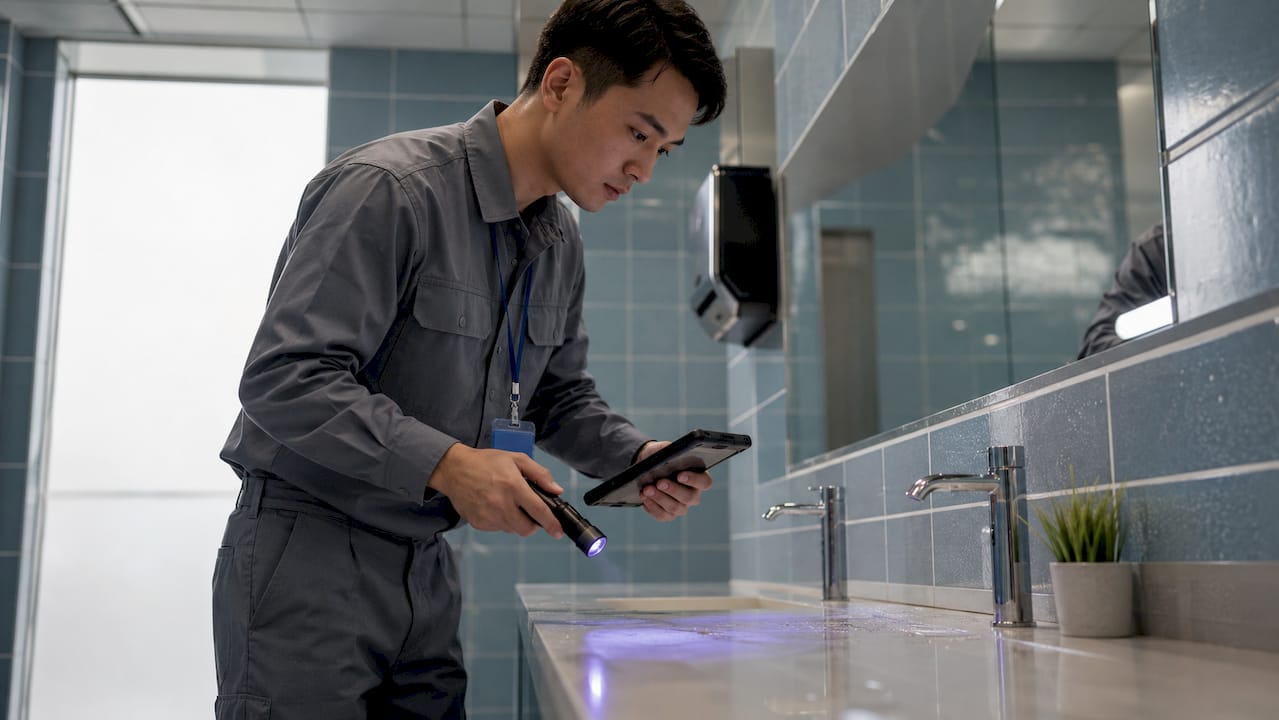
Infection prevention is another direct benefit. The Australian Commission on Safety and Quality in Health Care notes that audits measure disinfection effectiveness in high-touch zones, not just surface appearance. That distinction matters: a surface can look clean and still carry pathogens if disinfection protocols were skipped or applied incorrectly.
The accountability function is equally significant. Audits create a paper trail that holds cleaning vendors to the terms of their contracts. When corrective actions are logged and signed off, vendors cannot claim ignorance of a recurring problem. This is why cleaning audit best practices treat the audit as a contract management tool, not just a hygiene check.
Key reasons facility directors conduct regular cleaning audits:
- Compliance verification: Confirm adherence to OSHA, local health codes, and sector-specific regulations.
- Vendor accountability: Produce signed corrective action records that enforce contract terms.
- Infection prevention: Measure disinfection effectiveness in restrooms, kitchens, and high-touch surfaces.
- Risk reduction: Identify recurring failures before they become liability events.
- Continuous improvement: Track performance trends over months to guide contract renewals and resource allocation.
Pro Tip: Frame audits to your cleaning vendor as a shared quality tool, not a surveillance exercise. Audits that both parties understand and agree to upfront produce faster corrective action and fewer disputes.
How often should cleaning audits be conducted?
Audit frequency depends on the risk level of each area within your facility. High-traffic areas such as restrooms, kitchens, and reception zones require weekly spot checks, while office spaces typically need monthly reviews. A full, facility-wide audit should run quarterly. That cadence balances thoroughness with operational practicality.
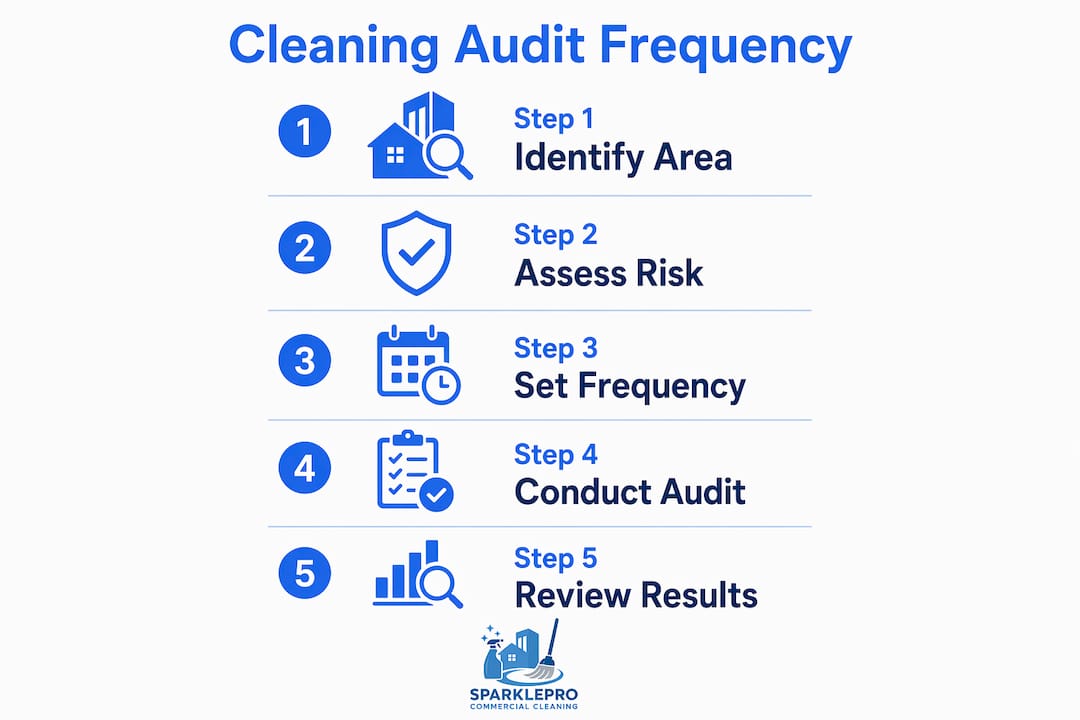
Seasonal factors and special events shift the calculus. A retail center running holiday foot traffic, or an office building hosting a large conference, warrants a temporary increase in audit frequency. The goal is to match audit intensity to actual risk, not to follow a rigid calendar regardless of conditions.
The table below summarizes recommended audit frequency by area type:
| Area type | Recommended frequency | Primary risk focus |
|---|---|---|
| Restrooms | Weekly spot check | Disinfection, odor, supply levels |
| Kitchen and break rooms | Weekly spot check | Food safety, cross-contamination |
| Reception and lobbies | Weekly spot check | First impression, high-touch surfaces |
| General office spaces | Monthly review | Dust, waste removal, surface hygiene |
| Full facility | Quarterly comprehensive audit | All areas, documentation, trend data |
Sticking to this schedule produces something more valuable than a single clean report: it builds a performance history. Audit trend data collected over months reveals whether cleaning quality is improving, holding steady, or degrading. That history becomes your strongest tool at contract renewal time.
Pro Tip: Schedule quarterly audits at least two weeks before contract review meetings. You will have fresh data and documented corrective action records ready to support any performance conversation.
What does an effective cleaning audit system include?
A cleaning audit system is defined by four components: defined standards, a scoring method, photographic evidence, and logged corrective actions. Each component serves a specific function, and removing any one of them reduces the audit to an informal spot check.
The critical distinction between a spot check and a full audit is documentation. A spot check is a visual, usually unscored inspection. An audit is comprehensive, scored, and produces documented evidence that can be reviewed, compared, and acted upon. Facility directors who rely only on spot checks have no defensible record if a cleaning failure leads to a complaint or legal claim.
ISO 9001:2015 structures quality management around the Plan-Do-Check-Act (PDCA) cycle. The audit sits in the "Check" stage. The PDCA framework requires that findings from the Check stage feed directly into corrective actions, which are then verified before the cycle closes. Applying this to cleaning means every audit finding must produce a specific, assigned action, not just a general note to "do better."
Corrective actions are only effective when assigned to a named individual. Corrective actions must assign responsibility to a specific person with a sign-off requirement. A corrective action that says "clean the restroom again" is not enforceable. One that says "supervisor Jane Smith to re-clean and photograph restroom 2B by 3:00 PM Friday" is.
A complete audit system also benefits from digital tools that enable real-time updates, responsibility assignment, and completion tracking. Mobile audit apps allow inspectors to log scores, attach photos, and generate reports on-site rather than reconstructing findings from memory later. The importance of documentation in cleaning services cannot be overstated: a finding that is not recorded did not happen, legally or operationally.
A complete audit system includes these elements in sequence:
- Defined specifications: Written cleaning standards for each area, agreed upon by both the facility and the cleaning vendor before the audit begins.
- Structured checklist: Area-specific items covering high-risk zones, COSHH procedures, laundry workflow, and documentation adherence.
- Scoring method: A numeric or percentage-based scale applied consistently across all inspections.
- Photographic evidence: Time-stamped photos of both compliant and non-compliant conditions.
- Corrective action log: Named individual, required action, deadline, and sign-off field for each finding.
- Trend reporting: Aggregated scores over time to identify patterns and support vendor performance reviews.
Facility directors managing non-compliance risks in complex properties will recognize this structure as the same framework used in broader property management audits.
How to conduct a cleaning audit in your commercial property
Conducting a cleaning audit follows a repeatable process. Each step builds on the previous one, and skipping any step weakens the final output.
-
Define your goals and standards. Identify what the audit will measure: hygiene compliance, vendor performance, infection control, or all three. Agree on written cleaning specifications with your vendor before the first inspection. Standards that are not written down cannot be enforced.
-
Assemble a trained audit team. Assign at least one internal team member who understands the facility's layout and risk zones. For larger properties, a dedicated audit lead with formal training in inspection methods produces more consistent results. Rotating auditors without a lead creates scoring inconsistency.
-
Build area-specific checklists. A single generic checklist does not serve a facility with both healthcare treatment rooms and open-plan offices. Tailor checklist items to each zone's risk level. Restroom checklists should cover disinfection of all contact surfaces, supply levels, and odor control. Office checklists focus on waste removal, desk surfaces, and floor condition.
-
Execute the inspection. Walk each area systematically. Score every item on the checklist. Photograph non-compliant conditions immediately, with enough context in the frame to identify the location. Do not rely on memory to fill in scores after leaving the area.
-
Communicate results promptly. Share the completed audit report with your cleaning vendor within 24 hours. Delayed reporting reduces the vendor's ability to address findings while conditions are still fresh. Assign each corrective action to a named individual with a clear deadline.
-
Track corrective actions to closure. Follow up on every open action before the next audit cycle. Unclosed corrective actions from a previous audit should appear at the top of the next inspection. Trend analysis across multiple audit cycles reveals whether corrective actions are actually changing performance or just generating paperwork.
Pro Tip: Involve department heads or tenant representatives in the audit process once per quarter. Their observations surface issues that facility managers miss, and their participation increases buy-in for corrective actions.
Key Takeaways
A cleaning audit is the most reliable tool a facility director has for converting cleaning performance into documented, enforceable evidence that protects occupant health, satisfies regulators, and holds vendors accountable.
| Point | Details |
|---|---|
| Definition matters | A cleaning audit is scored and documented; a spot check is not. Only audits produce enforceable records. |
| Frequency drives results | Audit high-traffic areas weekly and run full facility audits quarterly to build usable trend data. |
| PDCA is the framework | ISO 9001:2015's Plan-Do-Check-Act cycle requires every audit finding to produce a named, tracked corrective action. |
| Documentation is non-negotiable | Photographic evidence and signed corrective action logs are what separate audits from informal walkthroughs. |
| Trend data earns leverage | Consistent audit records over time support vendor contract renewals and proactive facility management decisions. |
Why I stopped treating audits as a formality
The most common mistake I see property managers make is treating the cleaning audit as a box-ticking exercise. They run it once a quarter, file the report, and move on. The audit score looks fine on paper, but the same restroom issues reappear every cycle because nobody tracked the corrective actions to closure.
The shift that changes everything is treating audit data as a management asset, not a compliance record. When you bring six months of scored audit reports into a vendor performance review, the conversation changes completely. You are no longer arguing about whether a problem exists. You are discussing a documented pattern, and the vendor knows it.
Transparency is the other piece most facilities get wrong. Sharing audit results with cleaning supervisors, not just account managers, creates accountability at the operational level. The person actually cleaning the building needs to know what the audit found and what is expected by the next inspection. Without that loop, corrective actions stay on paper.
Audits also do something less obvious: they protect you. When an occupant complains about hygiene or a regulator asks for evidence of cleaning compliance, a documented audit history is your defense. Facilities that rely on informal spot checks have nothing to show. The environmental cleaning standards that underpin a good audit program are not bureaucratic overhead. They are the foundation of a safe, defensible facility.
— Sales
Cleaning audit support from Sparkleprocommercialcleaning
Sparkleprocommercialcleaning delivers commercial cleaning programs built around the same documented, scored standards that effective audits require. Every service engagement includes clear specifications, corrective action protocols, and quality checks designed to hold up under formal inspection.
Facility directors in Delaware, Massachusetts, Washington, and New Jersey can contact Sparkleprocommercialcleaning for a site visit and a cleaning program tailored to their facility's audit requirements. The four-step process, from quote to customer approval, is designed to give property managers full visibility at every stage.
FAQ
What is a cleaning audit in simple terms?
A cleaning audit is a formal, scored inspection that measures whether a facility's cleaning meets agreed hygiene and safety standards. It produces documented evidence including scores, photos, and corrective action records.
How is a cleaning audit different from a spot check?
A spot check is a quick, usually unscored visual inspection with no formal documentation. A cleaning audit is comprehensive, scored, and generates a written record that can be reviewed, compared over time, and used to enforce vendor contracts.
What areas should a cleaning audit checklist cover?
An effective cleaning audit checklist covers restrooms, kitchens, reception areas, high-touch surfaces, COSHH procedures, waste management, and cleaning documentation. High-risk zones require more detailed inspection criteria than general office spaces.
How often should a commercial facility run a cleaning audit?
High-traffic areas such as restrooms and kitchens need weekly spot checks, while a full facility-wide audit should run quarterly. Frequency increases during high-occupancy periods or following a hygiene incident.
Who should conduct a cleaning audit?
A trained internal team member or a third-party auditor with knowledge of the facility's layout and risk zones should lead the inspection. Involving department heads or tenant representatives once per quarter adds an additional layer of accountability.