
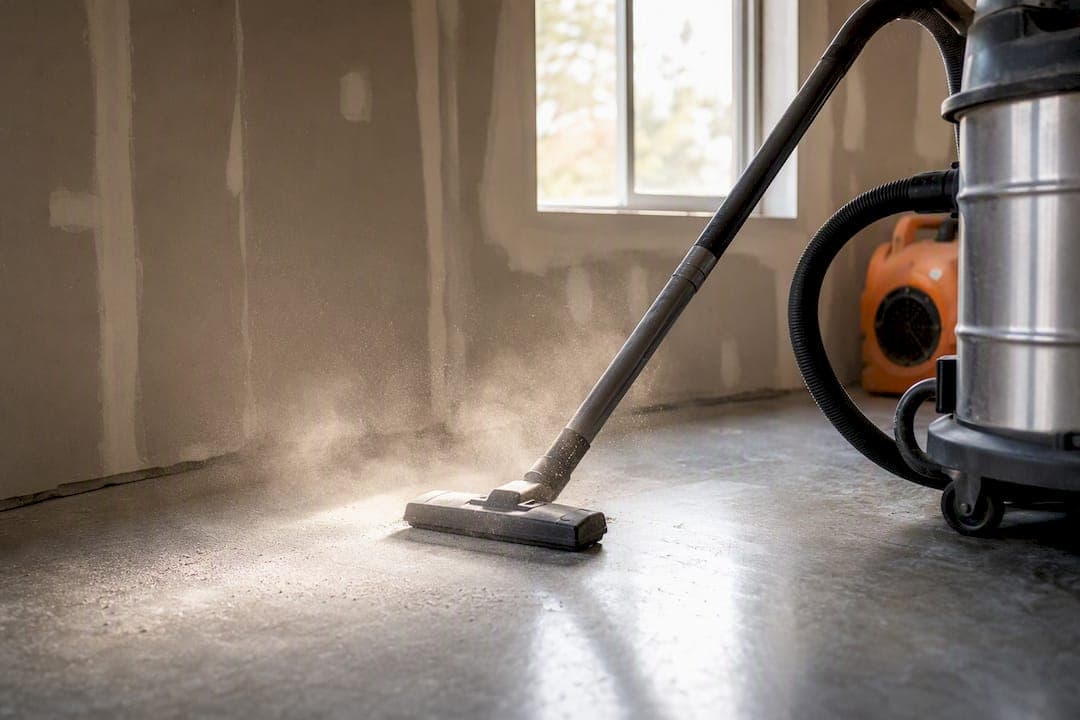
Dust remediation is the specialized, HEPA-based process that removes hazardous construction dust, including respirable crystalline silica, from inside commercial buildings after renovation, buildout, or demolition work. If your building has visible fine dust on surfaces after drywall sanding, concrete cutting, or tile work, hire a remediation contractor who follows OSHA 29 CFR 1926.1153 and runs HEPA-filtered vacuums and HEPA air scrubbers, not a shop vac and a broom. The regulation caps respirable crystalline silica exposure at a specific OSHA-mandated limit measured as an 8-hour time-weighted average, and that limit is the baseline every legitimate vendor should be able to speak to without hesitation. Sparklepro Commercial Cleaning builds its post-construction crews around exactly this standard.
Key Takeaways
Professional dust remediation removes construction-generated silica and fine particulates using HEPA-filtered equipment and OSHA-compliant engineering controls, not routine janitorial tools.
| Point | Details |
|---|---|
| Definition | Dust remediation is HEPA-based removal of settled and airborne construction dust from inside commercial buildings. |
| Regulatory baseline | OSHA 29 CFR 1926.1153 caps respirable silica at 50 micrograms per cubic meter as an 8-hour average. |
| Janitorial isn't a substitute | Standard vacuums and dry sweeping lack the filtration and training needed for silica-level dust hazards. |
| Schedule by inspection gate | Tie final cleaning to trade completion and a walkthrough checklist, not a calendar date, to avoid costly re-cleans. |
| Vendor to consider | Sparklepro Commercial Cleaning uses HEPA-equipped crews and a documented four-step quote-to-approval process nationwide. |
Table of Contents
- What Does a Professional Dust Remediation Scope Include?
- Why Isn't Routine Janitorial Service Enough for Construction Dust?
- When Should You Hire a Specialized Dust Remediation Contractor?
- How Does the Remediation Process Actually Work?
- What Safety and Compliance Standards Should You Require?
- What Drives Dust Remediation Cost and Timeline?
- How Sparklepro Commercial Cleaning Handles Dust Remediation
- Frequently Asked Questions
- Sources
What Does a Professional Dust Remediation Scope Include?
A real dust remediation job runs in three phases: rough clean, detail clean, and final punch, moving ceiling to floor so nothing drifts back down onto a surface you already finished. Skipping that sequence is how a contractor ends up rewiping the same countertop three times.
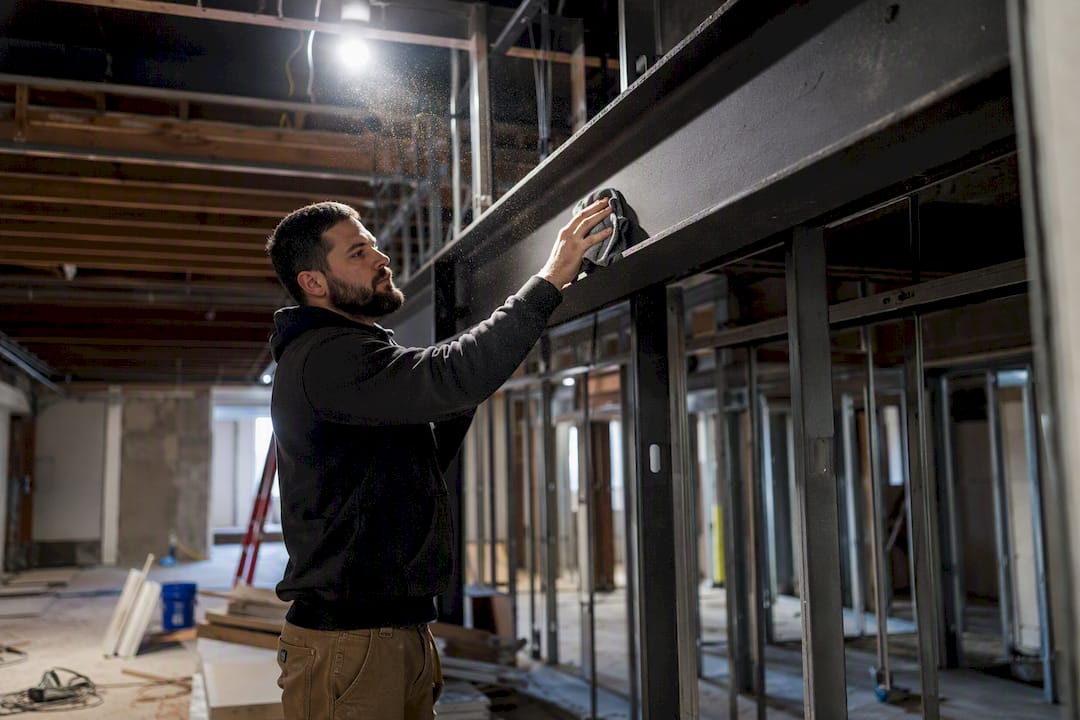
The equipment list on a legitimate bid should include HEPA-filtered vacuums, HEPA air scrubbers or portable negative-air machines, microfiber wet-wipe systems, lift equipment for high-dusting, razor scrapers for glass, and floor scrubbers matched to the substrate.
Methods vary by surface and contamination type:
- HEPA vacuuming for settled dust on horizontal and vertical surfaces
- Wet wiping and wet scrubbing to lift fine particulates without re-aerosolizing them
- Containment and negative pressure to keep dust out of finished zones during work
- pH-appropriate chemical treatment for grout haze and adhesive residue removal, which usually needs timed neutralization to avoid damaging the surface
- HVAC vent and duct cleaning when the building requires it
Pro Tip: Edge cleaning and crevice work look small on a bid, but thorough detail work at wall lines and corners cuts total remediation time noticeably because that's where dust resettles fastest.
Expect a written quote after a site visit, pre and post walkthrough photos, a clearance checklist, and a record of which PPE and engineering controls the crew actually used. If a vendor can't produce those, keep looking.
Why Isn't Routine Janitorial Service Enough for Construction Dust?
Janitorial teams are trained and equipped for daily maintenance, not silica exposure. A standard shop vac lacks the filtration to trap respirable particles, and dry sweeping just launches them back into the air your staff or tenants breathe.
The gap shows up in three places: equipment (HEPA versus standard vac), training (OSHA construction-specific programs versus general janitorial protocols), and scope (a single detailed remediation event versus recurring light maintenance). Property managers frequently assume these services overlap. They don't. The missing piece is almost always HEPA-equipped tools and an inspection-gate workflow that a routine crew was never trained to run.
Using the wrong service creates real downstream risk:
- Fine dust and grit scratch newly finished floors and polished surfaces
- Dust gets pulled into HVAC systems and recirculated building-wide
- Dry sweeping and non-HEPA vacuums can re-aerosolize silica, creating a compliance and liability exposure you didn't have before
A janitorial contract that looks cheaper on paper often costs more once you factor in a failed handover and a second cleaning crew.
When Should You Hire a Specialized Dust Remediation Contractor?
Certain triggers should send you straight to a specialist rather than your standing janitorial vendor: drywall sanding, concrete cutting or grinding, visible grout haze on new tile, fine dust coating any horizontal surface, HVAC or duct contamination, or a required LEED flush-out before occupancy.
Before you sign anything, require the vendor to show:
- HEPA-equipped vacuums and air scrubbers on their equipment list
- A written Exposure Control Plan referencing OSHA 29 CFR 1926.1153
- Technicians trained specifically on construction dust hazards, not just general cleaning
- Current insurance and licensing documentation
- References or case studies from comparable commercial jobs
Pro Tip: Ask for a pre-job walkthrough and put an inspection-gate clause in the contract, tying final sign-off and payment to an agreed checklist rather than a calendar date. It's the single easiest way to avoid arguing over an unfinished job. For help comparing bids, our construction cleaning bid preparation guide walks through what a complete proposal should include.
How Does the Remediation Process Actually Work?
A well-run dust remediation project follows a predictable sequence, and each step exists to prevent the most common failure: cleaning a space before the trades that create dust are actually done with it.
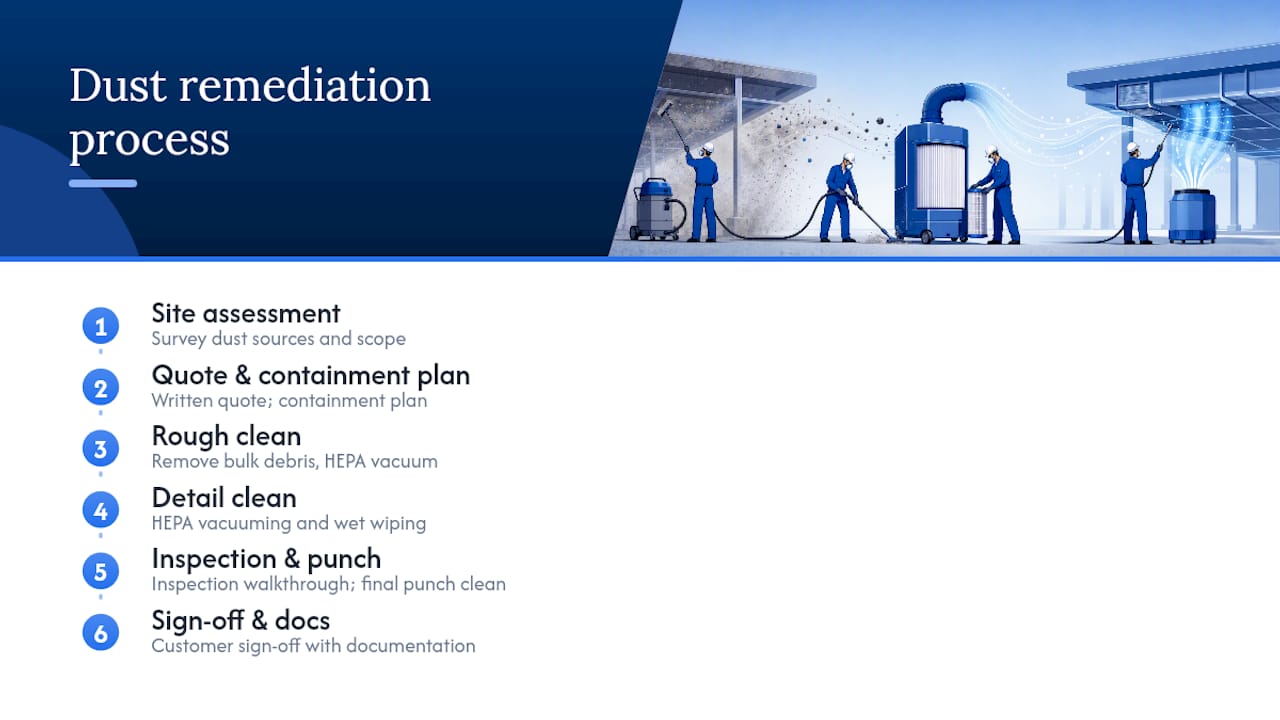
- Site assessment and measurement, where the contractor scopes square footage and surface types
- Risk notes and written quote, flagging silica-heavy tasks and any specialty chemistry needed
- Containment planning and scheduling that works around remaining trades
- Rough clean, clearing bulk debris and heavy dust
- Detail clean, addressing grout haze, adhesive residue, and fine dust on all surfaces
- Inspection gate and walkthrough, checked against acceptance criteria before moving forward
- Final clean and punch list, addressing anything the walkthrough flagged
- Customer approval and documentation, closing the job with photos and a signed checklist
The inspection gate is where most projects either succeed or quietly fall apart. A solid gate checklist confirms:
- Dust-producing trades have actually finished in that specific zone
- HVAC registers are sealed or isolated as required
- PPE and engineering controls were in place for the work performed
- Acceptance criteria are met: surface wipe tests, visual inspection, and dated photos
Don't schedule your final clean by date on the calendar. Tie it to trade completion and the inspection gate instead, or you'll be paying for a second visit. Our step-by-step post-construction cleaning process guide breaks this sequence down further for teams building their own project timelines.
What Safety and Compliance Standards Should You Require?
Respirable crystalline silica is the highest-frequency hazard on a construction dust job, and it's regulated specifically under OSHA's construction standards, 29 CFR 1926, not the general industry rules under 1910. That distinction matters for what engineering controls a contractor is legally required to use.
The construction silica standard sets exposure at 50 micrograms per cubic meter of air over an 8-hour average, and it requires engineering controls like wet methods or HEPA-filtered vacuums, plus respiratory protection when those controls aren't enough on their own.
Before work starts, ask your vendor for:
- A written Exposure Control Plan specific to the job site
- Confirmation of HEPA vacuums and air scrubbers actually deployed
- Appropriate respiratory protection, typically P100 or N95 depending on the task
- Safety Data Sheets for any chemical cleaners used on-site
- Air-monitoring or clearance test results if the project scope calls for them
Get this in writing before the crew arrives, not after. Our construction cleaning safety requirements guide covers documentation you can request directly from a bidding contractor.
What Drives Dust Remediation Cost and Timeline?
Square footage sets the floor, but contamination density is what actually moves the number. A light-dust office suite prices very differently than a space with heavy silica residue from concrete grinding.
Finish type matters just as much. Marble, epoxy, and VCT flooring each need different chemistry and dwell times, and specialty high-end finishes push per-square-foot pricing higher. Access issues, like needing lifts or scaffolding for high ceilings, add labor hours before a single surface gets wiped. And if trades are still working nearby, rework risk climbs fast.
When you're comparing bids, require separate line items for:
- Initial rough clean
- Detail clean
- Final punch clean
- Optional HVAC or duct cleaning
That breakdown is what keeps a "surprise" change order from showing up halfway through the job. Our cleaning solutions guide for builders has a fuller breakdown of what a complete phased quote should look like.
What Managers Get Wrong Most Often
The costliest mistake we see repeatedly isn't equipment or crew size. It's scheduling the final clean by a date on the calendar instead of tying it to an inspection gate that confirms the dust-producing trades are actually finished.
On a typical tenant-improvement project, that mismatch means the electrical trade shows up a day after the "final" clean, kicks dust back onto the finished floor, and the whole space needs a re-clean at extra cost. An inspection gate tied to trade completion, not the calendar, is what stops that.
How Sparklepro Commercial Cleaning Handles Dust Remediation
If you've read this far, you already know the shortcut everyone's tempted to take: call your regular janitorial vendor and hope a shop vac and some rags cover it. It won't, and the rework bill usually costs more than hiring a specialist the first time.
Sparklepro Commercial Cleaning runs HEPA-equipped crews trained on OSHA-aware procedures, with nationwide coverage and local operational knowledge in every market we serve. Our process is the same four steps every time: quote, site visit, scheduled cleaning, customer approval, so there's no guessing about what happens next or when.
Call us and you'll get a site visit, a written quote broken into phased pricing (rough, detail, final), an inspection-gate checklist built into the contract, and documentation of our insurance, licensing, and equipment before a single crew member steps on-site. If your building is in Massachusetts, start with our Massachusetts service page to request a quote directly. Property managers in Washington state can do the same through our Washington landing page, and Delaware-area managers can reach us through our Delaware service page.
Frequently Asked Questions
What is dust remediation in simple terms?
Dust remediation is the professional process of removing construction-generated dust, including respirable crystalline silica, from inside a commercial building using HEPA-filtered vacuums, air scrubbers, and wet-cleaning methods rather than standard janitorial tools.
What is drywall dust remediation specifically?
Drywall dust remediation targets the fine gypsum particulate created by sanding and cutting drywall. It requires HEPA vacuuming and wet wiping because dry sweeping simply redistributes the dust back into the air.
Why is dust remediation important for a commercial building?
Left unaddressed, construction dust settles into HVAC systems, damages new finishes, and can expose occupants to respirable silica above OSHA's permissible limit, creating both a health risk and a compliance liability.
What is the dust removal process, step by step?
It typically runs through site assessment, a written quote, containment planning, a rough clean, a detail clean, an inspection-gate walkthrough, a final punch clean, and customer sign-off with documentation.
How do I know if I need dust remediation instead of regular cleaning?
If your project involved drywall sanding, concrete cutting, tile installation with visible grout haze, or any visible fine dust on surfaces, you need a specialist remediation contractor, not your standing janitorial vendor.
Sources
- OSHA — Respirable Crystalline Silica, Construction (29 CFR 1926.1153)
- Post-Construction Cleaning: OSHA 29 CFR 1926 Safety | Opora
- Complete Commercial Post-Construction Cleaning Guide — Westlink Commercial Cleaning
- Post-Construction Cleaning Services: Process and Standards — National Cleaning Authority