
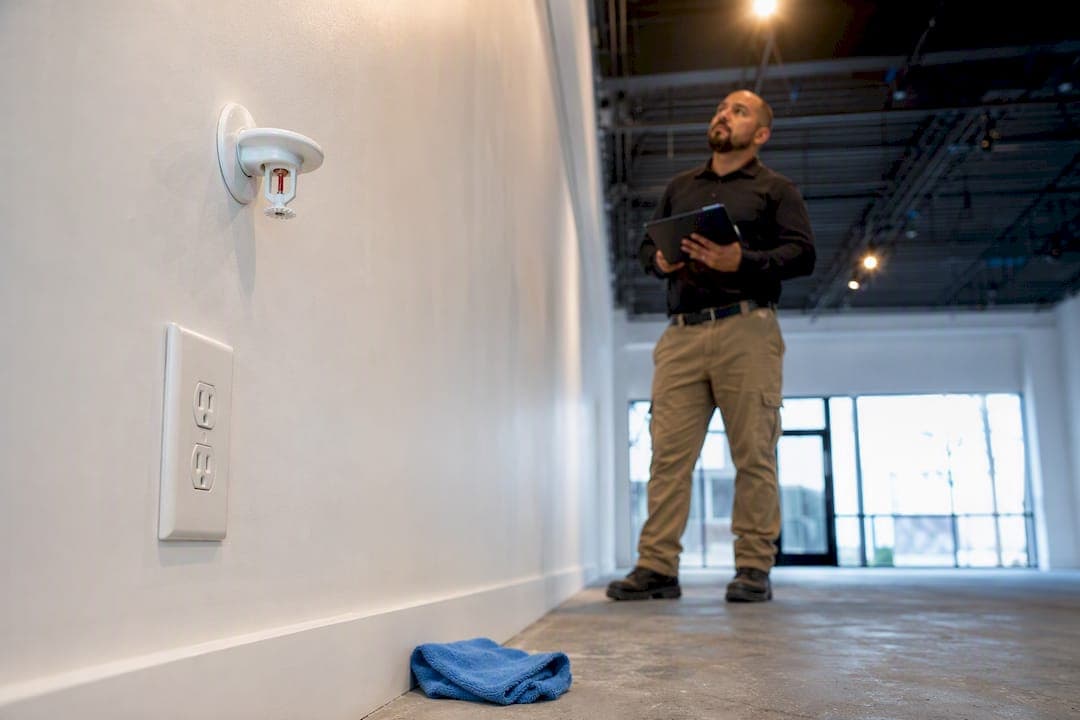
White box cleaning prepares a partially finished commercial suite for new tenants by clearing construction debris, controlling dust, and leaving a neutral, inspection-ready baseline behind. Property managers, building owners, and general contractors typically order it after a demolition or capital-improvement phase, right before marketing a space or handing it to a tenant's build-out crew. The core deliverables are consistent: debris and dust removal, wipe-downs of every surface, and prep work that lets paint, flooring, and finishes read clean under a walkthrough.
TL;DR:
- White box cleaning should be sequenced in stages, starting with debris removal and ending with final touch-ups and floor preparation, to accommodate multiple trades.
- The scope of white box delivery varies widely and should be clearly defined in the work letter and drawings, not assumed from the lease terminology.
- Larger or complex suites require more time, often stretching over a week, with access issues and hazardous materials significantly increasing costs and delays.
- Inspection reveals that paint and drywall issues are often hidden under fresh finishes, emphasizing the need for detailed documentation during cleaning.
- Using a professional cleaning service that offers nationwide coverage ensures a consistent scope and avoids disputes caused by scope ambiguity or incomplete documentation.
Table of Contents
- What Counts as a White Box, and What Doesn't
- How Do You Sequence a White Box Cleaning Job?
- How Do You Verify Scope in the Lease and Work Letter?
- What Drives Timeline and Cost on These Jobs?
- What Surprises Show Up During Inspection?
- What Does White Box Cleaning Actually Deliver?
- How Sparkleprocommercialcleaning Runs a White Box Job
- Request a Quote for Your Next Turnover
- What Sales Thinks About the White Box Gap
- Where to Verify White Box Standards and Scope
- Sources
- FAQ
What Counts as a White Box, and What Doesn't
"White box" describes a delivery condition, not a fixed checklist. CCPIA defines it as a space where basic building systems are installed and functioning, with walls typically drywalled and painted a neutral color while tenant-specific layout and finishes still need to happen. A standard white box, per CBF Contracting, commonly includes:
- Demising walls, framed and painted
- A suspended ceiling with basic lighting
- HVAC distribution throughout the suite
- Roughed-in electrical and a plumbing stub-out or ADA restroom
- A slab or sub-floor ready for finished flooring
- Storefront doors and windows, plus fire sprinklers meeting code
What's excluded matters just as much. Interior partitions, finished flooring, upgraded light fixtures, millwork, signage, and data or telecom wiring are tenant responsibilities in most leases, not part of the base delivery. Here's the catch: nothing forces a landlord and tenant to use "white box" the same way. One lease might include a functioning restroom; another might not. Confirm the exact scope in writing rather than assuming the term carries a fixed meaning.
How Do You Sequence a White Box Cleaning Job?
Cleaning a white box suite works best as a staged process, not one pass with a mop and a vacuum. Trades finish at different times, and each one leaves its own mess behind, so the sequencing below follows how demolition-to-finish work typically unfolds on a real job site.
- Debris removal. Clear demolition waste, packaging, and leftover materials before any detail cleaning starts.
- HEPA vacuuming and dust control. Drywall dust travels into HVAC returns and settles on every horizontal surface, so this step usually needs a HEPA-filtered vacuum, not a standard shop vac.
- Wipe-downs. Walls, window sills, door frames, and fixtures get wiped to remove residue before final inspection.
- Ceiling tile replacement. Stained or damaged tiles get swapped, then the new tiles get cleaned of handling marks.
- Paint touch-ups and cleanup. Overspray and drip marks get addressed, and paint residue gets cleaned off flooring and fixtures.
- Restroom finish cleaning. Fixtures, tile, and hardware get detailed if a restroom is part of the delivery.
- Window cleaning. Interior and storefront glass gets cleaned for showings.
- Floor prep. Sub-floors get swept and de-dusted so flooring contractors have a clean surface to work from.
Many cleaning crews write separate specs for the rough clean, the final detail pass, and a later punch-list touch-up, because later trades often generate new dust and damage after the "final" clean is done. That's not sloppy planning. It's realistic scheduling. A construction-phase dust control approach built for re-entries tends to save money over trying to force one clean to hold through multiple trade visits.
Pro Tip: Confirm hazardous-material clearance (asbestos, lead paint) before scheduling debris removal in older buildings. A cleaning crew that starts before abatement is complete creates a liability problem no one wants on a closeout schedule.
How Do You Verify Scope in the Lease and Work Letter?
The word "white box" on a lease exhibit tells you almost nothing on its own. What tells you something is the work letter, the attached drawings, and the responsibility matrix that spells out who delivers what. Before you schedule any cleaning crew, confirm these items in writing:
- Which systems are functioning at delivery (HVAC capacity, electrical panel size, plumbing stub locations)
- The finish standard for walls, ceiling, and flooring sub-surface
- Who pays for upgrades beyond base building standard
- Whether commissioning tests (HVAC balancing, electrical load tests) happen before or after cleaning
- Which party handles ceiling tile and ADA restroom completion, if either is ambiguous
On a site visit or pre-bid walkthrough, ask direct questions: what electrical capacity is available per square foot, whether the HVAC system was sized for the intended tenant use, and whether any finish upgrades were promised verbally but never added to the drawings. Documenting electrical and HVAC capacity matters because a tenant who signs based on assumptions, not verified numbers, ends up in change-order disputes mid-build-out. A scope-verification habit built into every deal protects your schedule more than any single clause in the lease.
What Drives Timeline and Cost on These Jobs?
A small retail suite under 2,000 square feet with clean access can often get a full rough clean and final detail done in one to two days. A large industrial or office floor plate, especially one with restricted freight elevator access or phased trade work, can stretch into a week or more of scattered cleaning visits. There's no fixed national rate here. Suite size, access, and how many times a crew has to re-enter all swing the number more than anything else.
The main cost drivers to plan around:
- Suite size and layout complexity. More square footage and more corners mean more labor hours, plain and simple.
- Access and phasing. Freight-only access, limited elevator windows, or occupied-building restrictions slow every visit down.
- Hazardous materials. Asbestos or lead paint discovered mid-job halts cleaning until abatement clears.
- Re-entries. Each trade that comes back after the "final" clean usually means another cleaning visit.
- Commissioning and testing requirements. HVAC balancing or electrical testing scheduled after cleaning can force a rework pass if dust resettles.
Build in contingency time, not just contingency dollars. Align cleaning windows with inspection dates and trade schedules rather than picking a date in isolation. If the electrician is scheduled to come back for punch-list fixes three days after your "final" clean, that clean isn't final. Plan the touch-up now instead of getting surprised later.
What Surprises Show Up During Inspection?
Fresh white paint is deceptive. It makes some defects easier to spot and hides others. A wall that looks flawless can conceal a patch job over water damage; a receptacle painted over during the rush to finish can mean an electrician has to re-expose it before it passes code. CCPIA's inspection guidance flags checking for paint on receptacles and sprinkler heads, plus stained or replaced ceiling tiles that might be hiding a leak history above.
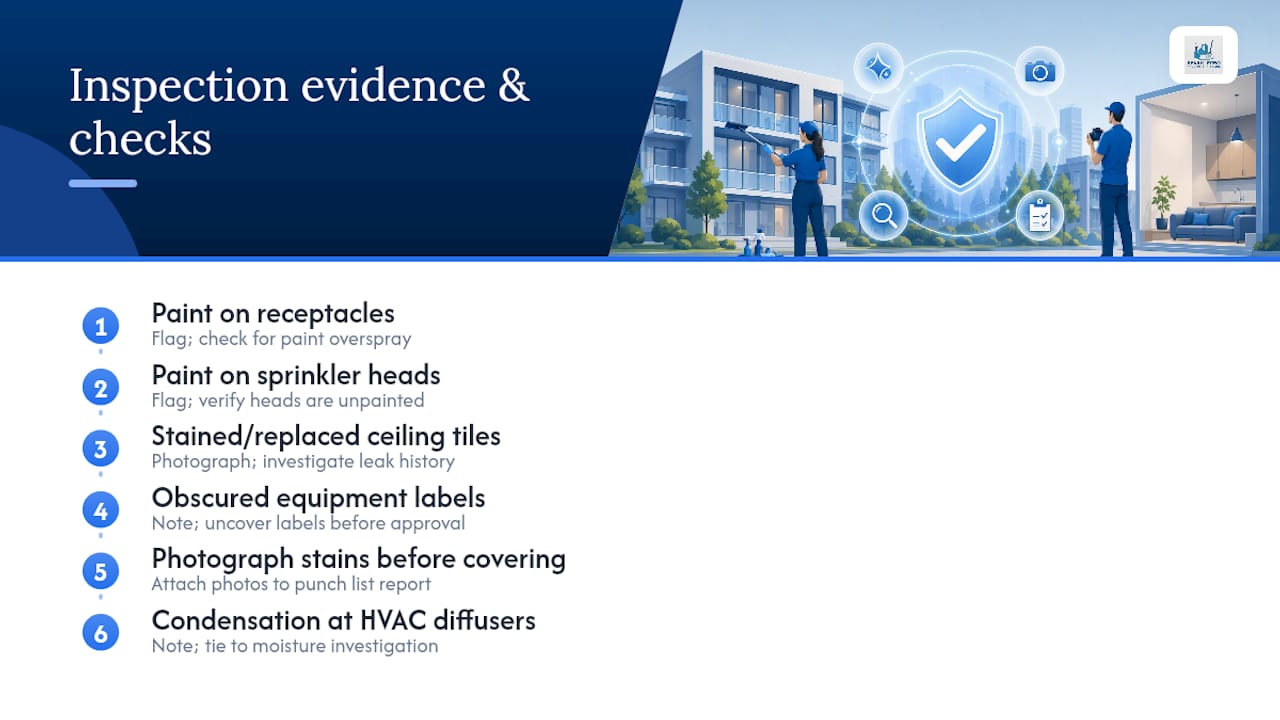
Cleaning crews should document, not just clean: photograph stains before covering them, flag any equipment label obscured by paint, and note condensation evidence around HVAC diffusers. Tie every punch-list item to a specific acceptance standard: no visible dust trail on horizontal surfaces, no paint overspray on fixtures, no unexplained staining left uninvestigated.
What Does White Box Cleaning Actually Deliver?
Done right, white box cleaning speeds up leasing. A clean, neutral suite shows better to prospective tenants and gives build-out contractors a workable baseline instead of a construction site. Rubicon's research ties white boxing to improved showability and reduced vacancy time, though results depend heavily on what's actually included in the delivery.
Here's what it doesn't do: replace tenant finishes, secure permits, upgrade undersized HVAC or electrical systems, or substitute for formal commissioning. Cleaning gets you to a professional baseline. It doesn't fix a system that was never sized for the next tenant's use.
- Pair every cleaning phase with a documented scope, not a verbal understanding.
- Schedule marketing and showings around confirmed completion dates, not optimistic ones.
- Treat cleaning as one piece of a closeout process, not the whole process.
How Sparkleprocommercialcleaning Runs a White Box Job
A straightforward four-step process is typically followed on these jobs: quote, site visit, scheduled cleaning, customer approval. That site visit matters most. It's where suite size, access constraints, and hazardous-material questions get answered before a crew shows up. Sparkleprocommercialcleaning handles post-construction and tenant-turn cleaning nationwide, which covers most of what a white box turnover needs. For minor touch-ups between trade visits, an in-house team can often handle spot cleaning. For the full rough clean, final detail, and punch-list sequence, a dedicated crew with HEPA equipment and documented acceptance criteria tends to hold up better under inspection.
Request a Quote for Your Next Turnover
Using a professional service is an alternative to piecing together in-house staff or juggling multiple subcontractors for a white box turnover. Instead of coordinating separate vendors for debris removal, dust control, and final detail work, you get one nationwide crew that handles post-construction cleanouts and tenant-turn cleans as a single scheduled engagement.
The process starts with a quote, followed by a site visit to confirm scope, hazardous-material status, and access windows before any work begins. Sparkleprocommercialcleaning offers post-construction cleaning, janitorial services, tenant turn cleans, and move-out cleans under one engagement, with crews available across the country and specific coverage for New Jersey properties as well. If a lease deadline or tenant move-in date is approaching, request a quote now and get a site visit scheduled before the punch-list window closes.
What Sales Thinks About the White Box Gap
The biggest mistake property managers make isn't hiring the wrong cleaning crew. It's assuming "white box" means the same thing to every party on the deal. A landlord's leasing team, a tenant's architect, and a general contractor's project manager can all read that phrase differently, and nobody catches the gap until someone's standing in a suite arguing about who was supposed to finish the restroom.
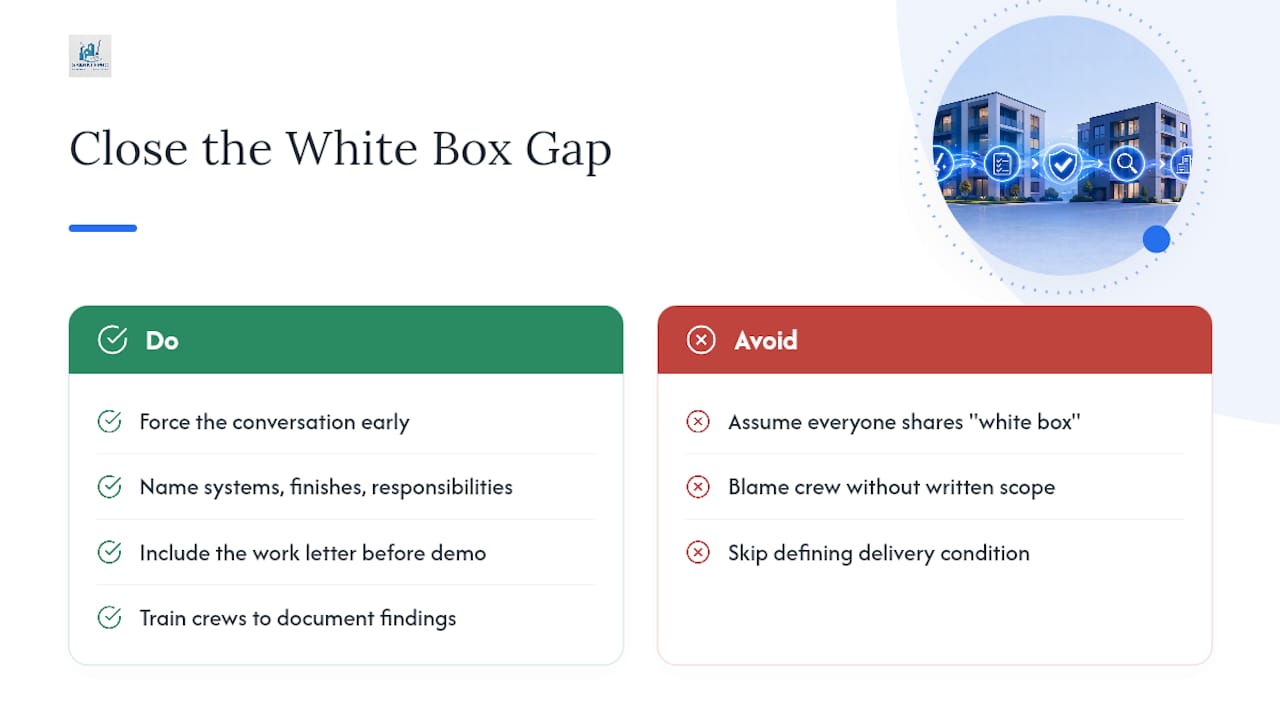
The fix isn't complicated, but it's uncomfortable: force the conversation early. Get the work letter to name every system, every finish level, and every responsibility before the first demo crew shows up. Cleaning crews get blamed for "missing" scope items that were never actually promised in writing, and that blame is almost always misplaced. The suite didn't fail the inspection because someone skipped a wipe-down. It failed because the delivery condition was never defined clearly enough to inspect against in the first place.
Treat the cleaning phase as the moment where ambiguity gets caught, not created. A crew trained to document what they find, not just clean around it, saves property managers from disputes that show up months later during a tenant's first system failure.
— Sales
Where to Verify White Box Standards and Scope
For definitions and inspection guidance, CCPIA's white box overview and CBF Contracting's construction breakdown cover the building-systems side. For scope language, the SolutionsGC glossary entry explains why lease exhibits and drawings, not the label itself, control what gets delivered.
Sources
- White Box Commercial Spaces - CCPIA
- White Box Construction: What It Is and What to Expect - CBF Contracting, Inc.
- White-box (glossary) — REIPrime / SolutionsGC summary
- White Boxing Commercial and Industrial Spaces - Rubicon
FAQ
What Is the Difference Between White Box and Vanilla Shell?
The terms are often used interchangeably, but neither is standardized industry-wide, so the actual deliverables depend entirely on what the lease or work letter specifies rather than the label used.
Does White Box Cleaning Include HVAC Cleaning?
Base white box cleaning covers dust removal from HVAC diffusers and surfaces, but full system cleaning or commissioning is typically a separate scope item that should be confirmed before the final clean.
How Long Does a White Box Cleaning Job Take?
A small suite with easy access can often be cleaned in one to two days, while larger or restricted-access properties can take a week or more depending on trade phasing and re-entries.
Who Pays for White Box Cleaning, Landlord or Tenant?
This is negotiated per lease and varies by market and deal structure, so property managers should confirm the responsible party in the work letter rather than assume a default.
Does Sparkleprocommercialcleaning Offer White Box Cleaning Nationwide?
Sparkleprocommercialcleaning provides post-construction and tenant-turn cleaning services nationwide, starting with a quote and site visit to confirm the specific scope for each property.