
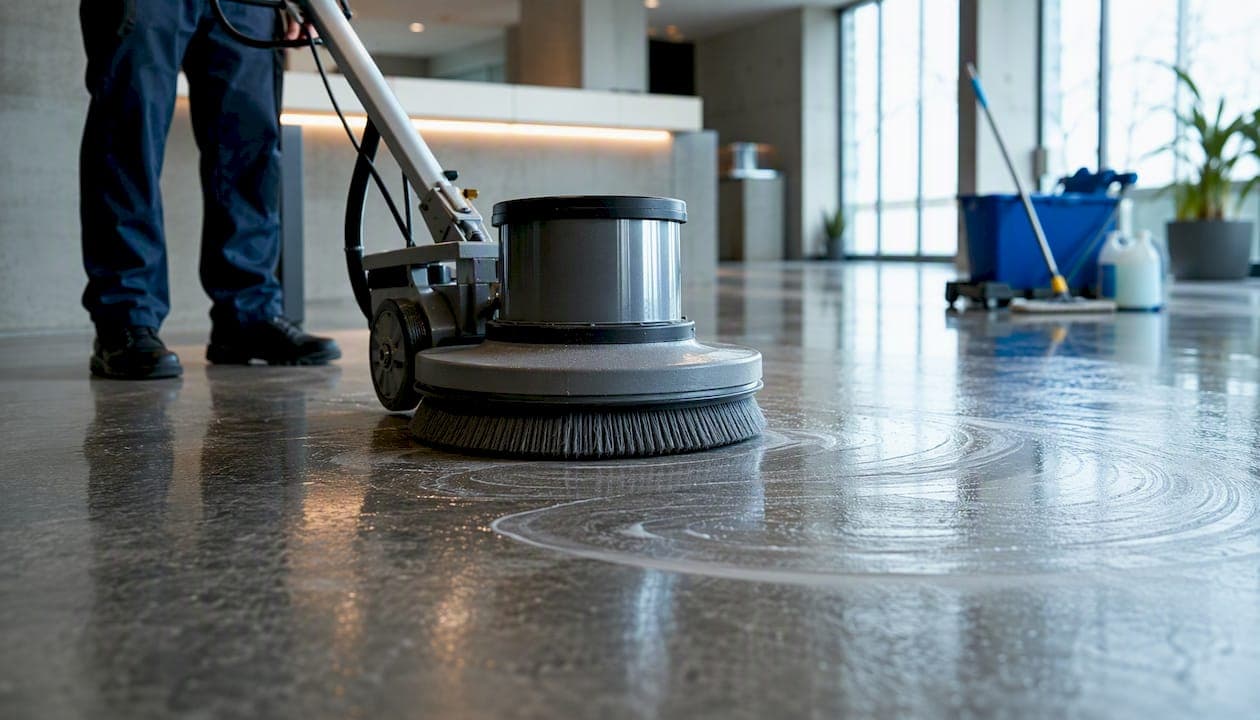
Hiring professional cleaners delivers measurable time savings, better health outcomes, and asset protection that typically pays back the fee over time. The EPA's indoor air quality guidance confirms that indoor air can be 2–5 times more polluted than outdoor air, making thorough, regular cleaning a health decision, not just an aesthetic one. IICRC-certified technicians follow documented protocols that go well beyond what a mop and a spray bottle can accomplish, and providers like Sparkleprocommercialcleaning bring that standard to commercial facilities nationwide. For homeowners weighing the cost and managers calculating ROI, the case is straightforward: cleaner spaces protect people, protect assets, and free up time for higher-value work.
Table of Contents
- The main benefits of professional cleaning at a glance
- 1. You get real time back — here's how much
- 3. Professional cleaning improves your indoor air and your health
- 4. Cleaning protects your assets and saves money long-term
- 5. Consistent results come from documented processes, not good intentions
- 6. A cleaner space reduces stress and sharpens focus
- 7. Commercial properties gain specific advantages beyond cleanliness
- 9. How to choose a professional cleaner without getting burned
- Key Takeaways
- The real value most facility managers miss
- Sparkleprocommercialcleaning covers the full scope of commercial cleaning
- Authoritative sources and further reading
The main benefits of professional cleaning at a glance
Here are the core advantages, with a note on who gains most from each:
- Improved indoor air quality — Reduced allergen and pathogen loads benefit everyone, especially allergy and asthma sufferers.
The sections below expand the highest-priority items with evidence and practical guidance.
1. You get real time back — here's how much
Professional cleaning typically frees several hours per week for homeowners. Across a full year, that adds up to hundreds of hours that would otherwise go to scrubbing bathrooms, vacuuming, and wiping down surfaces. That time can go toward family, exercise, or work that actually moves the needle.
For property managers, the math looks different but the principle holds. When facilities staff spend their shifts on core operational tasks instead of restroom rounds and floor care, productivity per labor dollar rises. Outsourcing commercial cleaning also removes scheduling headaches, supply procurement, and equipment maintenance from a manager's plate.
Pro Tip: Divide your hourly rate (or your staff's fully loaded labor cost) by the hours cleaning would take each week. Compare that number to a cleaning quote. Most people find the quote is lower, sometimes significantly.
As NBC News reported on the wellbeing effects of hiring a cleaner, organization experts frame the decision as "enlarging your team" — creating capacity rather than spending money. That framing applies equally to a homeowner and a facility director.
3. Professional cleaning improves your indoor air and your health
Regular professional cleaning improves indoor air quality and reduces the pathogen and allergen loads that drive respiratory symptoms and illness. The EPA's indoor air quality data puts the problem in stark terms: indoor air can be 2–5 times more polluted than outdoor air, driven by dust, mold spores, VOCs from building materials, and biological contaminants.
For allergy and asthma sufferers, the difference between a HEPA-vacuumed home and one cleaned with a standard upright is measurable in symptom frequency. In workplaces, regular cleaning of high-touch points (door handles, elevator buttons, shared keyboards) reduces pathogen transfer and cuts illness-related absenteeism. The EPA's guidance on cleaning and disinfection protocols also emphasizes selecting EPA-registered disinfectants and following label directions precisely — something trained technicians do as a matter of course, not as an afterthought.
4. Cleaning protects your assets and saves money long-term
Spending on professional cleaning reduces replacement and repair costs by extending the life of floors, carpets, countertops, and upholstery. Grit tracked across hardwood floors acts like sandpaper on the finish. Mineral deposits left on tile grout etch the surface permanently. Mold that takes hold in carpet backing requires full replacement, not spot treatment.
The ISSA "Value of Cleaning" white paper frames cleaning as an economic lever: modest increases in cleaning investment generate measurable returns through reduced absenteeism, improved productivity, and preserved asset value. Facility managers who treat cleaning as a cost center often discover the real cost only when a floor needs refinishing or a carpet needs replacing years ahead of schedule.
| Scenario | Without regular cleaning | With professional cleaning |
|---|---|---|
| Commercial carpet (high-traffic) | Replacement every 5–7 years | Lifespan extended to 10+ years with hot-water extraction |
| Hard-surface flooring | Finish degraded by embedded grit; refinishing required | Finish preserved; refinishing deferred significantly |
| Workplace absenteeism | Higher illness transmission from contaminated surfaces | Reduced sick days through targeted disinfection |
| Asset replacement budget | Higher annual spend on premature replacements | Lower spend; cleaning cost partially offsets replacement cost |
As industry analysis on asset protection notes, the financial benefit of professional cleaning is frequently overlooked precisely because it shows up as costs that don't appear on the ledger.
Pro Tip: Schedule a targeted deep clean for high-traffic surfaces (carpets, entry flooring, restrooms) every 90 days alongside weekly or bi-weekly routine service. That combination balances daily appearance with lifecycle cost better than either approach alone.
5. Consistent results come from documented processes, not good intentions
Professional services deliver predictable outcomes because they run on documented processes, not individual motivation. A trained crew working from a written scope of work produces the same result on visit 12 as on visit 1. That consistency is what makes professional cleaning worth the contract.
A quality scope of work should include:
- Specific task list by area (restrooms, common areas, offices, kitchens)
- Cleaning frequency for each task (daily, weekly, monthly)
- Products and equipment to be used, including any green-certified options
- Clear exclusions (what is not covered)
- Quality-control checkpoints and sign-off procedure
IICRC standards and technician training are the industry's primary trust signals. The IICRC (Institute of Inspection, Cleaning and Restoration Certification) sets protocols for carpet care, water damage, and specialty cleaning that certified technicians must follow. When evaluating providers, ask for proof of IICRC certification or equivalent documented training. A provider who offers a site visit, a written quote, and an inspection checklist before the first service is operating at a professional standard. One who quotes over the phone without seeing the property is not.
For property managers, effective cleaning solutions also include documented handoff procedures and performance metrics so you can verify results against the contract.
6. A cleaner space reduces stress and sharpens focus
Cleaner spaces reduce stress and improve focus. The evidence for this is consistent across both residential and workplace settings. Cluttered, dirty environments increase cortisol levels and fragment attention; clean ones lower cognitive load and make it easier to concentrate.
For homeowners, the effect is partly practical (no mental list of cleaning tasks hanging over the weekend) and partly social (a home that's ready for guests without a scramble). The NBC News reporting on hiring a house cleaner found that the happiness benefit was real and lasting, driven by reclaimed time and reduced background stress.
In workplaces, the productivity case is well-documented. The ISSA white paper identifies reduced absenteeism and improved performance as direct outcomes of cleaner facilities. Employees working in visibly clean, well-maintained spaces report higher morale, and managers see fewer sick-day requests during periods of consistent professional cleaning.
7. Commercial properties gain specific advantages beyond cleanliness
For businesses, cleaning supports brand image, regulatory expectations, and tenant retention in ways that go well beyond appearance. A dirty lobby tells a prospective tenant or customer something about how the building is managed. A clean one signals operational competence.
Commercial-specific services and their use cases:
- Post-construction cleanouts — Remove construction dust, adhesive residue, and debris before occupancy. Critical for protecting new flooring and HVAC systems. See the post-construction cleaning process for what a proper scope covers.
Nonprofits like Cleaning For A Reason demonstrate how targeted professional cleaning programs can extend well beyond commercial settings into community health initiatives, underscoring the broader social value of the service category.
Regular cleaning also ties directly to lease obligations, health department inspections, and customer-facing standards. A retail space that fails a health inspection or a multifamily property with persistent odor complaints faces real financial consequences.
9. How to choose a professional cleaner without getting burned
Choosing the right cleaner depends on verifying credentials, getting a clear scope in writing, and understanding the risk controls before signing anything. The questions below are the ones worth asking every provider.
- Are you licensed, bonded, and insured? Ask for a certificate of insurance naming your property. No documentation means no contract.
- Do your technicians hold IICRC certification or equivalent documented training? Especially relevant for carpet, upholstery, and specialty services.
- Can you provide references from similar properties? A commercial cleaner with healthcare and office experience is not automatically qualified for post-construction work.
- Do you have a written scope of work and sample SOPs? A professional provider has these ready; a marginal one improvises.
- What products do you use, and do you offer eco-friendly or low-VOC options? Relevant for LEED properties, healthcare settings, and occupant health.
- How do you screen and background-check workers? Especially important for after-hours access to secured facilities.
- Do you maintain Safety Data Sheets (SDS) for all chemicals used on-site? Required by OSHA; a provider who doesn't know what an SDS is should not be handling concentrated chemistries in your building.
Red flags to walk away from:
- No written quote; price given verbally only
- Vague scope ("we'll clean everything") with no task list
- Pressure to sign a long-term contract before a trial period
- No proof of insurance when asked
- Inability to name the products or certifications they use
Contract review checklist: Confirm service frequency, cancellation terms (30-day notice is standard; 12-month lock-ins without performance clauses are not), the process for reporting damage or unsatisfactory work, and what metrics trigger a remedy. A property manager's hiring guide covers these points in detail.
Key Takeaways
Professional cleaning pays for itself through time savings, healthier indoor environments, and deferred asset replacement costs — the financial case is strongest when you account for all three together.
| Point | Details |
|---|---|
| Health and IAQ | Indoor air can be 2–5x more polluted than outdoor air; professional cleaning reduces allergen and pathogen loads. |
| Asset protection | Regular cleaning extends carpet and flooring life significantly, reducing premature replacement costs. |
| Time and productivity | Outsourcing cleaning frees hours weekly for homeowners and redirects staff capacity for business managers. |
| Hiring checklist | Verify insurance, IICRC certification, written scope, and references before signing any contract. |
| Sparkleprocommercialcleaning | Offers nationwide commercial cleaning across post-construction, janitorial, disinfecting, and specialty services with a four-step engagement process. |
The real value most facility managers miss
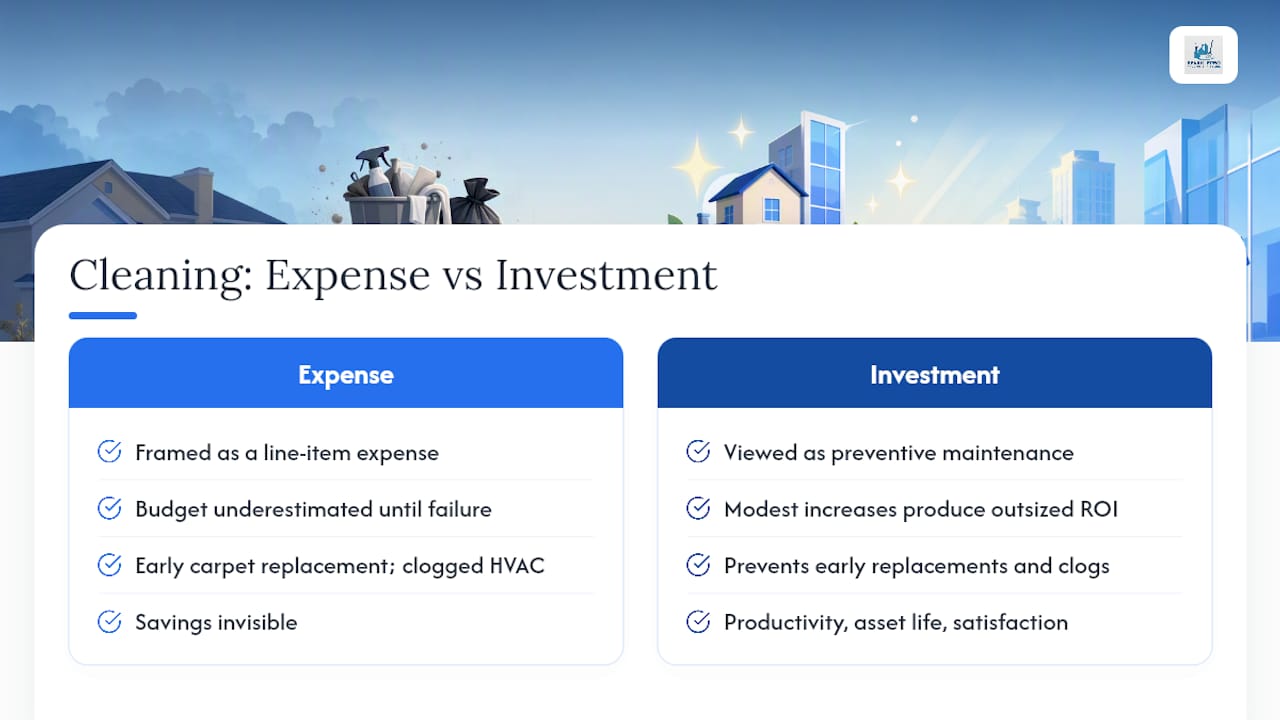
The conventional framing of professional cleaning as a line-item expense gets it backwards. Cleaning is closer to preventive maintenance than to housekeeping, and the ROI calculation changes completely once you account for what you're protecting.
Most facility managers I've seen underestimate the cleaning budget until a carpet needs replacing three years early or an HVAC system clogs with construction dust that a proper post-build clean would have removed. The ISSA research is clear on this: modest increases in cleaning investment produce outsized returns when measured across productivity, asset life, and occupant satisfaction. The problem is that the savings are invisible. You don't see the floor refinishing you didn't need or the sick days that didn't happen.
The same logic applies to homeowners. Hiring a cleaner isn't a luxury purchase; it's a decision about how you value your own time and what condition you want your home to be in five years from now. The people who frame it as "I can't afford it" are often the same ones spending weekends on tasks that a professional could complete in two hours with better results.
The credential question matters more than most buyers realize. An IICRC-certified technician working from a documented protocol is a different product than someone with a mop and a bucket, even if both show up at the same price. Ask for the certification. Ask for the scope in writing. The providers who can't produce those two things quickly are telling you something important.
Sparkleprocommercialcleaning covers the full scope of commercial cleaning
Property managers and building owners who need predictable, insured commercial cleaning across multiple service types don't have to manage multiple vendors.
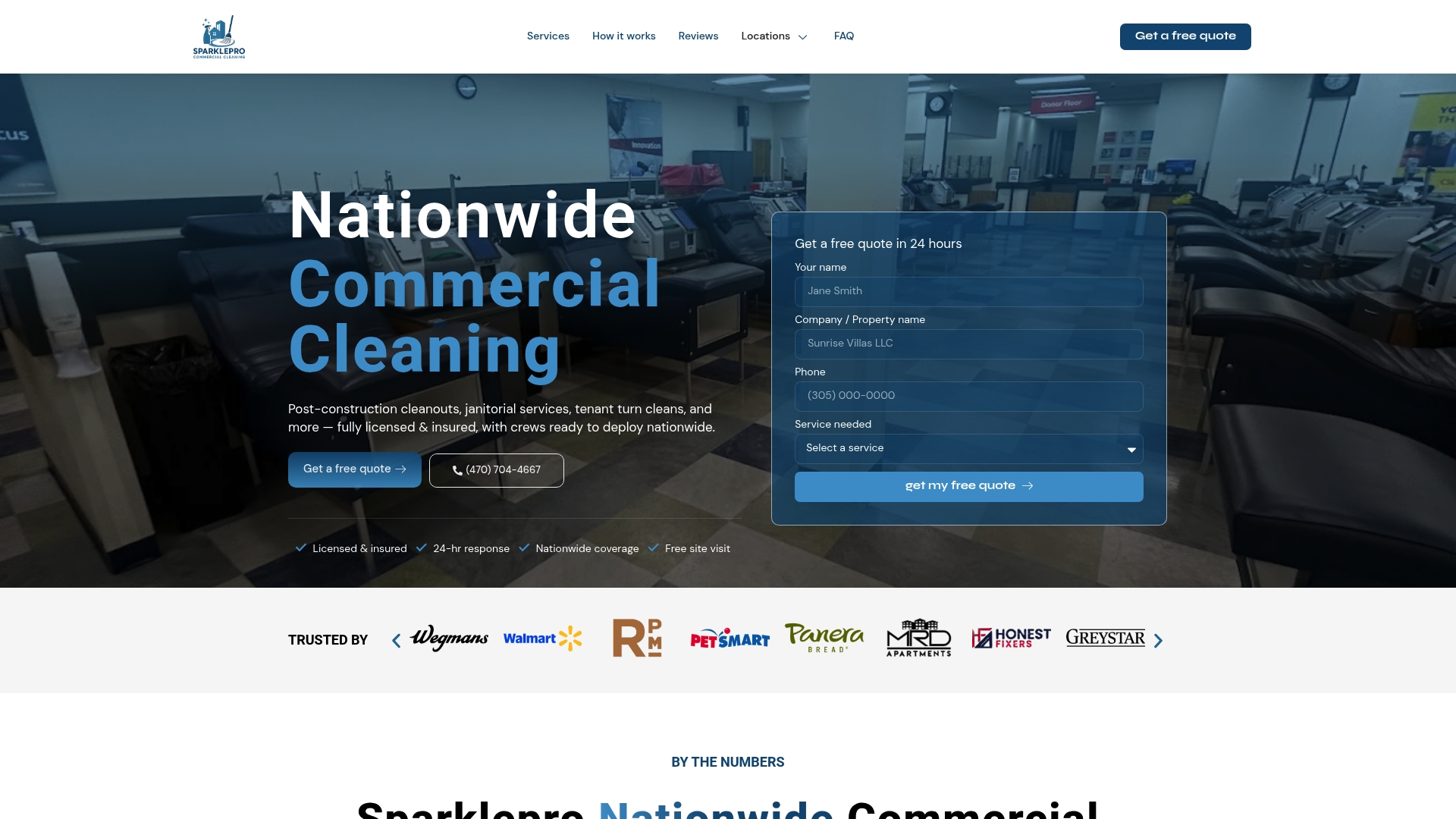
Sparkleprocommercialcleaning handles post-construction cleanouts, routine janitorial, tenant move-out and turn cleaning, disinfecting, day porter services, and eco-friendly programs for LEED properties, all under one contract with nationwide reach. The engagement process is straightforward: site visit, written proposal with a clear scope of work, scheduled service, and customer approval before the job is closed. Every engagement is fully licensed and insured, and technicians follow documented protocols aligned with IICRC standards.
If your facility is in Delaware, Massachusetts, or Washington, request a site visit and written quote at sparkleprocommercialcleaning.com to get a scope and price specific to your property.
Authoritative sources and further reading
- epa.gov
- The Value of Cleaning
- How Hiring a House Cleaner Made Me Happier, Healthier and More Productive
- cleaningforareason.org
- Why hiring cleaning professionals is worth every penny
- Sparklepro Commercial Cleaning (landing page)