
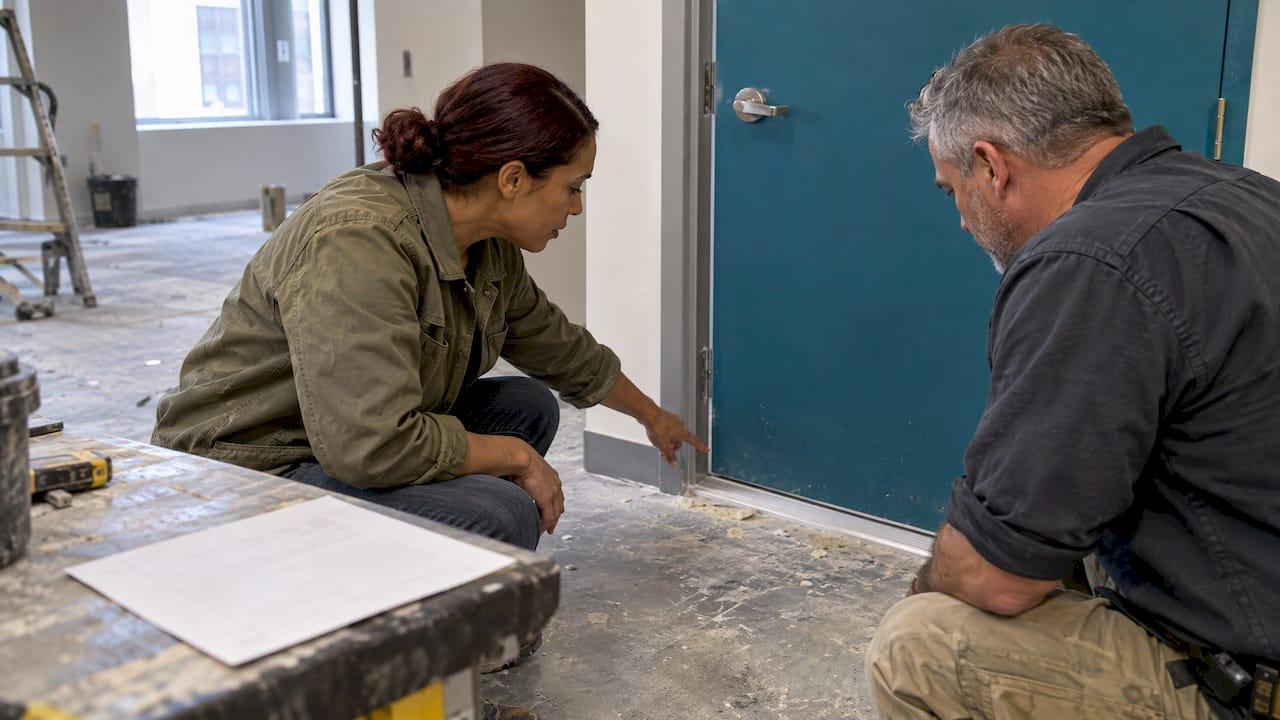
A turnover cleaning chargeback is a cost the owner, manager or general contractor deducts from, or bills to, a contractor or tenant because the space was not left clean as the contract required. It holds up only when four things line up: a written cleaning obligation, a documented failure, notice, and a reasonable cost. This guide shows property managers, GCs and building owners how to issue a chargeback that stands, how to answer one you disagree with, and how to set up turnover so the dispute never starts.
TL;DR
- Cleaning chargebacks come from the contract or lease, not from a statute, so the wording of your scope decides who pays.
- A chargeback survives a dispute when you can show the obligation, the observed failure, written notice, the corrective work and a reasonable cost.
- If you are on the receiving end, object in writing inside the dispute window and ask for itemized backup.
- Defining rough, final and touch-up cleaning in writing, with photos of existing conditions, prevents most disputes.
- Hiring a licensed, insured cleaning crew that signs off against a checklist moves the problem from billing to prevention.
Table of Contents
- What a turnover cleaning chargeback actually is
- When you can charge for turnover cleaning
- What a defensible chargeback file contains
- How to dispute a cleaning chargeback
- Preventing turnover cleaning disputes
- Special cases managers run into
- Our perspective
- Get turnover cleaning off your chargeback list
- FAQ
- Sources
What a turnover cleaning chargeback actually is
The term covers two situations that look alike on an invoice.
On a construction or tenant improvement job, the usual word is back charge. One construction contract resource describes it as an amount charged against a subcontractor for work the general contractor had to perform because the subcontractor failed to meet its contractual obligations, and cleanup is one of the common reasons. The same type of source stresses that a back charge is a cost deduction for an expense the subcontractor was contractually responsible for, not a penalty and not a negotiating tactic. Treat it that way in your paperwork and the tone of the conversation changes.
On a lease turnover, the same idea shows up as a charge to a departing tenant for cleaning the space back to the standard the lease requires. The mechanics differ, but the logic is identical: someone owed a clean space, did not deliver it, and someone else paid to fix it.
Note that this is not a card-network chargeback, where a customer disputes a payment with their bank. Everything here is a contract matter between businesses.

When you can charge for turnover cleaning
Short answer: when the document the parties signed says that party was responsible, and you can show it did not do the job.
Construction and vendor contracts
Cleaning duties are normally written into the general conditions or a cleaning and waste management specification. A published U.S. cleaning and waste management specification assigns ongoing housekeeping and final cleaning to the contractor or vendor. It also says that if that party fails to clean as specified, the owner may do the work and charge the cost to it. That is the template most chargeback clauses follow.
Because these charges are generally contractual rather than statutory, there is no general right to charge that exists outside the paper. If the subcontract is silent on cleanup, you are arguing from weak ground. If it is clear, you are mostly dealing with process.
The process matters as much as the right. A quoted subcontract form discussed by a concrete industry association requires written default notice and a reasonable time to correct before costs become chargeable, billing by the 15th of the following month, and prompt payment of amounts not in dispute. Your own contract may differ, but the pattern is common: notice first, chance to cure second, charge third.

Commercial leases
Whether a landlord can charge a commercial tenant depends mainly on the lease. A standard office lease cleaning clause shows the range of items a lease can allocate between landlord and tenant: interior and exterior cleaning, trash collection, recycling and extermination. Leases also vary on who carries recurring janitorial and day porter costs. In one publicly filed example, a lease amendment made the tenant directly and financially responsible for building janitorial and day porter services, costs that had previously sat inside the landlord's base-year expenses. Read the surrender, condition-on-return and operating expense clauses together before you bill anyone.
Who pays under which document
| Situation | Where the duty lives | What triggers a charge | What to check first |
|---|---|---|---|
| GC to subcontractor | Subcontract and cleaning specification | Failure to keep the site clean or complete final cleaning | Notice and cure language |
| Owner to GC | Prime contract, general conditions | Space not turnover-ready at handover | Definition of final clean and acceptance |
| Landlord to tenant | Lease, surrender and condition clauses | Space returned below the required condition | Move-out standard, normal wear carve-outs |
| Manager to janitorial vendor | Service agreement and scope | Missed scheduled tasks | Cure period and credit terms |
For a deeper look at the agreement that governs recurring service, see our guide to janitorial contract terms to put in writing.
What a defensible chargeback file contains
A chargeback is won or lost on records. Build the file as a chain with five links:
- The obligation. The clause, specification section or lease paragraph that assigns the cleaning duty.
- The observed failure. What was wrong, where, and when you saw it, against the standard in the document.
- Notice. Written notice to the responsible party with a reasonable time to correct.
- Corrective work. Who did the cleanup, on what dates, for how many hours.
- Reasonable cost. An invoice or payroll record, priced at rates you can defend.
Guidance on backcharges commonly lists daily field reports, time-stamped photographs or video, outside invoices or internal payroll records, and written correspondence as the supporting records. Contractors who receive a charge are advised to ask for itemized backup showing the date, worker names, labor rates and evidence of prior notice. Build your file so that request can be answered the same day.
Practical habits that make the file stronger:
- Photograph each area at the start of the cleaning phase and at the walkthrough, with the date visible.
- Keep punch-list items specific: "drywall dust on window sills, east elevation, floors 2 and 3" beats "building dirty."
- Send notices by a method that creates a record, such as email to the contact named in the contract.
- Price the corrective work at actual cost. An inflated number is one of the standard grounds for challenging a backcharge, and it invites a fight over the entire amount.
Debris and exterior areas
Chargebacks often include debris removal and exterior cleanup, not only interior dust. If your specification covers walkways and parking areas, say so in the scope and set a cleaning rhythm. A commercial sidewalk cleaning schedule is one way to decide how often exterior surfaces need attention. For the interior side of debris control, our construction site debris removal tips cover what should leave the site before the final clean begins.
How to dispute a cleaning chargeback
If you are the contractor or tenant who received the charge, speed and paper matter more than argument.
- Read the dispute clause today. Subcontracts commonly set a window for written objections. A contractor should object in writing within that window, request itemized backup and preserve its own records.
- Check notice. A back charge issued without written notice of the defect is, in the view of that same source, among the easiest to get reversed, because most subcontracts require notice first.
- Test the standard. Was the space judged against the specification, or against someone's expectation? Compare the complaint to the cleaning section of the contract.
- Separate old from new. Dust and debris from another trade after your crew left is a different problem from agreed work you did not finish.
- Question the cost. Ask for dates, worker names, hours and rates. Common grounds for challenge are lack of notice, defective work, inflated costs or unauthorized charges.
- Pay what is undisputed. Contract language often requires prompt payment of amounts not in dispute, so dispute the line items, not the whole invoice.
- Escalate by the contract. If talks fail, follow the dispute-resolution steps in the agreement or the payment statutes that apply to your project. A construction attorney in your state is the right person to advise on those deadlines.
Owners and managers should read that list as a warning too. Every weakness a contractor would use, missing notice, vague standards, unexplained costs, is one you can close before you issue the charge.
Preventing turnover cleaning disputes
Most disputes are scope disputes in disguise. Both sides believed "clean" meant something different. Written guidance on three-phase bidding suggests defining rough, final and touch-up or return cleaning in writing, setting the tasks for each visit, stating site-readiness and debris boundaries, documenting existing conditions, getting approval for added scope, and distinguishing incomplete agreed work from new contamination. Those are the right levers.
Here is how to apply them.
Write the three phases into the contract
- Rough clean: removal of bulk debris and settled dust while trades are finishing, so later work happens in a manageable space.
- Final clean: surfaces, glass, fixtures, floors and restrooms brought to the handover standard.
- Touch-up or return visit: a defined visit after punch-list work or tenant move-in prep, so late dust has a home in the scope and not in a dispute.
Our construction turnover cleaning timeline walks through the phases in order, and the builder turnover timeline covers the short window between completion and occupancy. A final clean checklist by stage and room gives you the acceptance standard to attach to the contract.
Document the starting condition
Before any crew begins, walk the space with the responsible party, photograph it and have both sides acknowledge the record. This is the cheapest insurance in turnover. It also settles the question of damage that was there before cleaning started.
Define site readiness
Cleaning crews can only finish a space that is ready for them. State what must be true before the final clean is scheduled: trades out, debris removed, protection stripped, power and water on. If a crew arrives and the site is not ready, the contract should say what happens, so a return trip is a priced change and not an argument.
Control added scope
Turnover is full of small additions: an extra floor, a second pass on glass, a tenant request the day before handover. Require written approval for each. An email reply is enough if the contract says so.
Set the acceptance step
Name who inspects, when, and against what. A joint walkthrough with a signed punch list ends the vague phase of the project. Anything on the list becomes a defined item with a notice date, which is exactly what a chargeback file needs if the item is not fixed.
Budget for it
Chargebacks often happen because cleaning was an afterthought in the budget. Our guide to what to budget for post-construction cleaning explains how scope and square footage drive the number, so cleaning is a line item from the start.
Special cases managers run into
Tenant improvement work. A TI build in an occupied building has neighbors, shared corridors and air handling to protect. The standard for cleanup is higher and the acceptable timeline shorter. Our page on tenant improvement cleaning for property managers covers what to specify.
Move-out and tenant turns. When a tenant leaves, write the condition standard into the lease and inspect with photos on the day keys are returned. If you use a vendor for the turn, the ranking of move-out cleaning services for B2B turnover helps you choose what to ask for.
Occupancy turnover. When a space moves from one occupant to the next, a defined process avoids both gaps and double charges. See what occupancy turnover cleaning is and how to run it.
Healthcare and specialized spaces. These carry stricter cleanliness standards, so the contract should name the standard and the disinfecting or environmental protocol, not just "cleaned."
Our perspective
Almost every cleaning chargeback we hear about began as a scope gap, not a bad crew. Nobody wrote down what "final clean" included, nobody photographed the starting condition, and the first written record was the invoice.
We run turnover differently. Our process starts with a quote and a site visit, so the scope is agreed against the real space. Cleaning is then scheduled in phases, and the customer approves the result. That sequence is what keeps a billing question from becoming a dispute.
We are licensed and insured, work with local crews and aim to respond within 24 hours. For property managers and GCs, that means one accountable vendor for the clean, with a defined handover, instead of a finger-pointing exercise between trades.
If you manage turnover across several properties, our advice is to standardize: one cleaning specification, one checklist, one acceptance walkthrough. It makes every chargeback decision, issuing or avoiding one, simpler.
Sales
Get turnover cleaning off your chargeback list
We provide post-construction cleaning, tenant turn and move-out cleans, deep cleans, disinfecting, janitorial and day porter services for offices, retail, multifamily, industrial and healthcare facilities across the United States. Pricing depends on property size, frequency and scope, and every engagement starts with a quote and a site visit.

If you want a turnover handled against a written scope and a checklist, request a quote from Sparkle Pro Commercial Cleaning. If you are hiring for a builder project, our GC and property manager hiring guide lists what to ask any cleaning vendor.
FAQ
Can a property manager charge a contractor for cleaning without written notice?
The contract decides. Many subcontracts require written notice of the defect and a reasonable time to correct before costs become chargeable, and a charge issued without notice is among the easiest to reverse. Send notice by email or another recorded method, and keep it in the file.
Are cleaning chargebacks set by law?
Generally no. Construction back charges are largely governed by the contract, and commercial lease cleaning duties are set by the lease. Payment statutes may affect deadlines and withholding on your project, so check them with a construction or real estate attorney in your state.
What proof should back a turnover cleaning chargeback?
Keep the contract clause, dated photos or video, field reports, written notices, and the invoice or payroll record for the corrective work. The file should show the obligation, the failure, notice, the corrective work and a reasonable cost.
How do I stop a chargeback from becoming a dispute?
Define rough, final and touch-up cleaning in writing, photograph conditions before work starts, and require written approval for extra scope. Finish with a joint walkthrough and a signed punch list so any open item has a date and an owner.
Sources
- What Is a Back Charge in Construction? Definition
- Construction Backcharge Management Guide
- Back Charges: Construction Contract Rules and FAQs
- Section 01 74 00 Cleaning and Waste Management
- Watch Your Back Charges, American Society of Concrete Contractors
- Cleaning Services Clause (Office Lease), Practical Law
- Lease amendment exhibit, SEC filing
- What Is a Backcharge? Meaning, Process, and Disputes
- Backcharge in Construction: Validity, Disputes, and Rights
- Electrical Contractor Backcharge Dispute With a GC
- Post-Construction Cleaning Bids: Three-Phase Pricing