
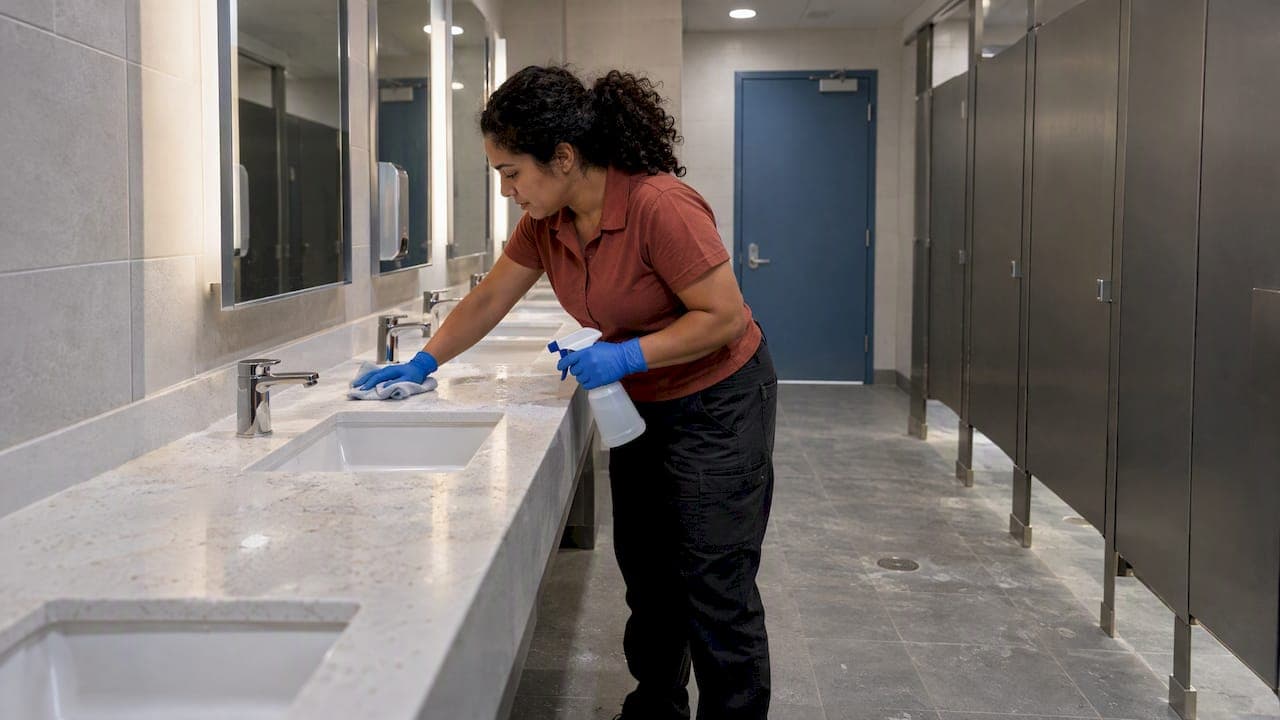
Construction turnover cleaning runs in three passes: a rough clean while trades are still working, a final clean after the last trade leaves, and a touch-up clean after the dust has settled and just before occupancy. The one rule that holds across projects is to schedule the last pass only after a settling window of roughly 48 to 72 hours with the permanent HVAC running. Everything else on the timeline works backward from your handoff date.
This guide is for property managers, general contractors, building owners and facility managers who have to book cleaning against a moving schedule. It covers when each phase belongs, what makes the dates slip, who signs off, and how to hand the space to ongoing janitorial service.
TL;DR
- Plan three cleans, not one: rough clean during construction, final clean after the last trade, touch-up clean right before handoff.
- Leave a 48 to 72 hour dust-settling window, with the permanent HVAC running through clean MERV 13 filters, before the touch-up clean.
- Book cleaning against triggers (drywall finished, paint complete, punch list closed), not calendar dates, because trades slip.
- Never dry sweep or blow down dust. Crews should use HEPA vacuums and wet methods, and OSHA requires debris to be cleared at regular intervals during the job.
- Approve each phase by walkthrough against a written scope before the next phase or the occupant arrives.
Table of Contents
- The turnover cleaning timeline at a glance
- Phase one: the rough clean
- Phase two: the final clean
- The settling window: the step most schedules skip
- Phase three: the touch-up clean
- How to build the schedule backward from handoff
- What causes delays and repeat cleans
- Coordinating with contractors, inspectors and occupants
- How to approve the cleaning before handoff
- Handing off to ongoing janitorial
- Our perspective: book the dust, not the date
- Plan your turnover cleaning with Sparkle Pro
- FAQ
- Sources
The turnover cleaning timeline at a glance
Think of the schedule as three blocks that sit on top of the construction schedule, plus a buffer between the last two.
| Phase | When it happens | What it accomplishes | Typical trigger |
|---|---|---|---|
| Rough clean | During construction, often in stages | Removes debris and heavy dust so trades can work and inspectors can see the work | Drywall, framing or demolition complete in an area |
| Final clean | After the last trade leaves | Top-to-bottom detail clean of every surface | Punch-list repairs and painting finished |
| Settling window | 48 to 72 hours after final clean work | Lets suspended fine dust fall out of the air | HVAC running, filters in place |
| Touch-up clean | Immediately before walkthrough or occupancy | Removes the last dust and marks so the space looks move-in ready | Owner or tenant walkthrough scheduled |
Some teams call the last pass a light clean, a powder puff clean or a white-glove clean. The names vary by region and contractor. What matters is that your scope document says what each pass includes and who approves it.
We lay out the same sequence in more depth in our guide to the 24 to 72 hour rule and three phases for property managers.
Phase one: the rough clean
The rough clean is the debris pass. It starts earlier than most owners expect, because cleanup is not a finish-line task. It is a safety and workflow requirement that runs alongside the build.

OSHA's construction housekeeping rule, 29 CFR 1926.25, requires that debris with protruding nails be cleared from work areas, passageways and stairs, and that combustible scrap and debris be removed at regular intervals during construction using safe means. That obligation sits mainly with the contractor, but a property manager who is managing the build-out should know it exists, because a cluttered site is a slow site.
What belongs in the rough clean:
- Removal of scrap, packaging, offcuts and bulk debris from floors, stairwells and loading paths
- Heavy dust extraction from floors, ledges, sills and the tops of framing and equipment
- Clearing mechanical rooms, ceilings above accessible tiles and wall cavities that are about to be closed
- Sweeping and vacuuming of floors so flooring, tile and finish crews have a clean substrate
When to schedule it. Book rough cleans by area, not by building. A common pattern is one pass after demolition or framing, another after drywall finishing, and a final rough pass when the heavy trades are done. Drywall sanding is the biggest dust event on most interior jobs, so it is the trigger most worth building into the contract.
For debris logistics, including dumpsters, haul-off and who pays for what, see our tips on construction site debris removal for property managers.
Phase two: the final clean
The final clean is the detail pass. It happens once the last trade has left, the punch-list repairs are finished and painting is done. Starting earlier is the most common scheduling mistake, because anything a trade does after the final clean puts dust and marks back on surfaces you just paid to clean.
What belongs in the final clean:
- Top-to-bottom dusting of ceilings, light fixtures, vents, ledges, door frames and window tracks
- Cleaning of interior glass, removal of labels, stickers, adhesive and paint overspray where safe
- Wall spot cleaning, millwork and cabinet wipe-down inside and out
- Restroom and kitchen or break-room fixtures cleaned and sanitized
- Floor work: vacuuming with HEPA equipment, then the floor-specific treatment, whether that is mopping, scrubbing or machine cleaning
- Removal of protective film and floor protection once heavy traffic is over
A room-by-room version of this scope is in our construction final clean checklist. If you are deciding when to book each of the first two passes, scheduling by trigger is the method we recommend.
Dust control is part of the timeline
Method affects schedule, because the wrong method forces a repeat. OSHA's silica standard prohibits dry sweeping, dry brushing and uncaptured compressed-air blowdown of dust, which means crews work with HEPA vacuums and wet methods (as summarized here, citing 29 CFR 1926.1153(f)). Wet methods and HEPA capture take more time per room than a broom and a blower, so budget for them. Our OSHA silica dust checklist for contractors goes through the 50 µg/m³ limit and what cleanup crews should do about it, and our concrete dust cleanup guide covers the heaviest dust source.

OSHA's general guidance also applies to the crew: assess hazards to decide on protective equipment, limit dust exposure, and provide respiratory protection when exposure cannot be avoided. The agency also advises that areas where asbestos is suspected be assessed before anyone enters (OSHA safety and health checklist). On renovations of older buildings, ask the contractor whether that assessment has been done before you send a cleaning crew in.
The settling window: the step most schedules skip
Fine particles from drywall and concrete work can stay airborne long after the visible mess is gone. One closeout guide puts the figure at 48 to 72 hours for fine gypsum and silica particles, and warns that wiping surfaces the same afternoon painters finish can leave a grey film that re-deposits on the surfaces (Muros Construction closeout guide). The same guide recommends that the touch-up clean proceed only after that window, with the permanent HVAC operating through clean MERV 13 filters.
In practice, that means:
- Final clean work is finished.
- The permanent HVAC is running, with clean filters installed and temporary protection removed.
- Two to three days pass, with no dusty trades in the area.
- The touch-up crew arrives and removes what settled.
If your handoff date leaves no room for those days, the date is the problem. Moving the final clean earlier does not help, because it simply gets dusty again. For HVAC specifics, including when ductwork needs cleaning rather than just filter changes, see our HVAC cleaning after construction guide.
Phase three: the touch-up clean
The touch-up is short and cosmetic, and it is the one the occupant actually sees. It removes dust that settled, fingerprints, scuffs from final deliveries and marks from last-minute punch-list items.
Typical scope:
- Dust on horizontal surfaces, sills, desks and shelves
- Glass and mirror streaks
- Floors: a final vacuum and damp mop or machine pass
- Restroom and kitchen detail, trash liners in, dispensers ready
- Spot clean of door hardware, elevator cabs and entry areas
Schedule it as close to the owner or tenant walkthrough as the settling window allows. Anything done after the touch-up, such as furniture delivery, signage install or low-voltage work, is a reason to book a second, smaller pass.
How to build the schedule backward from handoff
Use the date the occupant gets the keys as your anchor and work backward. The numbers below are planning logic, not fixed durations. Crew size, square footage, floor types and finish level change how long each pass takes, so ask your cleaning contractor for hours per phase based on a site visit.
- Handoff or occupancy date. Fixed by the lease, the certificate of occupancy or the opening date.
- Touch-up clean. The day or two before the final walkthrough.
- Settling window. 48 to 72 hours before the touch-up, with HVAC running.
- Final clean. Immediately before the settling window, after punch-list and paint are done. Allow more than one day on large floors, and allow room-by-room sequencing so restrooms and kitchens are done early.
- Punch-list completion. Needs to finish before the final clean, not alongside it.
- Rough cleans. Tied to milestones (demolition, drywall finishing, flooring prep), not to the calendar.
If the project also feeds a lease-up, the cleaning dates affect your leasing dates. This lease-up timeline for rentals is a useful companion for planning what happens once the space is clean and ready to show.
What sets the duration of each phase
- Square footage and layout. Open floors move faster than a floor of small offices, exam rooms or suites.
- Dust load. Concrete work, heavy drywall finishing and demolition raise the effort.
- Finish level. Healthcare, labs and cleanrooms have higher standards than a warehouse shell.
- Surfaces. Polished concrete, specialty flooring, large glazing and high ceilings each add time.
- Access. Elevator availability, loading dock hours, and whether the building is occupied around the work.
- Crew size. More hands shorten the calendar, but only if the area is clear of other trades.
What causes delays and repeat cleans
Most repeat cleans trace back to a handful of causes.
- Trades returning after the final clean. Touch-up paint, ceiling tile adjustments and flooring repairs all put dust back. Close the punch list first.
- Cleaning too soon after painting or sanding. Wiping while fine dust is still airborne leaves a film that has to be removed again.
- HVAC not running, or running with dirty filters. Dust circulates and settles on cleaned surfaces. Confirm filters are replaced before touch-up.
- Wrong method. Dry sweeping or blowing dust moves it around, and it is prohibited under the silica rule for covered work.
- Unclear scope. If the contractor assumed the cleaners would remove stickers and the cleaners assumed the contractor would, the item shows up on the punch list.
- Blocked access. Stored materials, locked rooms, or elevators reserved for deliveries stall the crew.
- Inspection failures. A failed inspection brings more work and more dust, so a clean already finished may need a follow-up pass.
Coordinating with contractors, inspectors and occupants
Cleaning touches every other party on the project, so a few habits keep the schedule honest.
- Write the cleaning phases into the contract. The general contractor's scope should say which cleans they provide (usually rough) and which the owner or property manager procures (often final and touch-up).
- Share the master schedule. Your cleaning provider needs the milestone dates and a named contact who can confirm triggers, such as a superintendent.
- Sequence around inspections. Schedule rough cleans so inspectors can see the work, and the final clean after final inspections that require open walls or access panels.
- Lock out late work. Ask the superintendent to stop non-essential trades from entering once the final clean begins, or to log what they did so the touch-up can target it.
- Plan for deliveries. Furniture, fixtures and equipment arrivals create debris and marks. Book a small touch-up after them if the occupant moves in right away.
For tenant improvement projects, where the building may stay occupied and the rules of the landlord and local authorities apply, read our guide to tenant improvement cleaning.
How to approve the cleaning before handoff
Approval is where timelines are won or lost, because an unapproved space turns into an argument after the occupant arrives.
- Agree on the standard in writing. List the surfaces, the finish level and the exclusions before the work starts.
- Walk each phase. The rough clean walk checks that the next trade can start. The final clean walk checks detail by room. The touch-up walk is the handoff walk.
- Use a punch list for cleaning. Photograph and number each item, assign it to the cleaner or another trade, and set a recheck time.
- Inspect with the right light. Check at floor level and with the building lights on, since glass streaks and dust films show up differently by angle.
- Sign off. The property manager or owner's representative signs the phase complete and records the date, so any later marks are clearly post-handoff.
- Confirm the HVAC and filter status. Record that filters were changed and the system is on.
Handing off to ongoing janitorial
The day after the touch-up clean, the building needs a routine to keep it that way. Start the recurring janitorial contract on or just before occupancy so the first week of occupant traffic is covered, not left to the construction crew's last pass. Share the finish schedule, floor types and any manufacturer cleaning requirements so the janitorial scope matches the new materials. Our guide to commercial post-build janitorial cleaning explains how that transition works, and the step-by-step post-construction cleaning process shows the whole sequence from quote to approval.
Our perspective: book the dust, not the date
The most useful change a property manager can make is to stop treating cleaning as a line at the end of the schedule. We are a nationwide commercial cleaning company with local crews, and the jobs that go smoothly share one habit: the cleaning provider sees the schedule early and is told about triggers as they happen.
Our process is built for that. We quote, visit the site, schedule the cleaning, and then you approve the result. The site visit matters more than the quote, because it is where we see floor types, access, elevators and the real dust load. It is also where we agree with you on what "done" looks like.
We would rather push a final clean by a day than clean into a settling window and return for a second pass. A date that holds is worth more than a date that is early. If a handoff date is truly fixed, tell us at the start so we can add crew to the final clean and keep the settling window intact.
— Sales
Plan your turnover cleaning with Sparkle Pro
We provide post-construction cleaning, tenant turn and move-out cleans, deep cleans, disinfecting, facility services and day porter services for offices, retail, multifamily, industrial and healthcare properties, with a site visit before every quote. Pricing depends on property size, frequency and scope, so we do not publish a flat rate. If your handoff is coming up, request a quote for post-construction cleaning and share your milestone schedule.
We also serve New Jersey with local crews; see our New Jersey commercial cleaning page for details.
FAQ
How long should I wait between the final clean and the touch-up clean?
Plan on 48 to 72 hours with the permanent HVAC running through clean filters. That gives fine drywall and silica particles time to settle so the touch-up removes them instead of smearing them. If the schedule is tight, compress other steps before this one.
When should construction cleanup start?
It starts during construction, not after it. OSHA requires debris to be cleared from work areas, passageways and stairs, and combustible scrap removed at regular intervals. Book rough cleans after milestones such as demolition or drywall finishing.
Who is responsible for turnover cleaning, the contractor or the owner?
It depends on the contract. Contractors commonly handle rough cleaning as part of site housekeeping, while final and touch-up cleans are often procured by the owner or property manager. Put the split in writing before the project starts so nothing is missed.
Can I do the final clean before the punch list is finished?
We do not recommend it. Punch-list repairs and touch-up paint put dust and marks back on surfaces. Finish the punch list, then book the final clean, then allow the settling window.
How do I approve the work?
Walk each phase against a written scope, log items on a numbered punch list, and sign off once each item is fixed. Record the date so marks after handoff are clearly separate.
Sources
- OSHA 29 CFR 1926.25, Housekeeping
- OSHA, Safety and Health Checklist
- Post-Construction Cleaning and Closeout Checklist, Muros Construction