
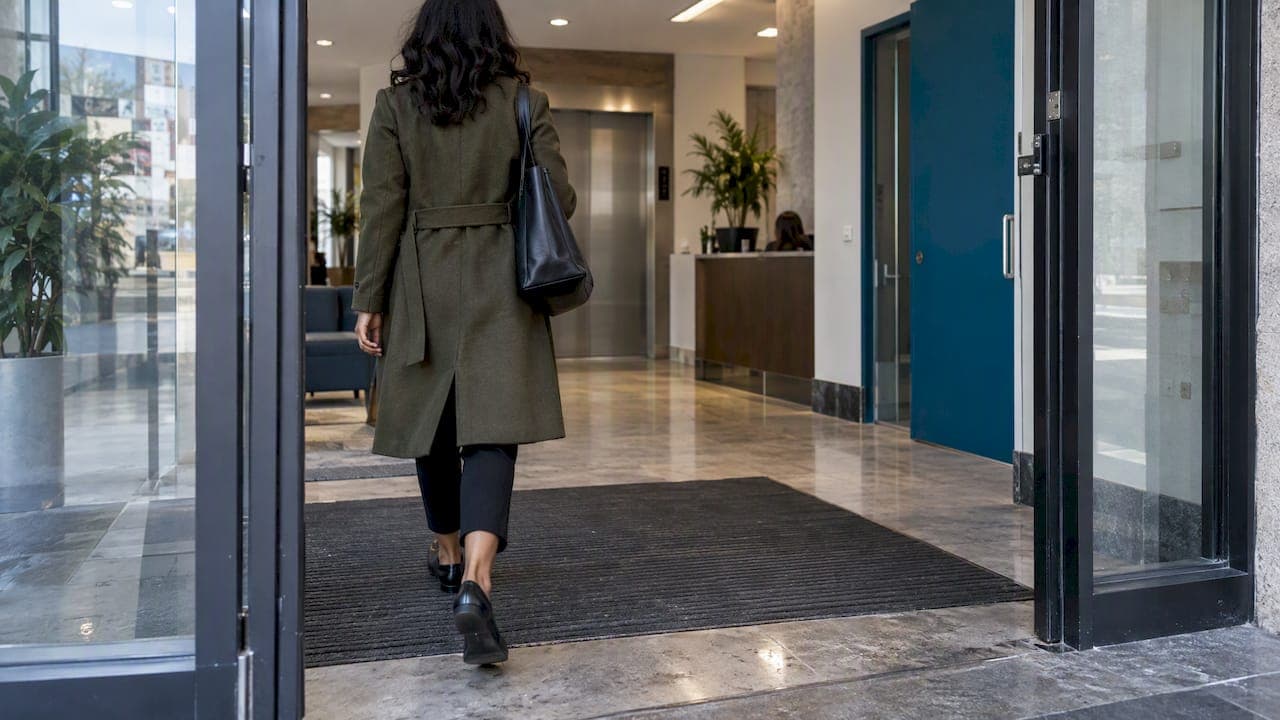
Cleanliness is one of the few parts of tenant satisfaction that a property manager can fix quickly, measure cheaply and prove to the tenant. Tenants notice restrooms, lobbies, floors and trash long before they notice your capital plan. To improve satisfaction, set a written cleaning scope, watch the areas where complaints cluster, survey tenants on a schedule, and close the loop on every complaint.
This guide is for property managers, facility directors, building owners and commercial real estate teams who hire cleaning vendors. It covers what tenants complain about, how to measure it, and how to build a cleaning program that holds up.
TL;DR
- Restrooms draw the most cleaning complaints in commercial buildings, and supply stock (paper, soap, dispensers) is the top single issue in the latest CleanLink survey.
- Satisfaction is measurable: anonymous occupant surveys plus unannounced management inspections show problems that day-to-day operations miss.
- A written scope of work with documented performance measures keeps vendor and building team aligned, and gives you something to point to when a tenant complains.
- Every complaint needs a record, an investigation, a fix and a follow-up with the tenant. The follow-up is what builds trust.
- Cleaning is a retention lever, not just a cost line. Tenants who see a well-kept building have fewer reasons to look elsewhere.
Table of Contents
- Why cleanliness shapes how tenants feel about a building
- What tenants actually complain about
- Five points of cleanliness for commercial property management
- Put the standard in writing
- Measure satisfaction instead of guessing
- Handle complaints so tenants stay
- Match the service to the building
- Our perspective: cleaning is a retention tool, so manage it like one
- Where Sparkle Pro fits
- A 30-day plan to lift cleanliness scores
- FAQ
- Sources
Why cleanliness shapes how tenants feel about a building
Tenants rarely say "your janitorial scope is weak." They say the lobby feels tired, the restroom smells, the carpet looks gray. Those impressions add up to a verdict on the landlord.
Research backs the link. A 2019 study of an office building found that building cleanliness, air quality and room layout significantly influenced tenant satisfaction, and the authors concluded that maintaining these factors matters for tenant loyalty. It is one building in one city, so treat it as supporting evidence rather than a universal rule. But it matches what most managers see: cleanliness sits next to comfort and air quality as a core part of the tenant experience.
Three things make cleanliness different from other satisfaction drivers:
- It is visible every day. A broken elevator is occasional. A dirty restroom is something tenants and their visitors can meet on any morning.
- It is cheap to fix compared with capital items. You can change a cleaning frequency this week. You cannot replace an HVAC system this week.
- It is easy to document. Inspections, checklists and survey scores give you evidence on both good and bad days.
If you want a broader view of what a cleaning program does for a building, our piece on why your building needs cleaning services covers the benefits in more detail.
What tenants actually complain about
Before changing anything, look at where complaints come from. Facility-industry survey data is consistent on this point.
The 2024 CleanLink complaints survey found that the single biggest cleaning complaint from building occupants was paper stock in restrooms (58%), followed by pest and bug problems (54%) and trash and recycling removal (51%). Restrooms were the main complaint area overall, with insufficient paper, malfunctioning dispensers and odors the most frequent issues. Dirty or dusty floors and carpets, and a perceived lack of cleaning frequency, also ranked high.

An earlier 2022 survey from the same publication had 41% of respondents naming restrooms as the area with the most complaints, with soap and paper dispensers and dirty mirrors among the common gripes.
Two patterns stand out:
- Many complaints are supply and process problems, not scrubbing problems. An empty dispenser is a restocking-frequency issue. Overflowing trash is a route-timing issue. Neither needs a bigger crew, only a better schedule and a check.
- Perception matters. The same 2022 report quotes CleanLink's James DeGraff noting that while many classic cleaning complaints have declined, subjective or "frivolous" complaints have risen. Your team has to sort real defects from preferences without dismissing either.
Restrooms deserve their own plan
Because restrooms lead every list, give them a dedicated checklist: stock levels at set times, dispenser function, mirrors, floors, odor control and a logged check time. If the same fixtures keep failing or the finishes are worn past cleaning, the answer may be repair rather than more labor. A look at commercial bathroom remodel costs can help you judge when worn surfaces and fixtures are beyond what cleaning can fix.
Pests and trash are cleaning-adjacent
Pest sightings and trash removal came second and third in the 2024 survey. They sit between cleaning, waste handling and pest control contracts, so assign an owner for each. Green Seal's commercial cleaning standard (GS-42) requires cleaning providers to set up clear feedback procedures for tenants and management that address coordination with pest control and building improvements. Even if you are not pursuing certification, that is a sensible model: the cleaning vendor should know who to call when it sees evidence of pests.
Five points of cleanliness for commercial property management
Readers often ask for "the five points of cleanliness." There is no single official list for commercial buildings, so here is the framework we use when we walk a property. It turns a vague goal into five things you can check.
| Point | What to check | Typical failure |
|---|---|---|
| 1. Entry and lobby | Glass, mats, floors, seating, first-impression odors | Salt, dirt or water tracked in; smudged doors |
| 2. Restrooms | Supplies, dispensers, fixtures, mirrors, odors | Empty dispensers, stained grout, lingering smell |
| 3. Floors and surfaces | Hard floors, carpet, dust on ledges and vents | Dusty edges, spots in carpet, dull finish |
| 4. Waste and pests | Trash and recycling pickup, dumpster areas, pest signs | Overflowing bins, slow removal, sightings |
| 5. Touch points and air | Door handles, elevator buttons, shared kitchens, dust that affects air quality | Skipped high-touch cleaning, dusty vents |
The fifth point links cleaning to indoor air. Our article on cleaning's role in indoor air quality explains how dust control and cleaning methods affect what tenants breathe, and the pandemic made many tenants far more attentive to it.
Put the standard in writing
Vague expectations produce vague results. The CIMS-GB standard expects a written Quality Plan, a site-specific scope of work, documented performance measures, and at least one measurement tool. It also recommends communicating the plan to the parties with a material interest in it. You do not need to be certified to borrow the structure.
A practical written standard for a property includes:
- Scope by area. What is cleaned, how often and to what finish, for lobbies, restrooms, offices, kitchens, stairwells and exterior entries.
- Service windows. When day porters, evening crews and restocking rounds happen.
- Performance measures. For example, an inspection score target per area, or a maximum time to respond to a reported issue.
- Escalation. Who the tenant contacts, who the vendor contacts, and how fast.
- Products and methods. Green Seal GS-42 asks providers to give management a list of cleaning products, a statement that labels and safety data sheets are kept and available on request, and materials on reducing the need for intensive cleaning. These are reasonable asks of any vendor, and useful for properties with sustainability goals. If your building is pursuing LEED, ask about eco-friendly product options up front.
Share the relevant parts with tenants. A one-page summary of what is cleaned and when answers many "nobody ever cleans this" complaints before they start. For a ready structure, see our step-by-step cleaning plan for property managers.
Measure satisfaction instead of guessing
Complaints tell you about the tenants who speak up. Surveys and inspections cover everyone else.
Tenant surveys
The USGBC's occupant comfort survey guidance for existing buildings describes anonymous, seven-point surveys that cover cleanliness alongside other comfort factors. Its rule of thumb: if more than 20% of respondents are dissatisfied with a factor, an action plan has to address it. The guide also notes that systematic occupant feedback can reveal specific problems that normal operations would miss. A 20% threshold is a solid internal trigger even for buildings outside that program.
Keep your survey short:
- Rate lobby and common area cleanliness.
- Rate restroom cleanliness and supplies.
- Rate responsiveness when you report a problem.
- Rate floors and carpets in your suite or common corridors.
- One open comment box.
Run it on a regular rhythm, such as once or twice a year, and keep the questions stable so results compare over time.
Inspections
CIMS-GB calls for one or more measurement tools. Surveys go to representatives of the organization, and management conducts unannounced inspections, with customers able to take part. Unannounced is the key word: a scheduled walk-through shows you the building at its best.
A simple inspection routine:
- Walk the five points above on a set route.
- Score each area on a consistent scale and take photos.
- Log the date, time, inspector and findings.
- Compare scores to the previous month and to survey results.
If inspection scores are high and survey scores are low, you probably have a perception or communication gap. If both are low, you have a service gap. If they diverge by floor or wing, look at crew assignment and supervision.
Handle complaints so tenants stay
How you respond matters as much as the fix. CIMS-GB is specific: keep a record of each complaint, keep its source as confidential as possible, document procedures to minimize recurrence, and investigate fully. After corrective action, inform the customer representative and ask for feedback.
Here is a workable sequence:
- Log it. Date, location, description, who reported it.
- Acknowledge quickly. A short reply the same day, even if the fix takes longer.
- Investigate the cause. Was it a missed task, a bad schedule, a product failure, a supply issue or an unrealistic expectation?
- Fix it and change the process. If an empty dispenser was the symptom, change the restocking round, not just the refill.
- Close the loop. Tell the tenant what was done and ask whether it worked.
- Review monthly. Look for repeat locations and repeat causes.
Most complaints are small. The tenants who stay are usually the ones who got a clear answer and saw the problem stay fixed.
Match the service to the building
Different properties need different emphasis.
| Property type | Cleaning emphasis |
|---|---|
| Office buildings | Restroom frequency, lobby presentation, kitchens and break rooms, high-touch disinfecting |
| Retail centers | Entrances, common restrooms, trash and food-court areas, daytime upkeep |
| Multifamily common areas | Lobbies, hallways, mail and fitness rooms, trash rooms |
| Industrial | Offices and restrooms, safe floor care, specialized scopes |
| Healthcare | Disinfecting and environmental services with documented protocols |
Day porter service is one of the most effective fixes for visible complaints. A porter on site during business hours can restock restrooms, empty trash, wipe high-touch points and respond to spills as they happen, which addresses the supply and trash complaints that top the surveys. Evening janitorial work then handles the deeper recurring tasks.
Turnover and tenant improvements
Satisfaction starts before move-in. A suite that is handed over clean makes a first impression that lasts, and new-tenant build-outs create dust that can follow into occupied floors. If you manage tenant improvements or move-outs, see our guides on tenant improvement cleaning and post-build janitorial cleaning. Cleaning ahead of occupancy, including HVAC, is covered in our post-construction HVAC guide.

Our perspective: cleaning is a retention tool, so manage it like one
We clean commercial properties across the country, and the pattern repeats. Buildings with unhappy tenants rarely have a single dramatic cleaning failure. They have a dozen small ones nobody owns: a restroom checked once a day when it needs checking three times, a trash route that runs after the lunch rush, a vendor who is hard to reach.
Our view is simple. First, put the scope in writing and walk the site with your vendor before the contract starts. That is why our process begins with a quote and a site visit, followed by scheduled cleaning and your approval of the work. Second, expect a fast response when something goes wrong. Third, ask your vendor how it handles the five points above, and what it does between scheduled visits. A vendor with local crews who know your building will catch the dispenser, the odor and the dusty ledge before a tenant emails you.
We are licensed and insured, we are not a franchise, and we treat every property as one tenants will judge by its restrooms.
— Sales
Where Sparkle Pro fits
If you are reworking a cleaning program, we handle routine janitorial services, day porter service, disinfecting, deep cleans, tenant turn and move-out cleans, post-construction cleanouts, and environmental services for healthcare and cleanroom settings, plus eco-friendly options for LEED properties. Pricing depends on property size, frequency and scope, so we start with a quote and a site visit. Properties in New Jersey can start from our New Jersey page.
A 30-day plan to lift cleanliness scores
Week 1: Baseline. Walk the five points unannounced and score them. Pull the last six months of complaints and sort them by area and cause.
Week 2: Fix the quick wins. Adjust restroom restocking times, trash routes and entry matting. Add a porter round if complaints concentrate in business hours. Our guide to top ways to improve building cleanliness has more ideas.
Week 3: Write it down. Draft the scope, service windows, performance measures and escalation path. Share the tenant-facing summary.
Week 4: Survey and schedule. Send the short survey, set the inspection calendar and book the first monthly review with your vendor.
Then repeat. Satisfaction moves slowly, and consistent small improvements show up in survey scores before they show up in renewals.
Owners who want a broader checklist can also read our building owner cleaning tips.
FAQ
What affects tenant satisfaction with cleanliness the most?
Restrooms. In the 2024 CleanLink survey, restroom paper stock was the top complaint at 58%, ahead of pests and trash removal. Lobbies, floors and carpets, and a sense that cleaning is too infrequent, follow.
How often should I survey tenants about cleanliness?
Once or twice a year works for most properties, using the same questions each time so you can compare. Add a quick check after any vendor change or major complaint. The USGBC guidance treats more than 20% dissatisfied on a factor as the point where an action plan is needed.
When a tenant moves out, who is responsible for cleaning?
The lease decides. Many commercial leases require the tenant to return space in a stated condition, and landlords often arrange a turn clean before the next occupant. Check your lease language, and schedule a move-out clean so the next tenant sees a ready suite.
How should I respond to a cleaning complaint?
Log it, acknowledge it quickly, find the cause, fix the process and follow up with the tenant. CIMS-GB calls for documenting procedures that minimize recurrence and asking the customer for feedback after corrective action.
Sources
- Building cleanliness, air quality and room layout study (2019)
- CleanLink Complaints Survey 2024
- CleanLink Complaints Survey 2022
- CIMS-GB Standard 2023
- Green Seal GS-42 Standard for Commercial and Institutional Cleaning Services
- USGBC Occupant Comfort Survey reference guide